
For five months the Gulf of Oman arrives at Muscat with a shoulder in it: a short, hard chop out of the northeast that turns the crossing to the islands into fifty minutes of standing braced and swallowing spray. Then, some time in the first half of October, it stops. The dawn water goes slack, the horizon loses its texture, and within a week every dive guide, tuna skipper and sailing instructor in the city is working off the same page of the same calendar.
That calendar is what this guide is about. Muscat does not have a beach season so much as a sea season, and the people who work the water agree on its dates to within a fortnight. What follows is how the window opens, which boats to be on once it does, and what each one charges.
The turtles set the calendar
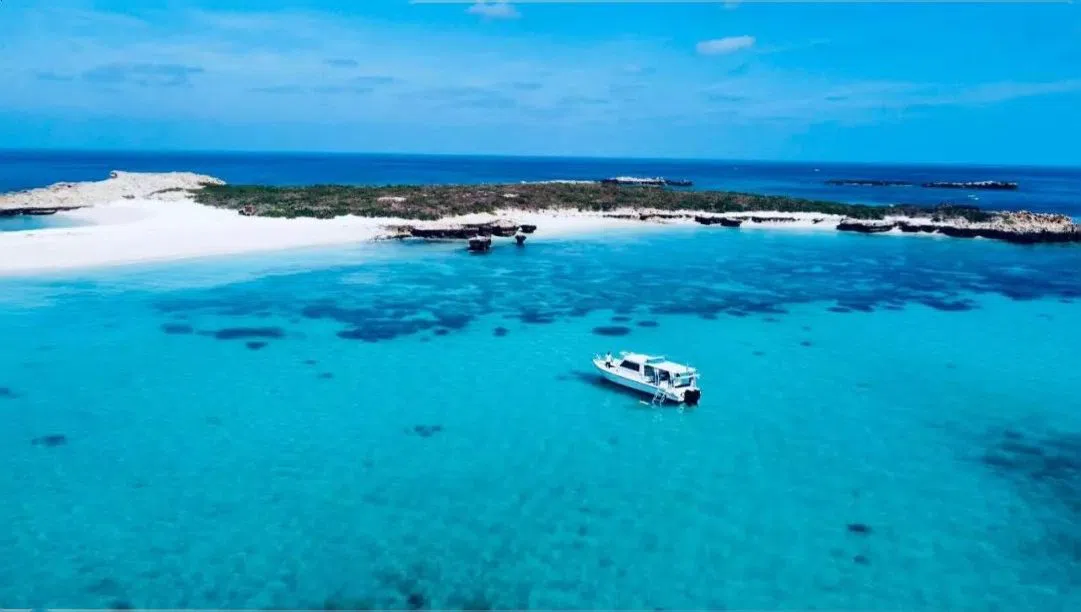
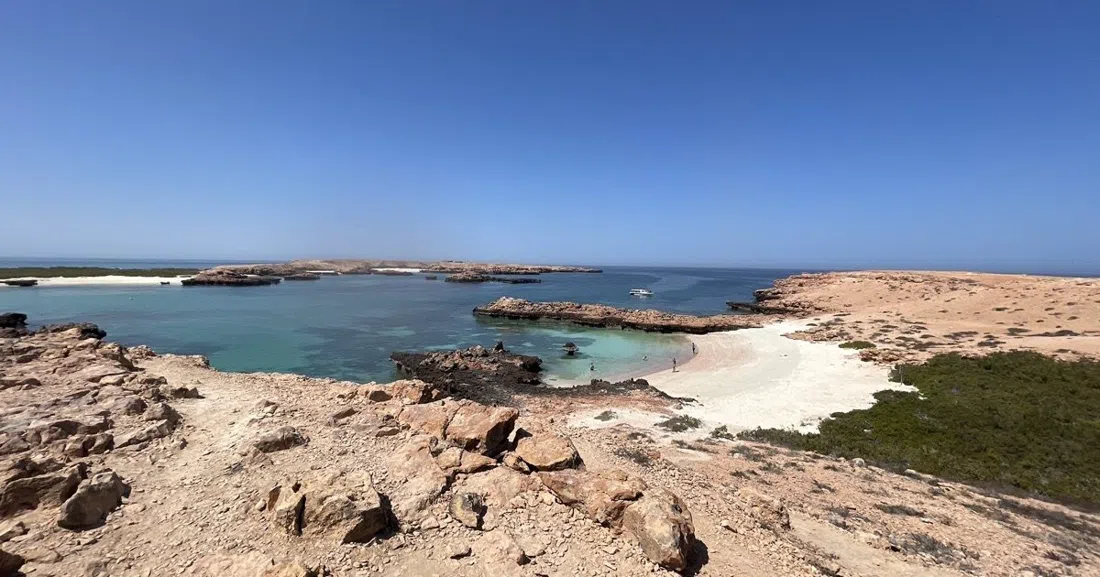
Everything here bends around one place. Daymaniyat Islands Nature Reserve (nine islands, roughly 16 nautical miles northwest of the city) is the reef every Muscat dive boat points at the moment the swell drops. It is also a protected nesting ground, and the rule is blunt: beach landings and camping are closed 1 May to 31 October for hawksbill and green turtles, reopening 1 November. Diving and snorkelling carry on through the closure, but you stay in the water and off the sand.
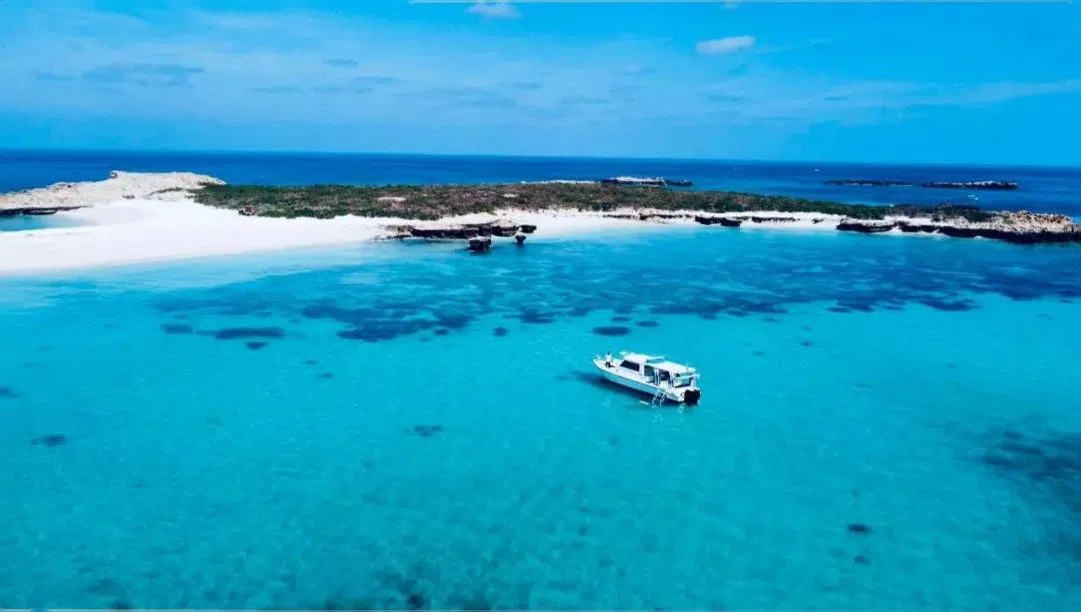
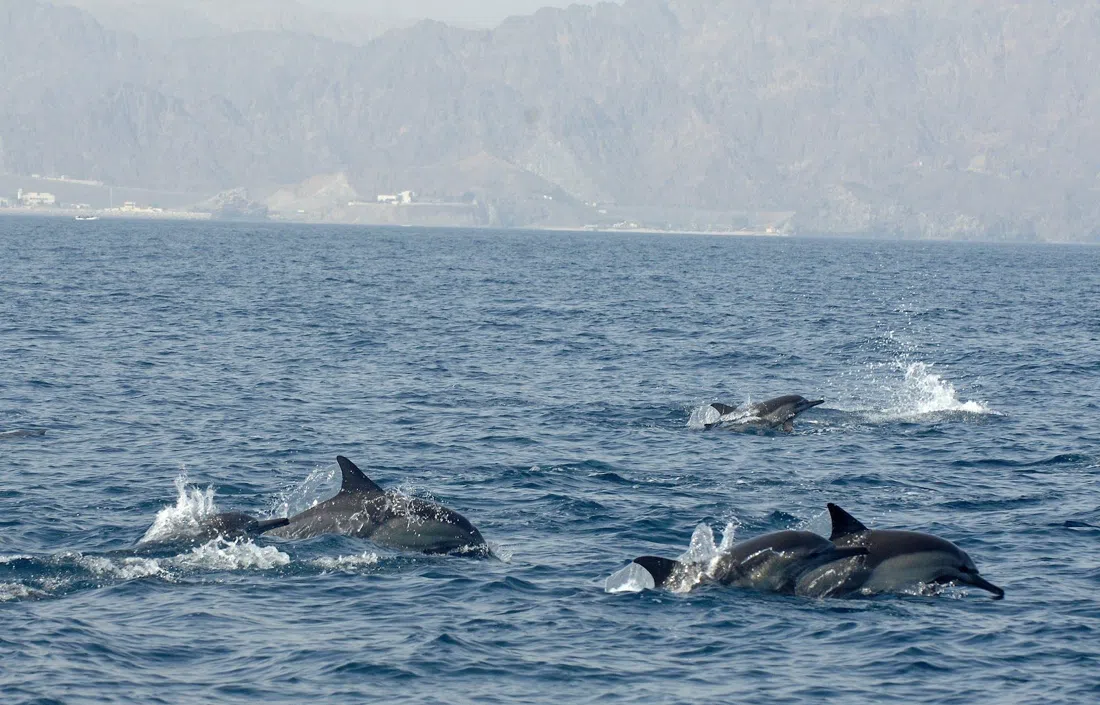
The useful accident is that the two windows coincide. The weeks the sea flattens are the same weeks you are legally allowed to stand on the islands. Operators publish October to May as the peak, with 15 to 25 metres of visibility, and the cleanest water tends to sit in the shoulders: roughly September through November, then again April and May. Whale sharks show up from August into November, so the late-season crossings sometimes hand you the flat water and the animal on the same day.
You cannot simply turn up. Each visitor needs an Environment Authority e-permit, one per person per day, non-transferable, at around OMR 3 per adult expatriate visitor. Every licensed operator handles the paperwork, but read your booking confirmation, because some quote it inside the price and some add it at the dock. No private beach hire will land you there. It is licensed operator boats only.
Three harbours, three different crowds
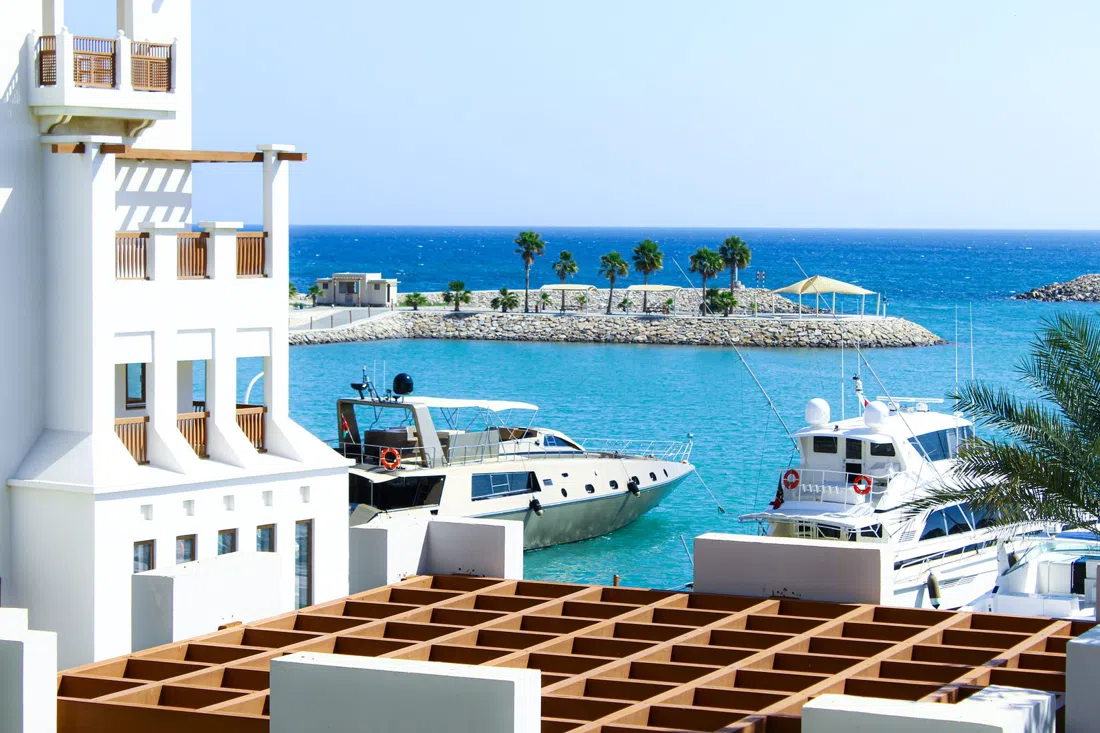
Al Mouj Marina (Al Mouj, on the northern shore near the airport) is the closest departure point to the Daymaniyats and the best free seat in the city for watching the season turn. The promenade is walk-on and costs nothing. Come at about 7.30am in late October and you will see divers, offshore fishing crews and sailors queueing for the same slack water at eight. It is a serious facility, 5 Gold Anchor rated and TYHA superyacht-accredited since September 2024, with a 40-metre maximum vessel length, and the resident operators all take group bookings off the same dock. Trips leaving from here run from around OMR 15 per person to OMR 550 for a whole boat.
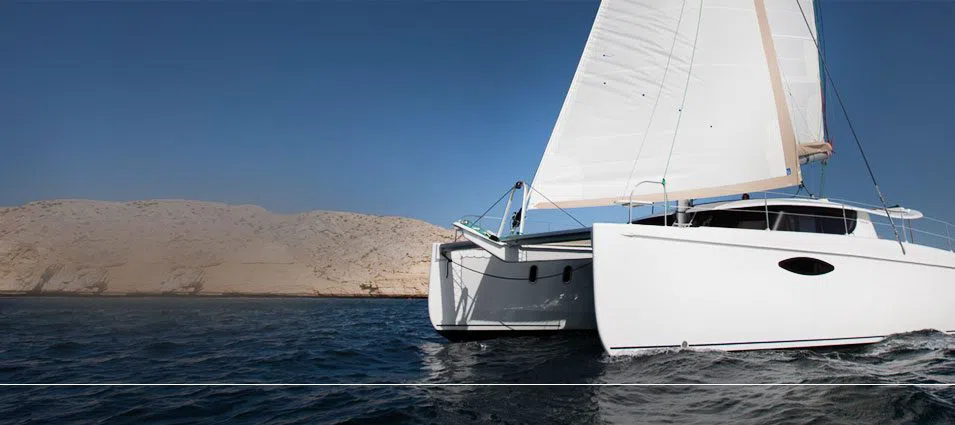
Marina Bandar Al Rowdha (Bandar Al Rowdha, on the south side past Muttrah) is the city's original sea-sports harbour, OMRAN-owned and part of the ART Marine network. It is grittier and more local, which is exactly why it is the better place to stand: more than twenty resident marine-tourism operators share one ramp with dhow skippers and fishermen, and trips start as low as OMR 8. Five minutes of watching the boats being loaded here tells you more about conditions than any forecast app.
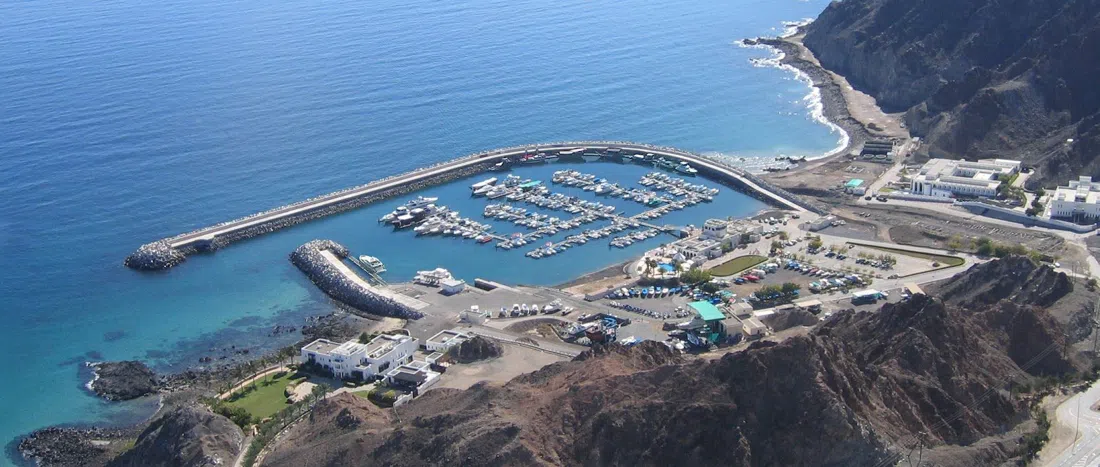
Jebel Sifah Marina (about an hour south by car) is the quiet alternative, worth the drive for two overgrown wrecks and steep sea walls reachable directly from the marina. There is a resident dive and watersports centre, and the Sifawy Boutique Hotel on site if a group wants to sleep at the dock. Berthing, dive and charter rates are on enquiry. The coastline is different, the water calmer, and there are far fewer boats.
The dive boats and what a day actually costs
MolaMola Diving Center (running out of Bandar Al Rowdha) gives the best-value full day on the water and is the most honest about conditions. Its own visibility calendar names April to May and September to November as the clear weeks, which is the season described here. Eight o'clock departure, 45 to 50 minutes across, two dives on the reserve, lunch and permits included, back on the dock by 1.30pm. OMR 47 for the two-dive day without kit, OMR 59 with; rental kit on its own is OMR 12. Groups get a dedicated instructor, private boats are available for bigger parties, and night dives run on request.
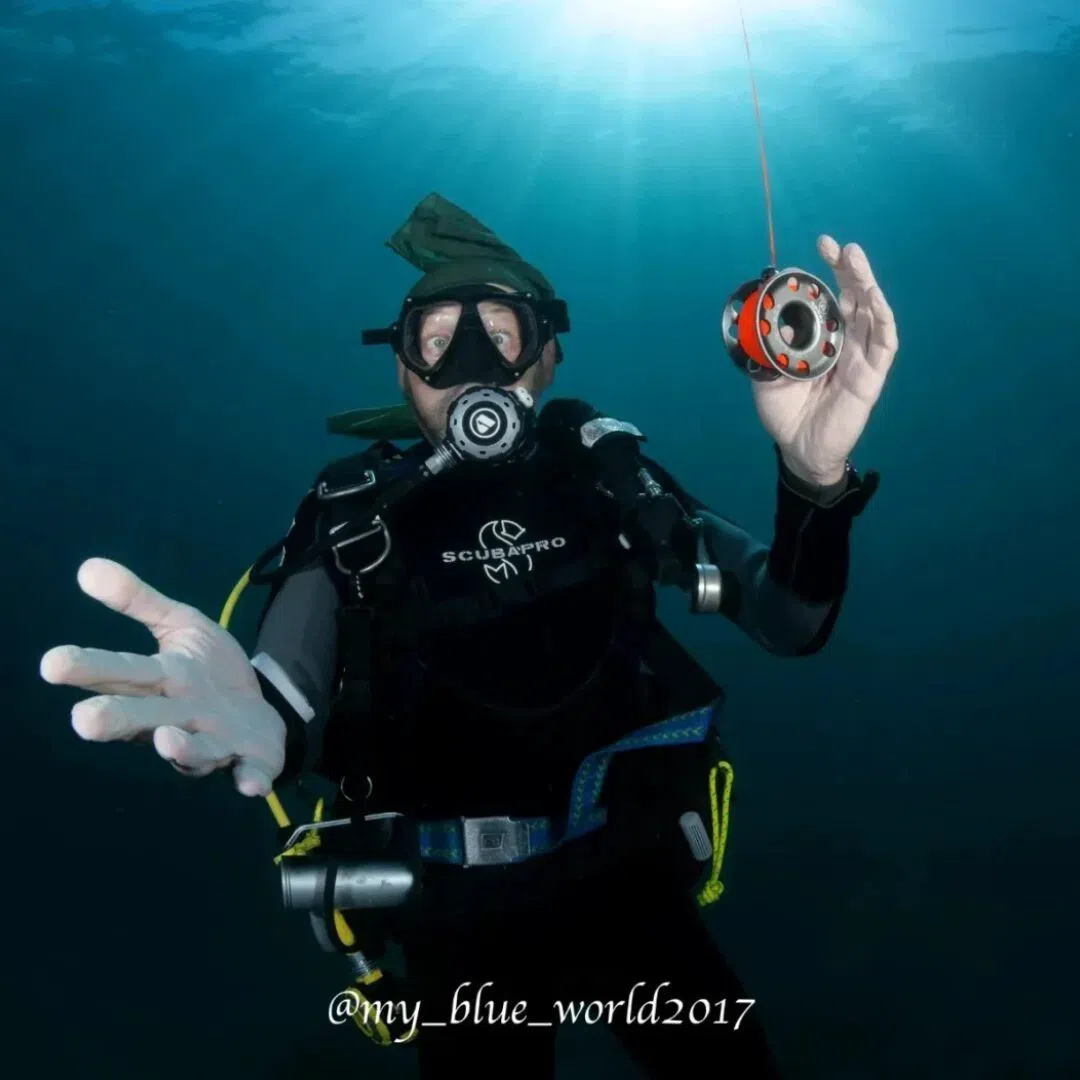
Extra Divers Qantab (Qantab, on the south side) is the most technical operation in the city and the one to book if you want the wreck rather than the reef. The Al Munassir is an 84-metre, 3,000-tonne navy ship scuttled in 2003 and sitting at 30 metres, a proper advanced dive rather than a photo stop, and they run around twenty sites across Bandar Khayran and Fahal besides. Ratios are deliberately tight at four to five divers per guide, with three boats so several groups can run in parallel. The centre closed for the off-season on 1 August and reopens on 1 October 2026, just as the calm season begins, so September enquiries go unanswered by design. The resort around it is also no longer Shangri-La: management passed to Hilton on 1 January 2026, with Al Husn becoming a Waldorf Astoria in 2027, so book the dive centre directly rather than through an old hotel page. Prices are on request, and they prefer cash in rials, with a 7% surcharge on other currencies and 3% on cards.
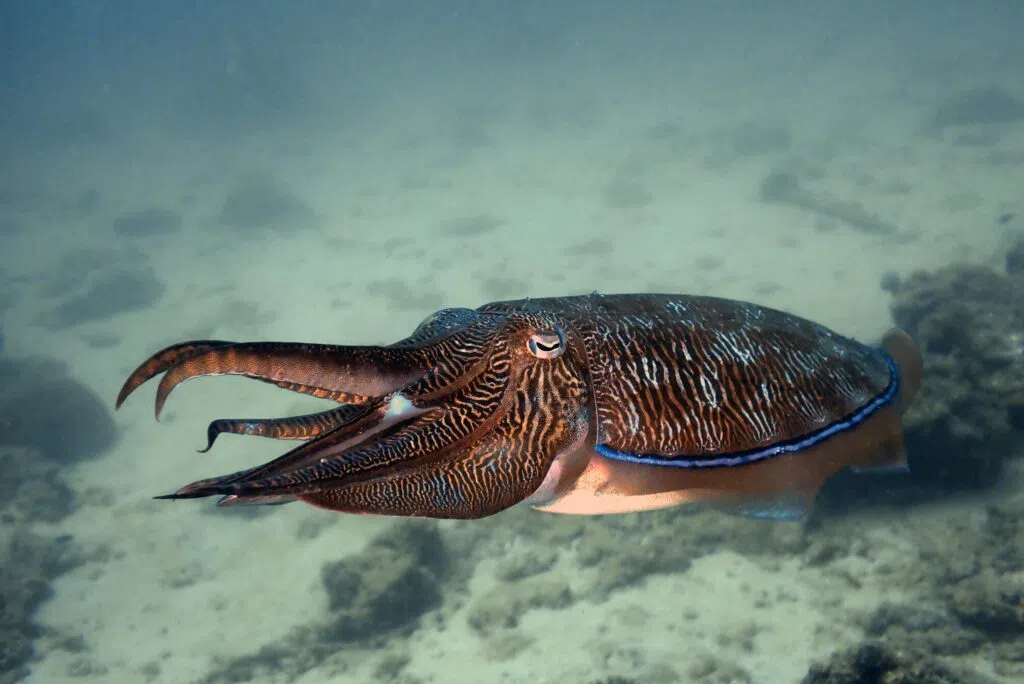
Pearl Dimaniyat Diving & Snorkeling Center (Seeb Marina, north coast) has the best-priced scuba day on this stretch and the strongest group option in the city, with three private boat sizes carrying 15, 20 and 25. Scuba days run OMR 55, snorkelling OMR 25, a dolphin trip OMR 15, and private boats OMR 200 to 350. The Seeb base puts you closest to the islands and among working fishermen at the ramp, which is part of the appeal.
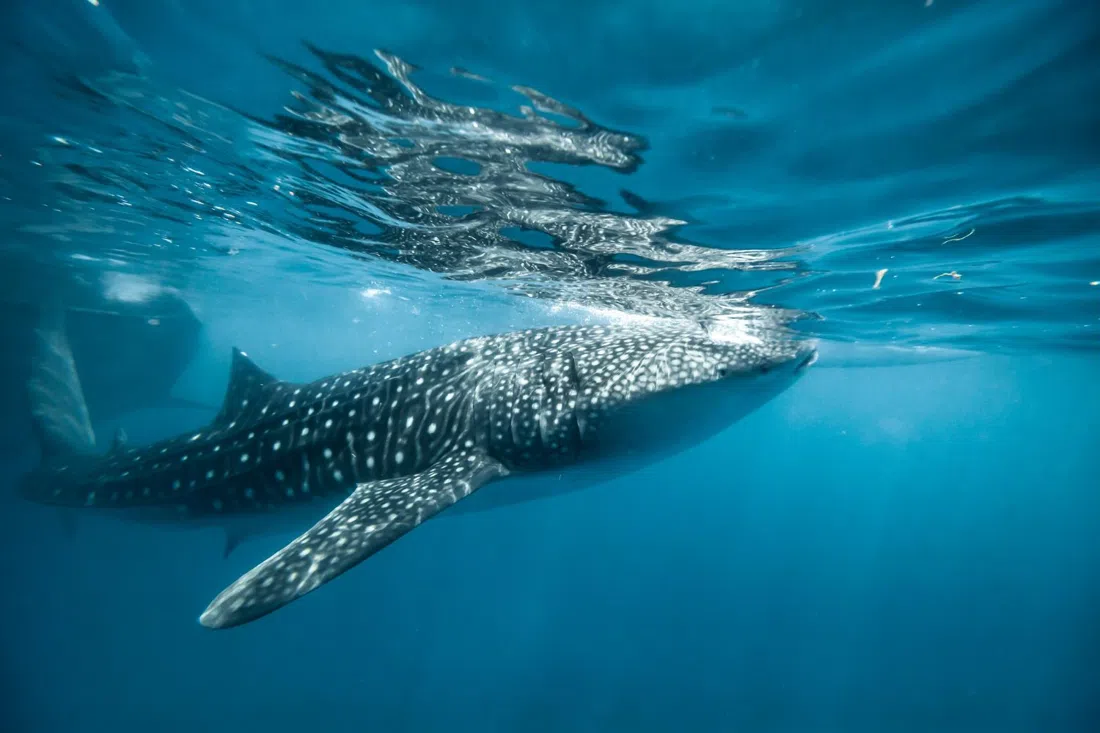
Blue Flow Diving (based up the coast to the northwest) is the budget end of the fleet without feeling like it. A dive day is OMR 30, a snorkel or dolphin trip OMR 8, a coastal or sunset run OMR 10, and an Open Water course OMR 210; a whole private boat goes for about OMR 40. Several tours need a minimum of four to six people, so solo travellers should ask what is already confirmed rather than assume a departure. They are also the only operator here covering Ras Abu Daud alongside the usual Fahal, Khayran and Daymaniyat rotation, and their base cuts real time off the crossing once the sea is flat.
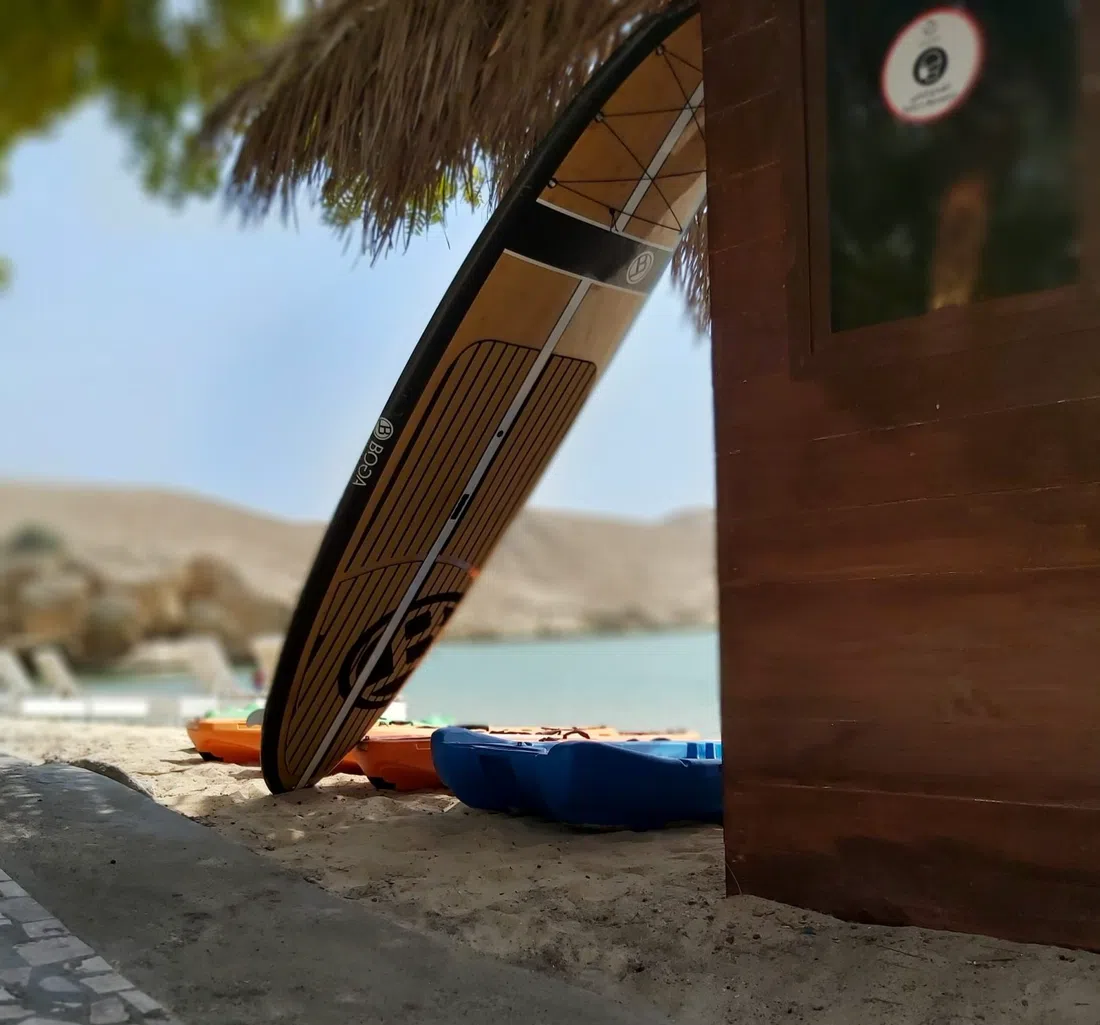
Snorkelling when not everyone will get wet
Horizon Blue (Daymaniyat snorkel and fishing runs from the north coast) is the clearest operator in the city about what the water does month to month. They publish October to May as peak with 15 to 25 metres of visibility, whale sharks from August to November, and they state plainly that May to October means no island landings even though snorkelling carries on. Hard caps of 12 and 15 keep the boats civilised. OMR 30 per person shared; whole-boat private charters from OMR 250 per half day. They were founded in 2025, so they are newer than most, and it shows in how straight the information is.
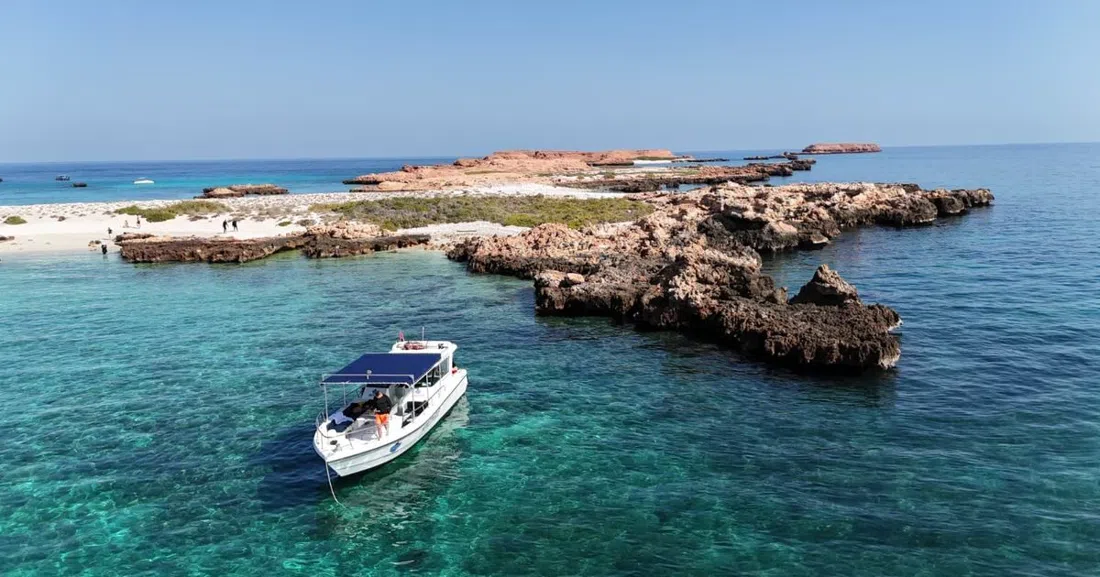
Daymaniat Shells (shared island departures plus private charters) has been running since 2016 and is unusually serious about conservation for the sector. Pick this one if you want the reef explained rather than simply visited, and on a high-visibility day take the full-day option rather than the half. They also run celebration cruises for groups, quoted on enquiry.
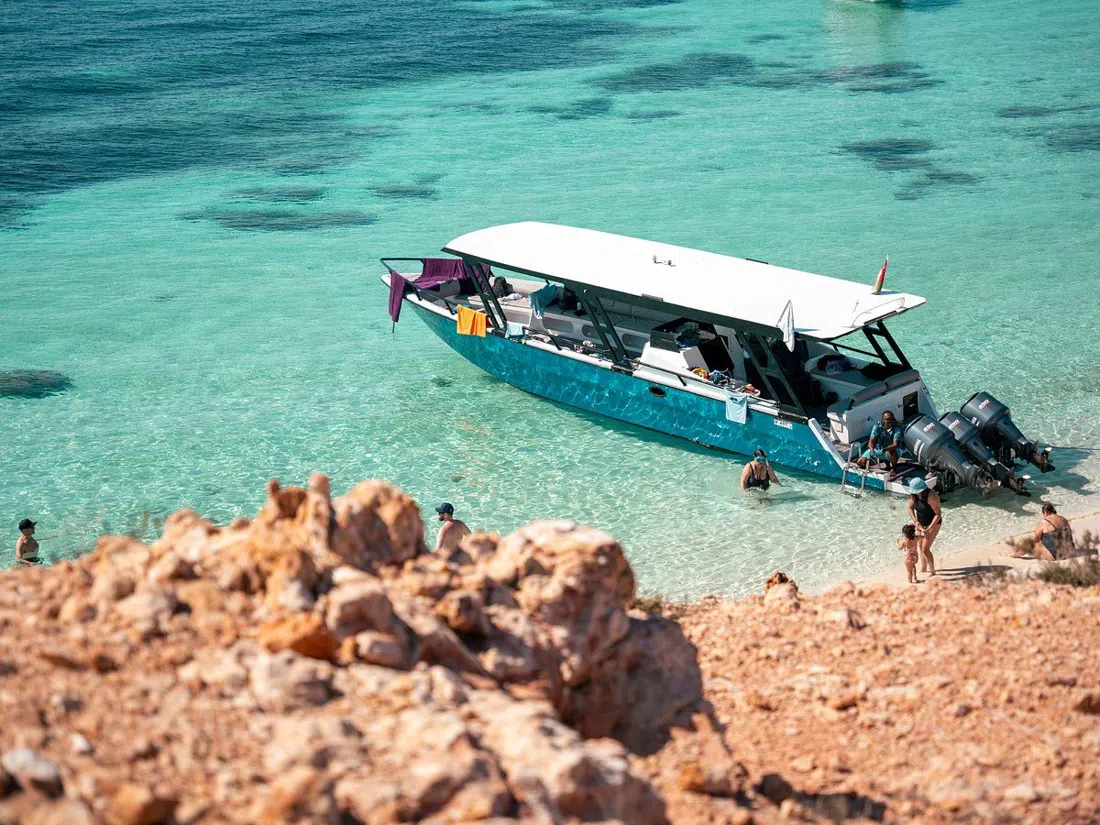
Royal Marine Tours (family-run since 2015) is the operator that makes the season concrete, for reasons set out further down. Day trips are OMR 30 for a half-day snorkel, OMR 40 for a full day, and OMR 250 for a private whole boat. Small-group ethos, and fishing sold by the boat rather than per head.
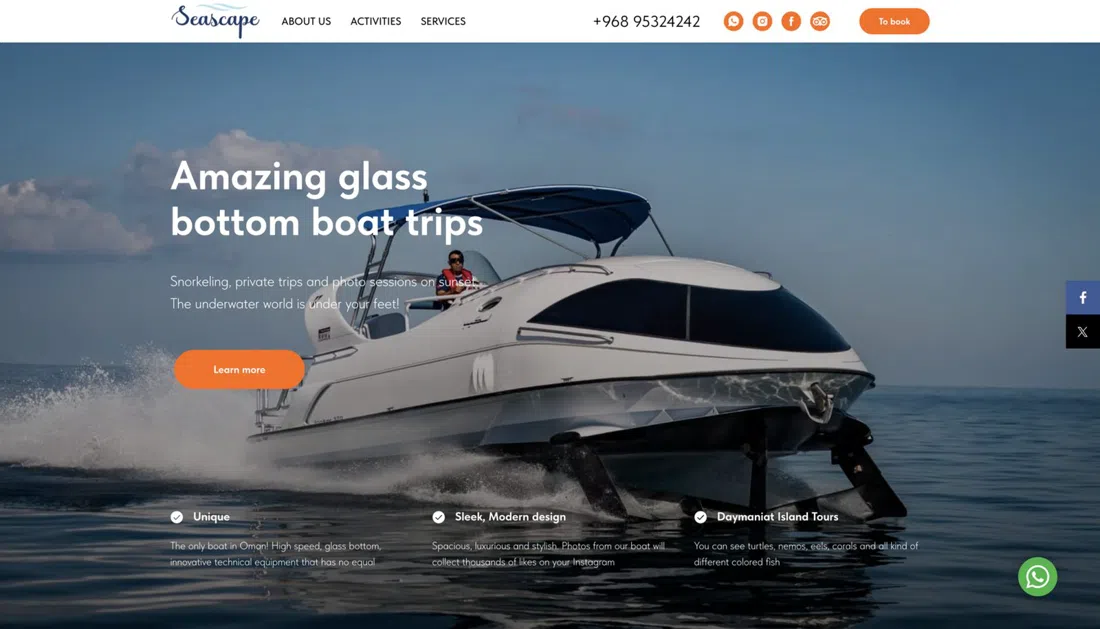
Seascape Oman (glass-bottom boat and charter) solves the mixed-group problem. Non-swimmers, nervous parents and small children see the reef through the hull while everyone else is over the side. Capacity is 20, and the boat gets used for birthdays and proposals as much as for snorkelling. Snorkel trips are OMR 30 for adults and OMR 18 for children, sunset runs OMR 15 per person with a minimum of four, and a private half day OMR 400 plus OMR 50 for each extra hour. VAT at 5% is included; reserve permits are extra. Departures at 8am, back around 1pm. The hydrofoil only earns its keep once the chop has gone: in season it is genuinely smooth, out of season it is a fast ride over lumps.
Fishing by the boat rather than by the head
Safira Fishing Oman is the properly licensed, properly priced option, and the one that will map the grounds for you: the Daymaniyats 16 nautical miles northwest, Fahal 13 to the east. Shared trips run on fixed dates with minimum numbers at OMR 100 per adult on a weekday and OMR 125 at the weekend. Private charters are OMR 350 for a half day and OMR 450 for a full day, with offshore days from OMR 550. That offshore option is roughly two hours' running each way, which is only sane in the calm months, so book it in November or February rather than July. Children are welcome but must be accompanied by a paying adult.

Sidab Sea Tours (Sidab, south side) has been operating since 1998 and is the most established name on this coast, supplying most of the city's hotels, running yacht charters and beach parties, with a reservations desk staffed around the clock and transfers to and from the marina included. Their dhow cruise is the cultural counterweight to a week of speedboats: slow, wooden, and the right way to see the harbour cliffs at dusk. Game fishing and Bandar Khayran island-hopping leave from the same dock. Everything is quoted per trip.
Learning to sail in the flattest weeks of the year
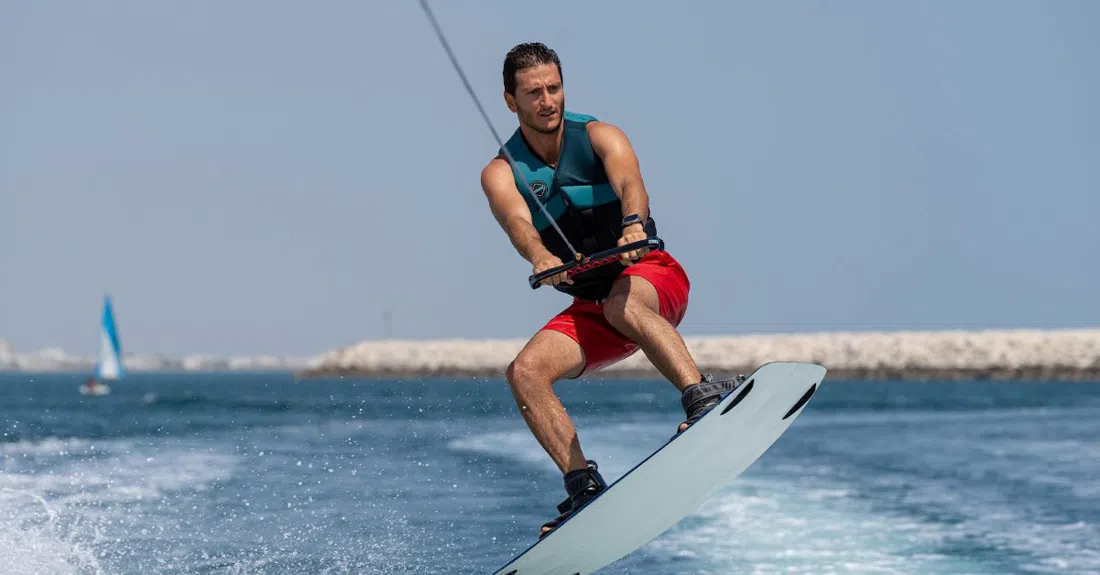
SeaOman (Al Mouj Marina) is the commercial arm of Oman Sail, the national sailing initiative, and the only operator in the city that spans all three of these cultures under one roof: diving, sailing tuition and charter, with Green Fins accreditation and a fully Omani team. Crews work in Arabic and English. It is built for groups, running corporate team-building days, structured children's programmes and whole-boat charters. Pricing sits mid to upper, and dive days and private charters are booked direct. If you have ever wanted to learn to sail somewhere the wind is steady and the water is flat, the glassy weeks are the reason to do it here rather than anywhere cold.
The two nights the reserve allows
Royal Marine Tours runs overnight camping on the reserve at OMR 95 per person, strictly 1 November to 30 April. The dates have nothing to do with demand: that is the only window in which landing on those beaches is legal. Book the first week of November and you are sleeping on sand the turtles vacated days earlier.
Pearl Dimaniyat packages the other version, a two-day, one-night camping-and-diving trip at OMR 150 per person, the only combination of its kind on this coast. Both are genuinely basic, with islands, no facilities, and whatever you carry in, and both are among the best nights available anywhere in Oman. They also sell out for the winter holidays well in advance.
The 7am read at Muttrah
One land venue belongs in this story. Muttrah Fish Market (Muttrah, a five-minute walk from the corniche moorings) is 4,000 square metres holding more than a hundred sellers and cutters, completed in 2017 on the site of Muttrah's 1960 market and shortlisted for the 2019 Aga Khan Award for Architecture. Whatever the boats found that morning is on the slab by 7am, which makes it the most honest daily read on what the sea is doing. Kingfish and tuna stacked high means the offshore grounds are fishable; a thin morning usually means the boats stayed in.
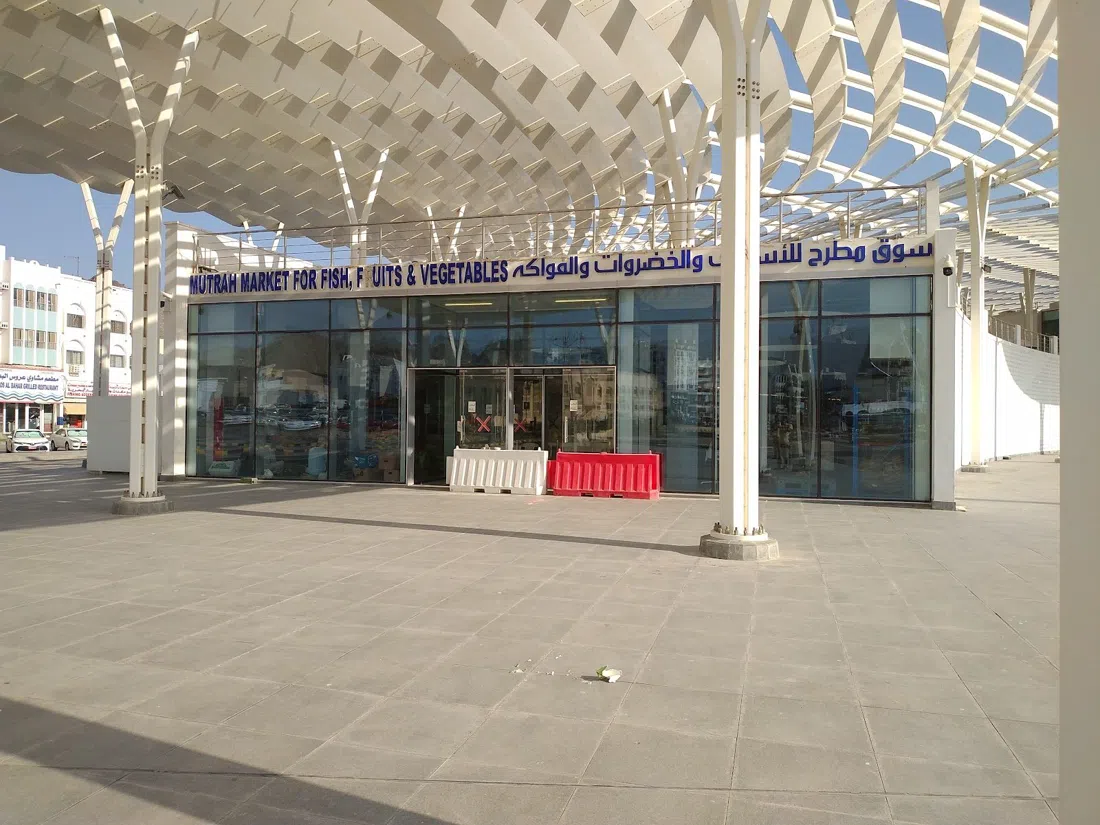
Entry is free, no booking, walk in. Fish is sold by the kilo and there are coffee shops and a rooftop restaurant upstairs. Go early, because by nine the best of it is gone. Groups are fine in principle but the halls are narrow and the floors are wet, so split a party of more than six and give the cutters room to work.
Planning the trip
Aim for the second half of October through to April. The clearest water tends to fall in late September to November and again in April and May, and island landings and camping are only legal 1 November to 30 April. Almost every boat leaves at 8am and is back between 1pm and 1.30pm, so build one activity per day and treat the afternoon as recovery.
Hire a car. Al Mouj and Seeb sit on the northern shore, Bandar Al Rowdha and Qantab on the south side, and Jebel Sifah is an hour south, and no public transport serves those docks at 7.30am. Sidab Sea Tours includes marina transfers, which counts for something if you would rather not drive at dawn.
Bring rials. Extra Divers Qantab prefers cash and adds 7% for other currencies and 3% on cards, and several operators quote permit fees separately. Budget OMR 3 per person per day for the reserve permit on top of any island trip.
On cost: a snorkel day runs OMR 8 to 30 per person, a two-dive island day OMR 30 to 59, a night camping on the reserve OMR 95 to 150, shared fishing OMR 100 to 125, and a private boat OMR 200 to 550 depending on size and hours. A whole-boat charter split between eight people is frequently cheaper than eight shared seats, so always ask for both numbers.
Base yourself near whichever coast you are diving: the northern shore for the Daymaniyats, the south side for wrecks and Bandar Khayran. Compare rates and locations on the Muscat hotel search, and for everything ashore between boat days, the forts, the corniche and where to eat after a 1pm landing, start with the Muscat guide.