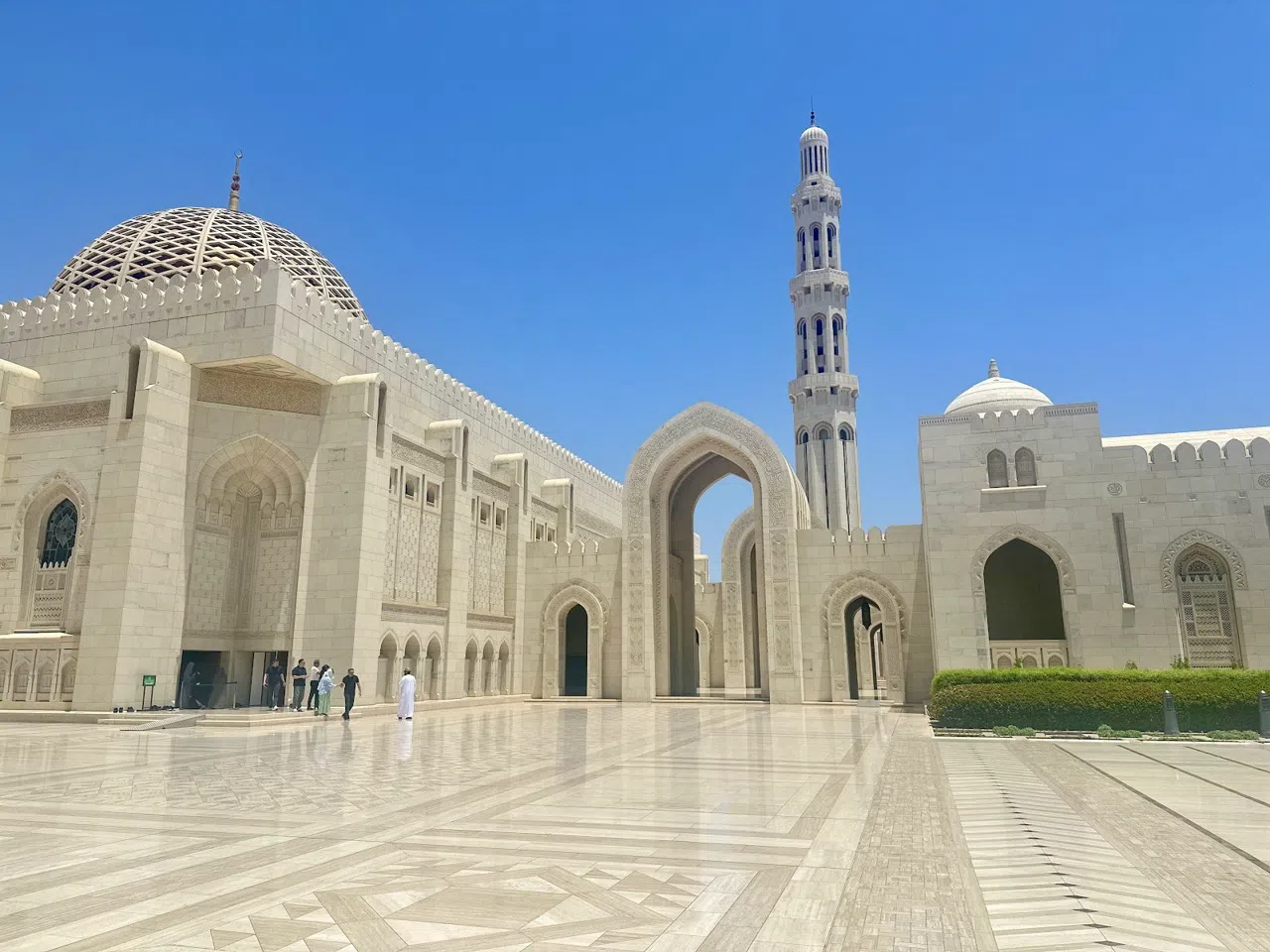

At nine in the morning the main prayer hall is quiet, which is the one thing photographs of it never convey. Light arrives sideways through the high windows and settles on grey and cream marble, and the loudest sound is a dozen pairs of socked feet and somebody's whispered question to a guide. By half past ten there are coach parties in the arcades and the room is a different place.
What you actually see
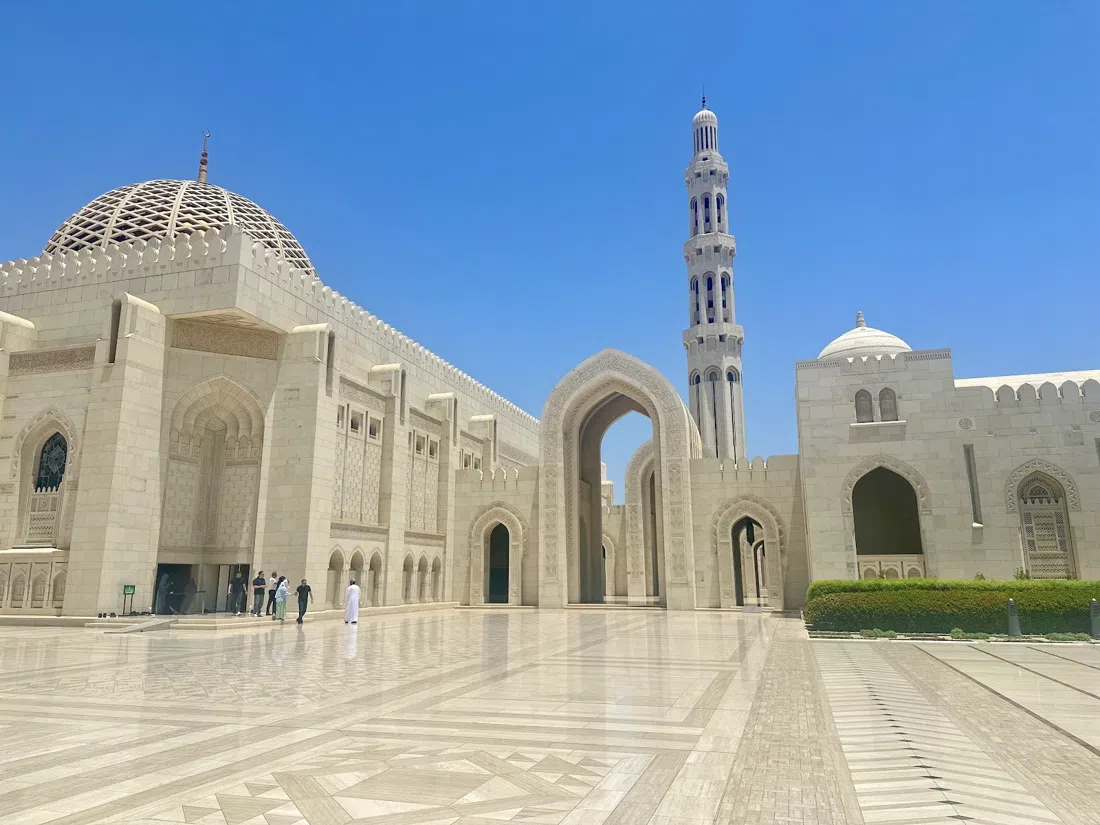
Sultan Qaboos Grand Mosque (Al Ghubra, on the main highway between the airport and the city centre) was commissioned by the late Sultan Qaboos bin Said, built through the second half of the 1990s and opened for prayer in 2001. That makes it young for a monument, which is the point of it: a deliberate statement of Omani craft and Islamic design made in one go, not an accumulation of centuries. Sandstone outside, five minarets, and a courtyard wide enough that the building only resolves into proportion once you have walked a third of the way across it.
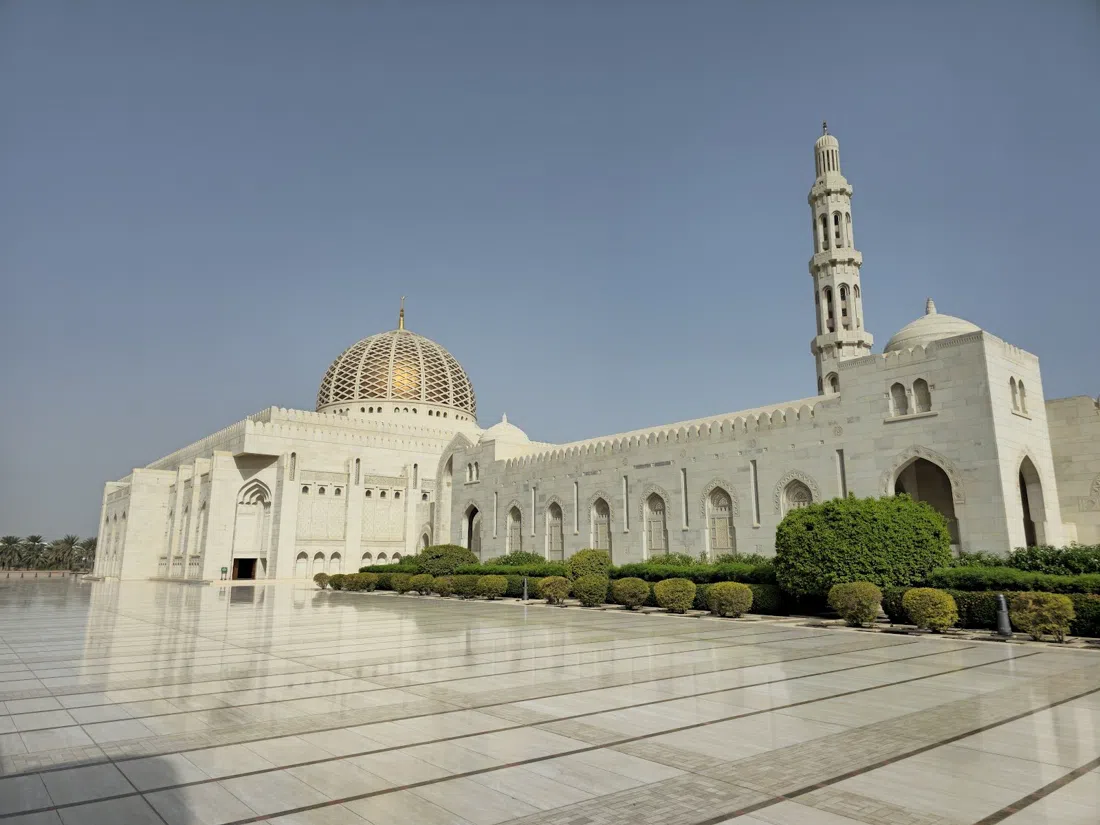
Inside, the main prayer hall is the set piece. A single hand-woven Persian carpet covers the floor in one piece, and a Swarovski crystal chandelier hangs from the central dome, with smaller ones ranged down the hall. Most people come away remembering the acoustics and the light rather than the inventory: a very large room, cool, dim at the edges, bright under the dome, and almost silent outside prayer times. Give the mihrab niche a minute for the tilework at close range, then look up in the long arcades outside. The ceiling panels run through a sequence of regional Islamic design styles, and they are more interesting than the courtyard selfie everyone is queueing for.
Do not skip the women's prayer hall. It is a fraction of the size, it has its own carpet and chandeliers, and because tour groups rarely route through it, it is usually the quietest room on the site. Allow a full hour and up to ninety minutes for the main hall, the women's hall and the arcades at a walking pace that does not feel rushed. Shorter than that and you have seen the carpet and nothing else.
The hour that decides the whole visit
This is a working mosque, and non-Muslim visiting is a narrow window: Saturday to Thursday, roughly 08:00 to 11:00, with the official site stating 08:30. It is closed to visitors on Friday, with no exceptions and no back door. Everything else about the day has to work around those three hours.
Arrive at opening, not twenty minutes later and not at ten. Two things happen as the morning goes on. The cruise and coach traffic builds, which is what the coach and car park on site is there for, and the temperature climbs, which matters because you cross open marble in bare feet or socks to get between buildings. From roughly 10:15 the arcades fill with large parties being briefed in several languages, and the main hall stops being quiet. At 08:30 you can stand in it almost alone.
There is no timed entry and no queue system in the conventional sense. The bottleneck is the dress check at the entrance, and what you are waiting for is the group ahead of you being sorted out there. Going early puts you in front of them.
Two rooms most visitors walk straight past
The Islamic Information Centre (inside the mosque compound, signed off the arcades) is the best thing on the site that nobody plans for. It is a cultural desk staffed to answer questions, it is free, and the coffee and dates are free too. It is informal and happy to take a tour group, but it works best in small clusters, because the value is in actually asking things, about prayer, about the dress code you have just complied with, about Omani custom versus the assumptions you arrived with, and getting a straight answer from an Omani who does this all day. Fifteen minutes here is worth more than another lap of the courtyard.
The Sultan Qaboos Grand Mosque Library (same compound) is a genuine quiet study space rather than a sight, and it suits individuals and very small groups only. It is not a coach stop. The hours have a real catch in them: the library runs Sunday to Thursday, roughly 08:00 to 14:00 and again 16:00 to 21:00, and it is shut on Friday and Saturday. So on Saturday, one of the mosque's own visiting days, the library is closed. If it is on your list, come on a Sunday-to-Thursday morning.
Dress code and what staff actually check
The dress code is enforced at the entrance by staff, for every person in the party, and it is not negotiated. Women need ankle-length clothing, covered arms to the wrist, and hair covered with a scarf. Men need long trousers and sleeves; shorts and vests will stop you at the gate. Shoes come off before the prayer halls, so socks are worth having.
If you turn up short, abaya and scarf hire is available for about OMR 2.5 (roughly 6.50 USD) and they hold an ID as the deposit, so bring something you are comfortable handing over for an hour, a driving licence rather than your passport if you have the choice. Do not plan around hire as the default when a party of several women is arriving at the same time; wearing your own long sleeves and carrying a scarf is faster and costs nothing.
Two other things are worth knowing. The mosque is free, and it is meant to be: a brief OMR 8 plus tax ticket trial in January 2025 was withdrawn, so if anyone quotes you an entrance fee, that is their fee and not the mosque's. And it remains a place of worship, so keep voices down inside, ask before photographing people, and expect to be moved along politely if prayer time approaches.
Turning up versus going with a guide
You can drive or taxi in, park, walk through the dress check and see everything for nothing. Licensed multilingual Omani guides are available at the gate if you want the building explained once you are already there, which is the cheapest way to get context without committing a whole morning to an itinerary.
The case for booking a private guided half-day instead is logistics rather than access. Muscat is strung out along the coast, the mosque shuts at 11:00, taxis are unmetered, and a driver-guide collapses four stops into one morning without you negotiating a fare four times. Private half-day city tours taking in the mosque start from 100 USD per person and run seven days a week. The mosque does not, so if you are looking at a Friday, check what the Friday version of the itinerary actually includes, because it cannot include the interior.
The argument the other way is just as plain. If you are two people staying in the city, happy with a taxi and interested in sitting in a quiet room for an hour, you do not need a guided tour to do this well. Groups, cruise passengers on a fixed window, families with limited time and anyone who wants the history delivered properly get the most out of a private guide.
A second mosque five minutes away
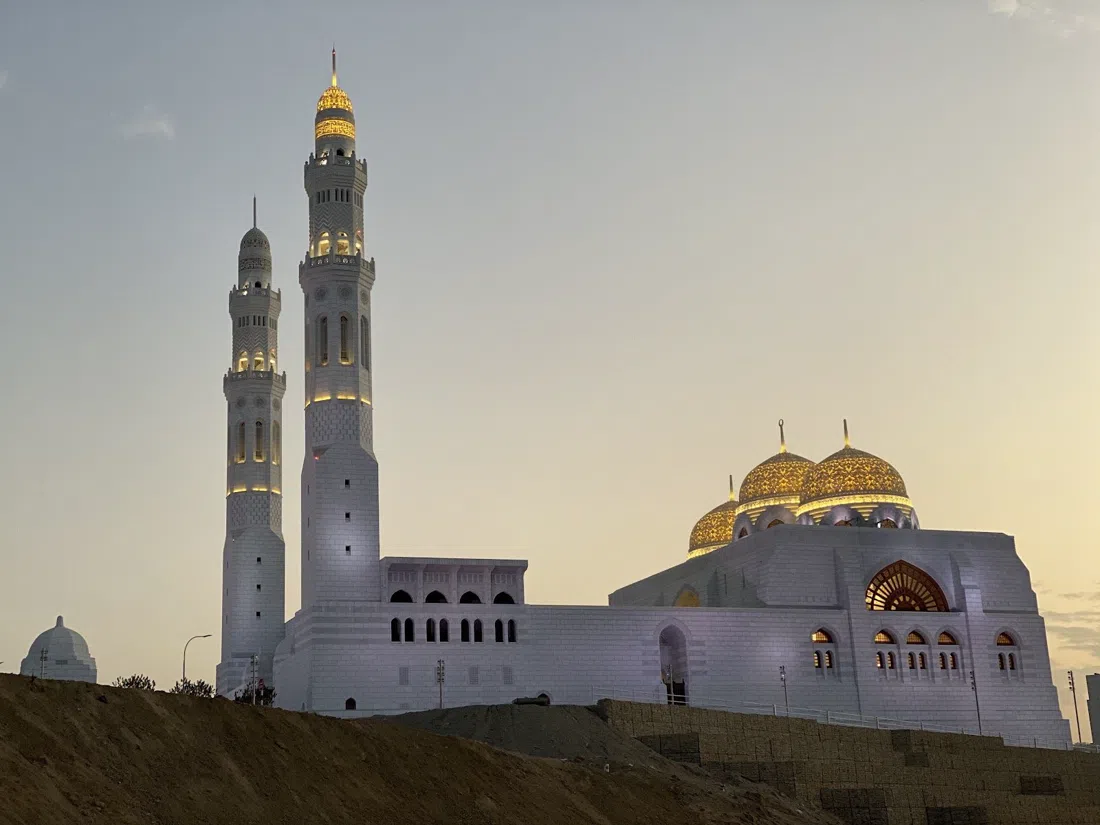
Mohammed Al Ameen Mosque (Bawshar, five minutes from the Grand Mosque) was completed in 2014 and opens to non-Muslim visitors on the same morning window. Small groups are fine, and there is no coach infrastructure, which is exactly its appeal. When the Grand Mosque is thick with cruise parties, this is the obvious second stop: the same discipline of white marble, light and proportion, at a scale you can take in without a crowd between you and it. Twenty minutes, free, and almost nobody there.
What fills the day after eleven
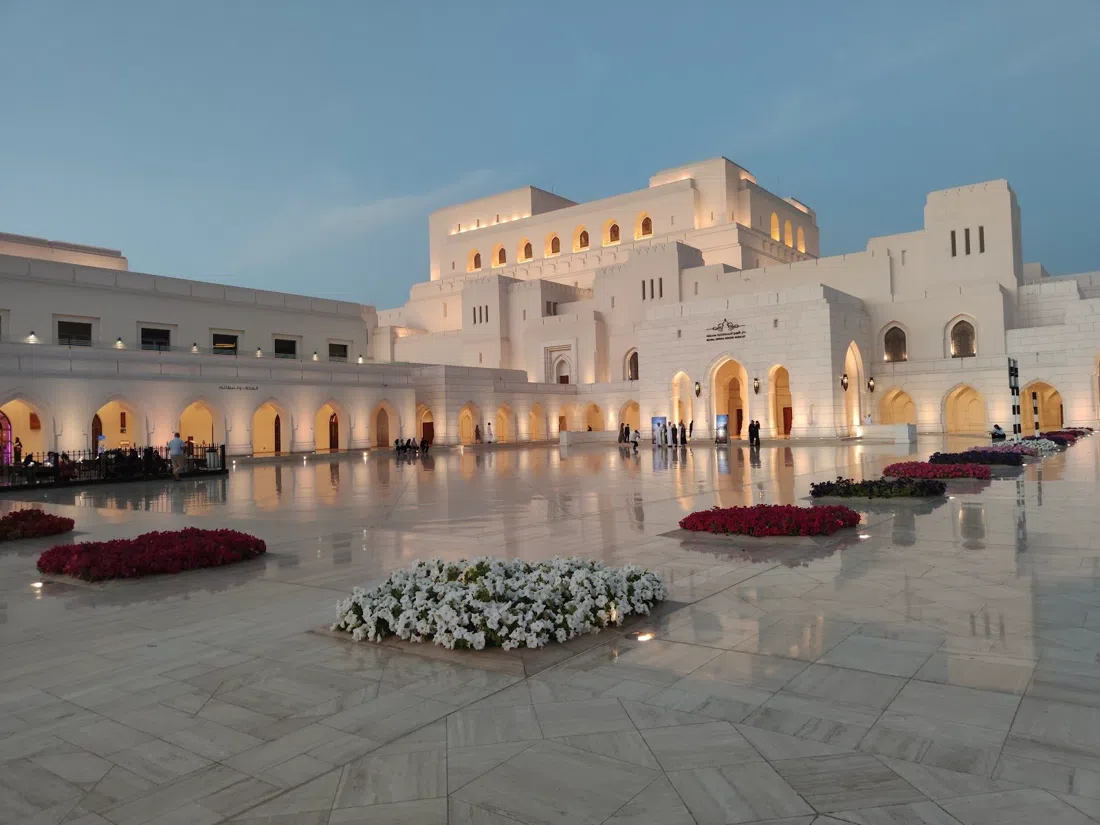
The Royal Opera House Muscat (Shati Al Qurum) is the standard afternoon pairing, and it earns the slot. Daytime house tours leave every 20 minutes, and it is open Saturday to Thursday 08:30 to 17:30 and closed Friday, so it covers precisely the hours the mosque does not. Expect about OMR 3.15 for the building and up to OMR 4.2 including the galleries, with a discounted rate around OMR 2.1 per head for groups of ten or more. Tickets at the box office, guides in English and Arabic. It is explicitly group-friendly, which the mosque's arcades are not.
National Museum of Oman (Old Muscat, opposite the palace) is the best single explainer of what the mosque's craftsmanship actually means: the metalwork, the woodcarving, the maritime trade that paid for the taste. OMR 5 for foreign visitors, OMR 2 residents, OMR 1 for Omani and GCC nationals, free for students and visitors with disabilities, and certified guides enter free. The hours are the useful oddity: Saturday to Thursday 10:00 to 17:00, but Friday 14:00 to 18:00. That makes it the fix for a Friday, when the mosque is shut.
Amouage Manufacture and Visitor's Centre (Seeb, airport side of the mosque) runs booked group tours Sunday to Thursday and closes Friday and Saturday, so pre-book, because walk-ins are not guaranteed. The tour itself is free; the bottles are luxury-priced and nobody pretends otherwise. Allow one to two hours. It is the one stop in town that explains frankincense as a business rather than a museum label, which is a decent counterweight to a morning of monumental architecture. For planning the rest of the week, our Muscat guide covers the coast and the interior.
Lunch within reach of the gate
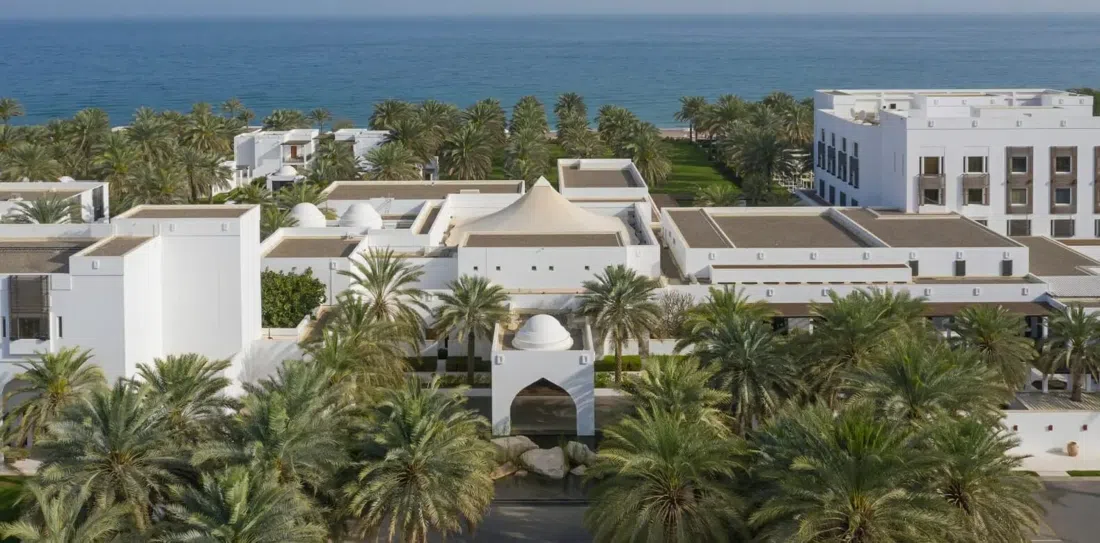
The Chedi Muscat (Al Ghubra) is the nearest genuinely good lunch to the mosque, on the same side of town, and the natural place to sit out the heat after an 08:00 start. Restaurants take groups by reservation, but it is a guests-first resort, so book a table rather than turning up, and expect premium hotel prices. If you would rather be in a hotel's orbit for the whole trip, compare rates with a Muscat hotel search.
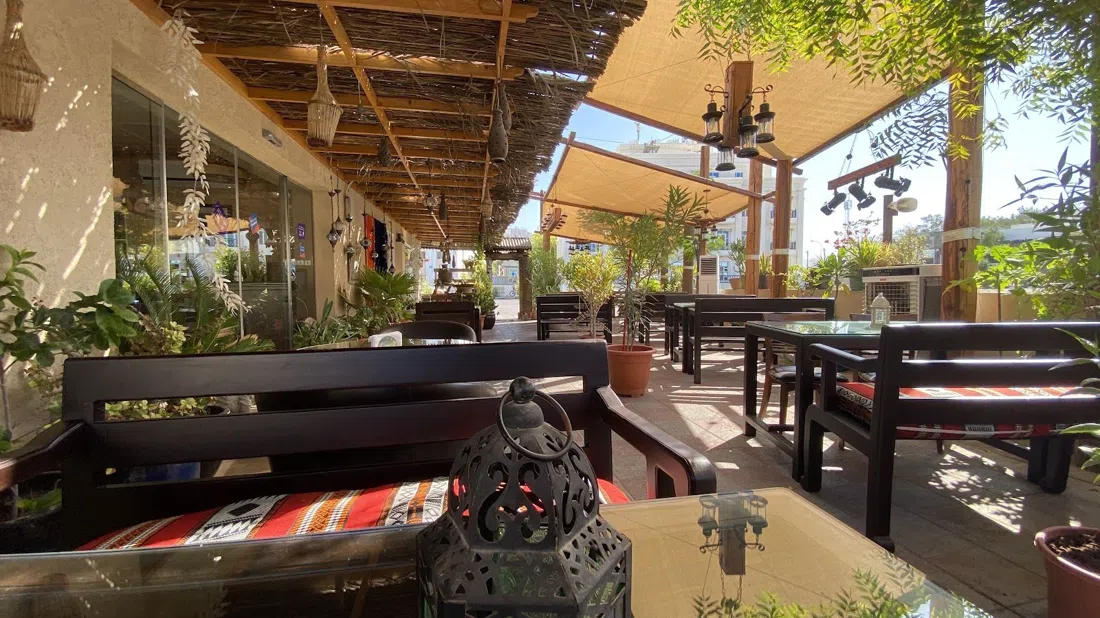
Kargeen Caffe (Madinat Qaboos) is the better answer if you want Omani food rather than hotel food. Open since 1997, a short hop from the mosque, mid-range, and built for large parties: the garden sections regularly host big family gatherings, so book ahead for a group. Order shuwa or harees. Long hours, roughly 07:00 to 01:00, make it flexible either side of a morning visit.
Old Muscat and Mutrah in the same afternoon
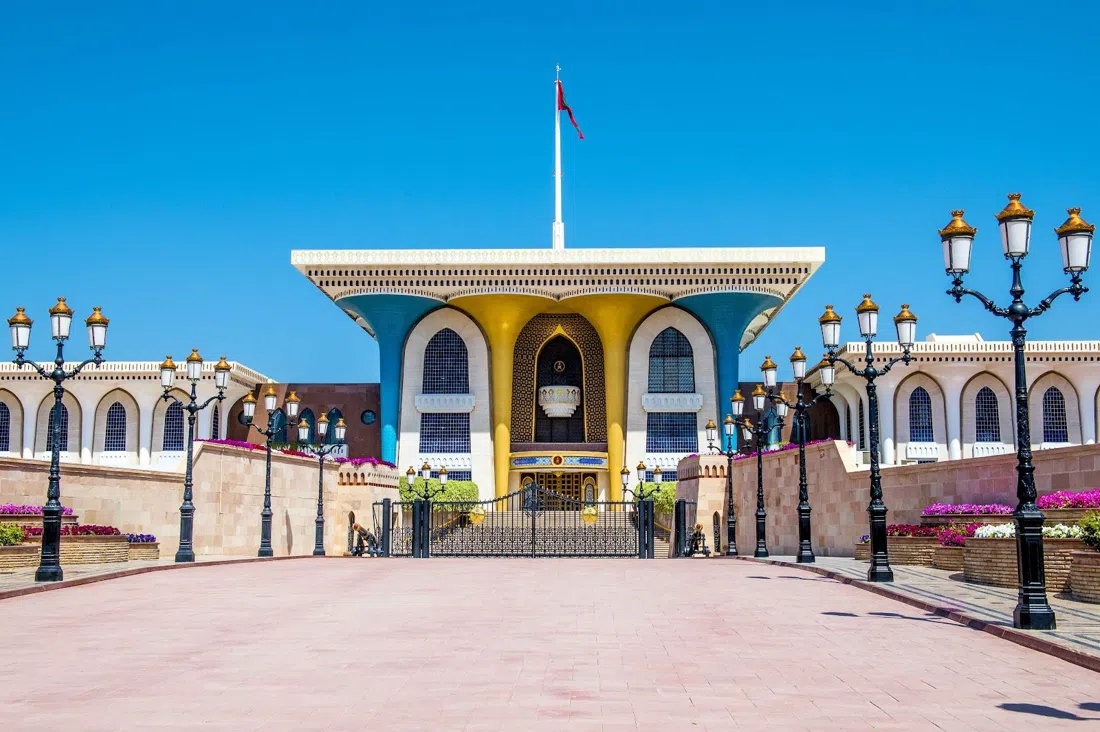
Al Alam Palace (Old Muscat) has no ticket and no door policy because nobody goes past the gates. You photograph the symmetrical gate from the plaza, and because it is exterior-only it is always accessible, which makes it the reliable stop when the timed attractions have shut. Bait Al Zubair (Old Muscat, inside the walls) is the human-scale counterweight to the mosque: a privately founded heritage house, around OMR 1 to 2 for foreign adults, under-tens free, discounted student and group rates, closed Friday.
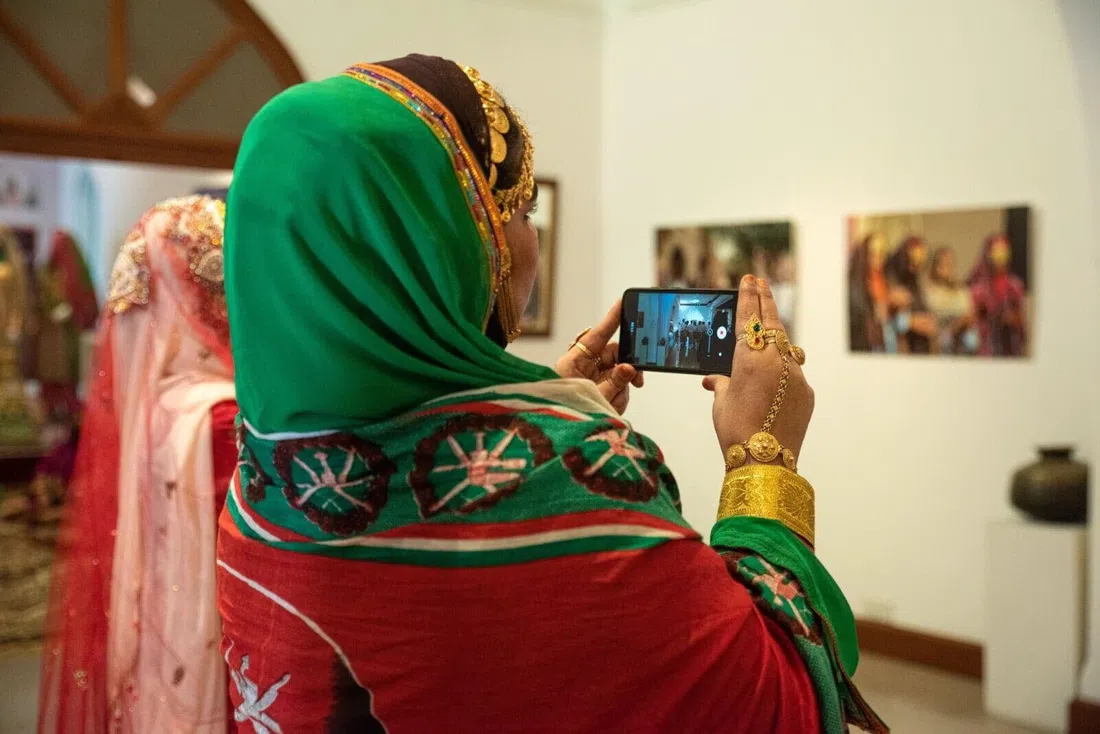
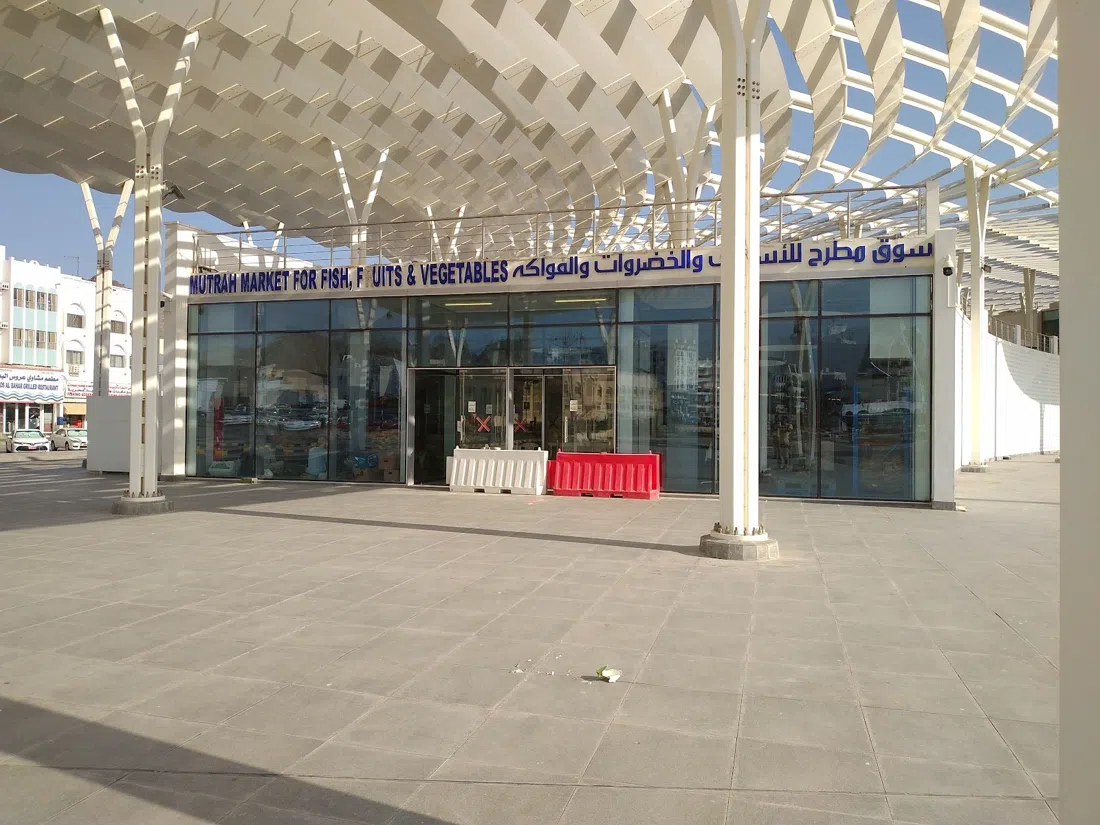
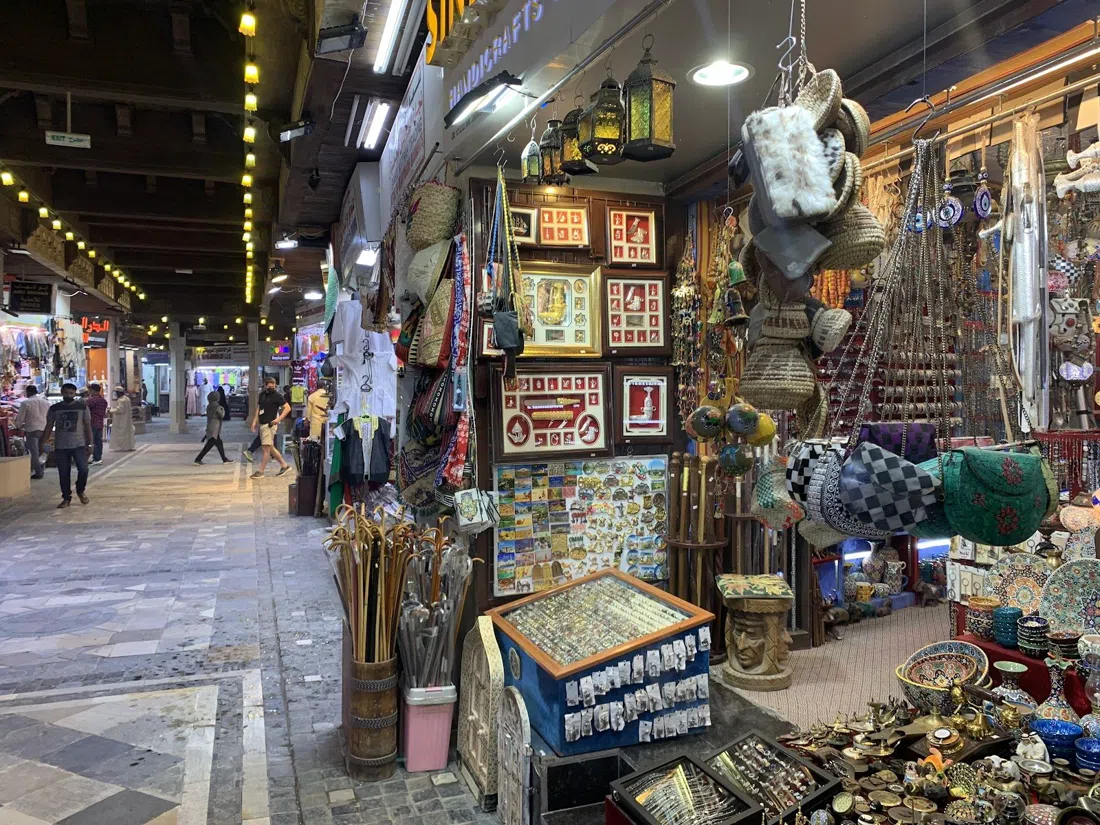
Mutrah Souq (Mutrah, off the corniche) opens roughly 08:00 to 13:00 and again 16:00 to 22:00, with Friday mornings shut, so it slots neatly either side of the mosque's 11:00 cut-off. The lanes are tight: couples and small groups thread through, large ones fragment within two minutes. Free to walk, haggle for goods. Mutrah Fish Market (Mutrah corniche) was completed in 2017 and is a serious piece of contemporary Omani architecture as well as a working market. Go early, because both the fish and the atmosphere thin out by late morning. It is public and tolerant of groups, but the mornings belong to traders rather than tourists.
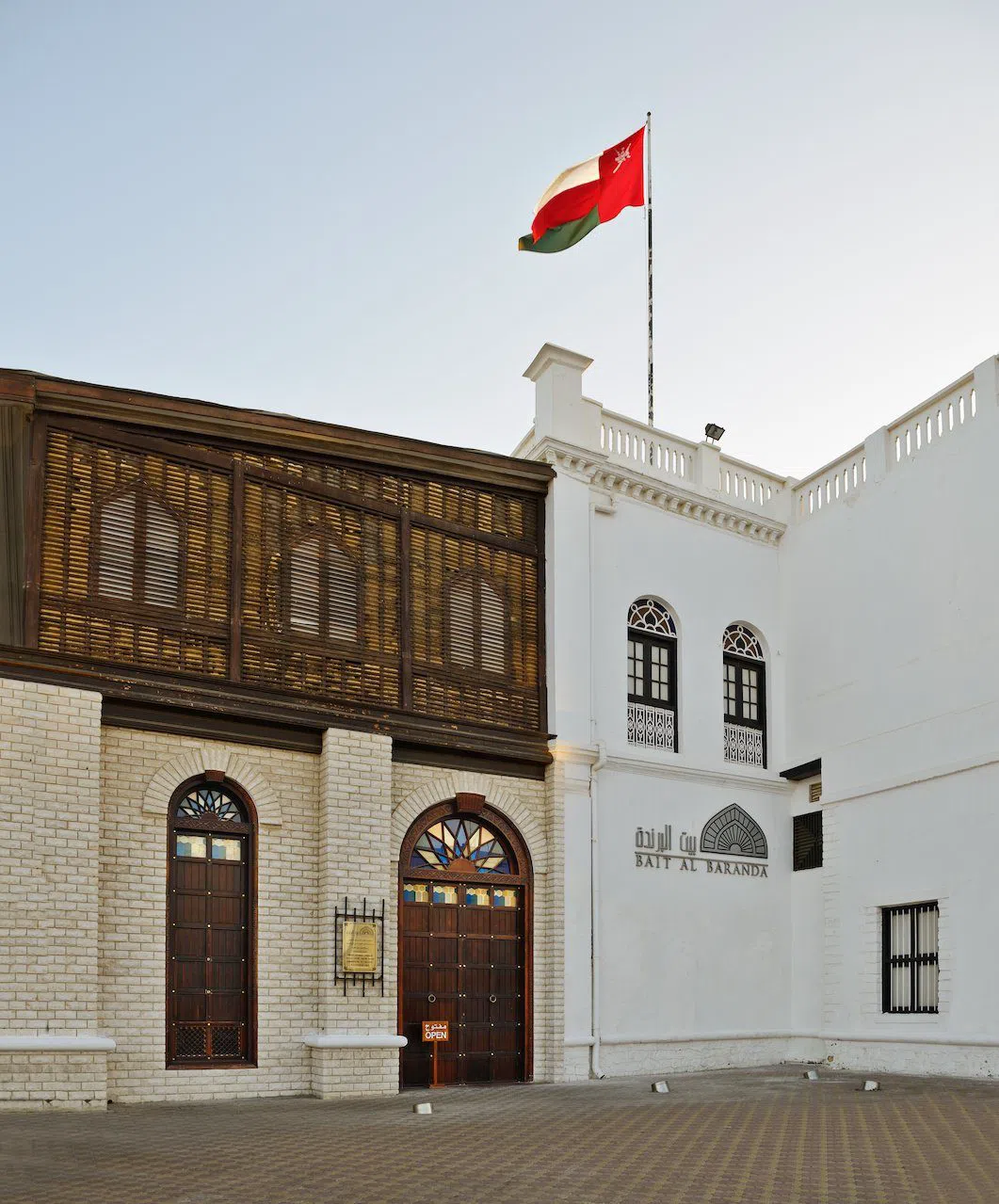
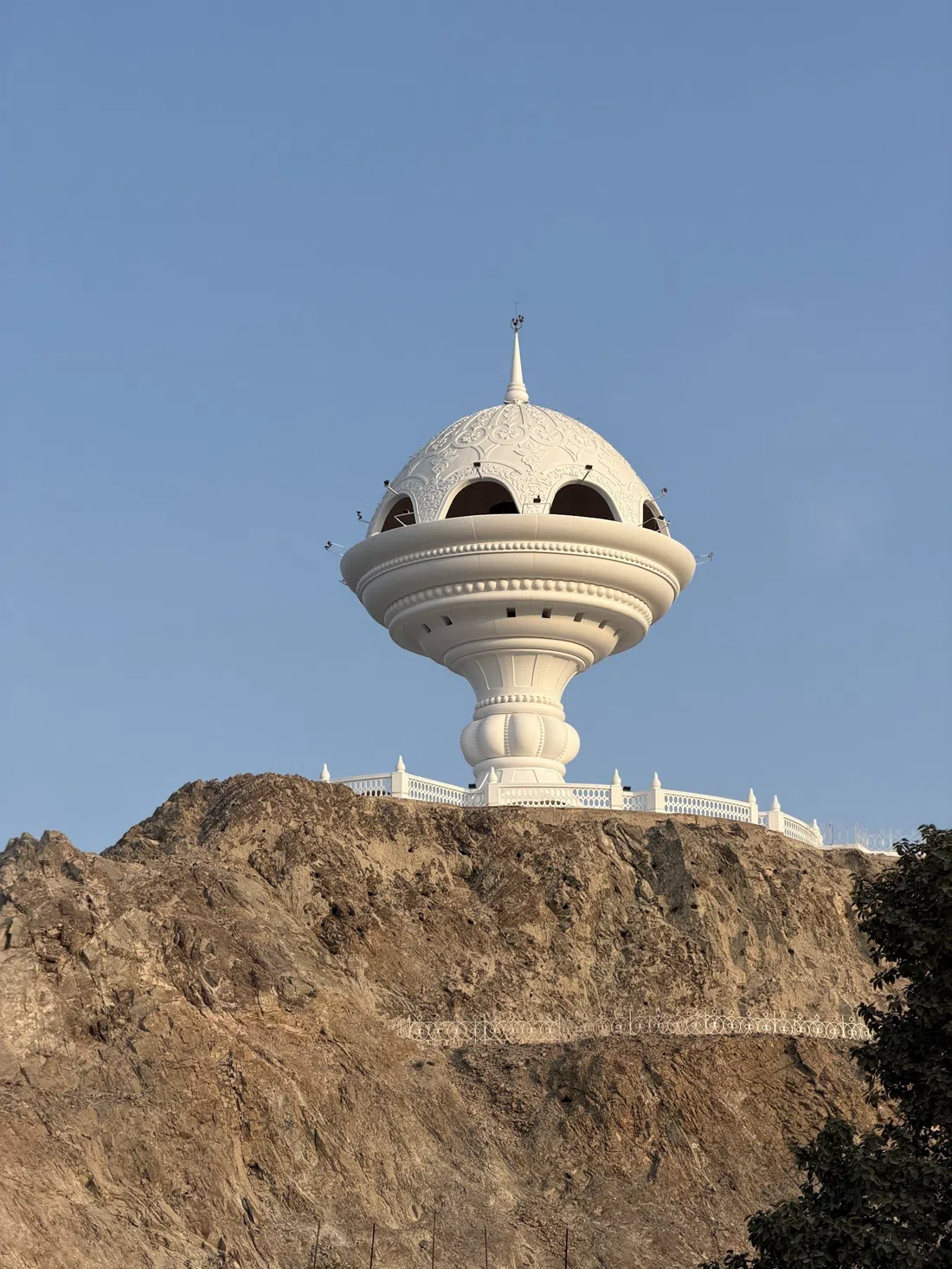
Two cheap add-ons close the loop. Al Riyam Park and Incense Burner Monument (Riyam, east along the corniche) has the best harbour panorama in the city and costs nothing: ten minutes, parking near the entrance, no restriction on groups. One caveat is that the old commercial entertainment zone has been removed and is being redeveloped, so come for the view and the hill paths rather than for facilities. Bait Al Baranda (Mutrah) is a former American Mission and British Council building, around OMR 1 for adults, with split hours of roughly 09:00 to 13:00 and 16:00 to 18:00, closed Friday. Quiet, cheap, and skipped by almost every itinerary.
Is it worth it
Yes, and without much qualification, on the condition that you go at opening and give it ninety minutes rather than twenty. The mosque rewards sitting still in it. Arrive at 10:30 with a coach ahead of you and you will get a crowded photograph of a carpet and wonder what the fuss was.
It suits almost everyone: architecture-minded travellers, families with children old enough to be quiet indoors, cruise passengers with one morning ashore, and anyone curious about Islam who will use the Information Centre. It suits large groups least well in the arcades and best at the entrance, where staff are used to processing parties. It does not suit anyone unwilling to dress to the code, which is enforced politely and completely, and arguing about it is not a plan.
Best time to go
Time of day decides most of it: be at the entrance for opening, between 08:00 and 08:30. The light is low and directional through the high windows, the halls are near-empty, and the marble underfoot has not yet taken the day's heat. Anything after 10:00 is the busy version of the same building.
Day of week: Saturday to Thursday only, and Friday is out. If your single free day is a Friday, build it around the National Museum's Friday 14:00 to 18:00 slot, the palace plaza, the harbour viewpoint and the souq from 16:00, then see the mosque on another morning. Avoid Saturday if the library matters to you, and keep the Amouage visit and the library to Sunday through Thursday.
Season: this is a hot, dry city, and the open courtyard is unshaded. From roughly October through April the morning window is genuinely pleasant. Through high summer, treat 08:00 as compulsory rather than advisable, and plan an indoor afternoon. Ramadan shifts visiting arrangements and prayer timings every year, so confirm the window directly before travelling rather than trusting last year's note, and expect reduced hours.
Practical notes
Getting there: the mosque sits on the highway in Al Ghubra, about 20 minutes from the airport and 25 to 30 from Mutrah, and there is a large free car park including coach space. Hire cars are easy and the roads are good. Orange-and-white taxis are unmetered, so agree the fare before you get in, and expect to pay more than you would in a metered city. A driver for the morning, arranged through your hotel, is usually the cheapest sane option if you are visiting two or three stops.
Money: the rial is a strong currency, so sums look small and are not. Carry small notes for the souq and for abaya hire, and remember the hire deposit is an ID rather than cash. Cards work at the museums, the opera house and hotels; the souq and taxis are cash-first.
Budget for one person on a mosque morning: entry free, abaya and scarf hire about OMR 2.5 if needed, opera house tour OMR 3.15 to 4.2, National Museum OMR 5, heritage houses OMR 1 to 2 each, lunch mid-range at a garden restaurant or premium at a resort. A full day of sightseeing without a private driver comes in under OMR 15 of admissions.
What to bring: socks, a scarf for women whether or not you intend to hire one, water, and shoes you can slip off repeatedly without sitting down. Leave the tripod and the drone; this is a place of worship, and so is the second mosque down the road.