The Muscat issue
Fifteen minutes at the gates of Al Alam Palace, Muscat
The palace gates are as far as any visitor goes, so plan the Old Muscat morning around what sits opposite them.

By Bram VisserForts, wadis and the long way round

Nobody gets inside Al Alam Palace, the ceremonial palace of Sultan Haitham bin Tarik in Old Muscat. The boulevard and the gate plaza in front of it are public and free, with no permit and no booking. The stop takes 15 to 20 minutes.
What you see from the gate plaza
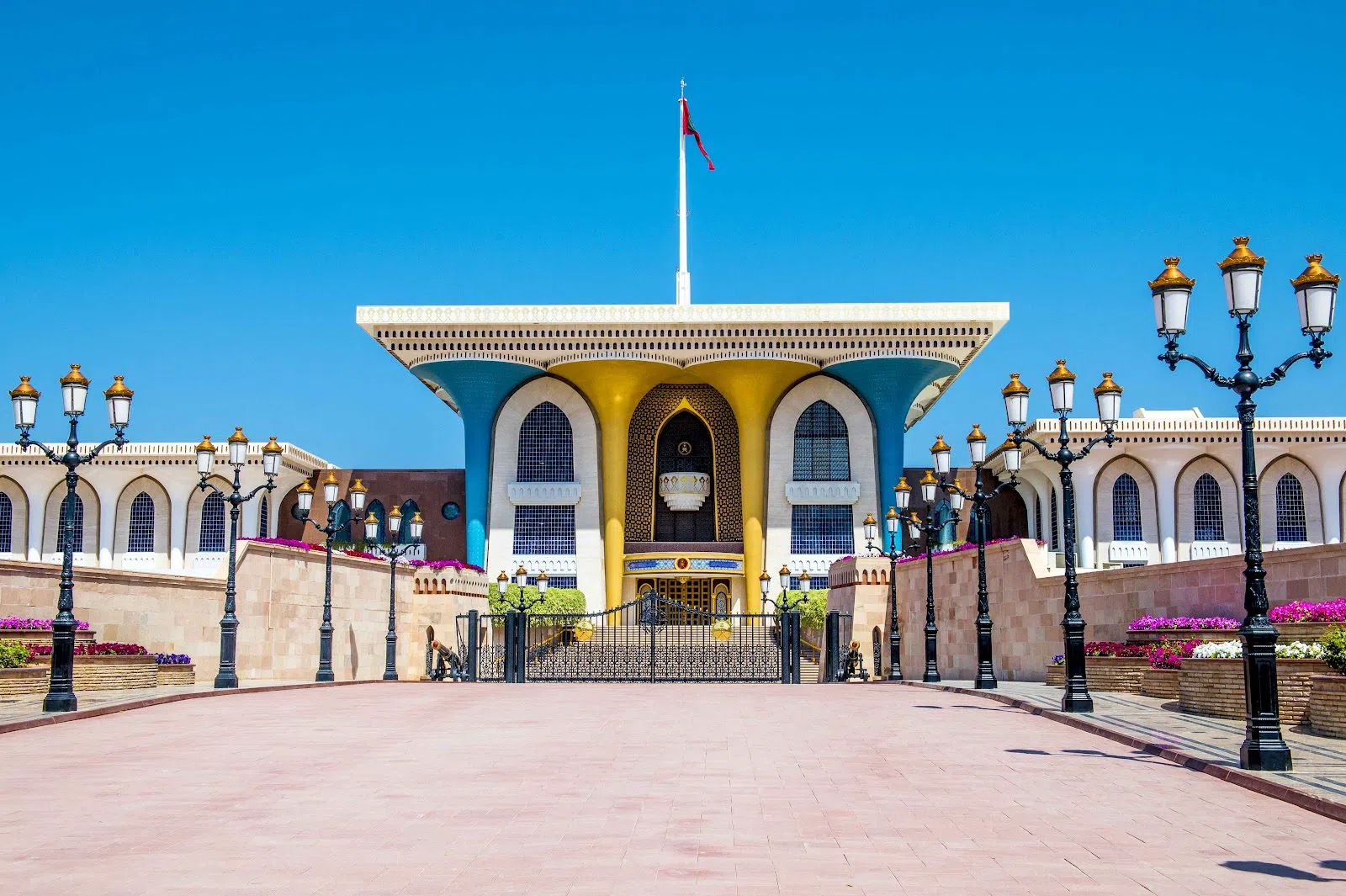
The facade is a ceremonial white arcade fronted by flared blue-and-gold trumpet columns with gold mushroom capitals. A royal flagpole flies above it, a manicured palm boulevard runs down to the gates, and bare brown cliffs and fort walls rise behind the roofline.
You photograph the facade from the street and leave. Treat it as one stop inside a wider Old Muscat circuit. The plaza takes full coach groups without a permit or a booking.
Al Jalali Fort guards the palace's eastern flank in Old Muscat, a squat Portuguese fort welded to a sheer black rock headland above the old harbour. Crenellated round towers carry a flag over the battlements, and a long exposed stone stairway climbs the cliff face. It is the shot that makes the palace photograph work.
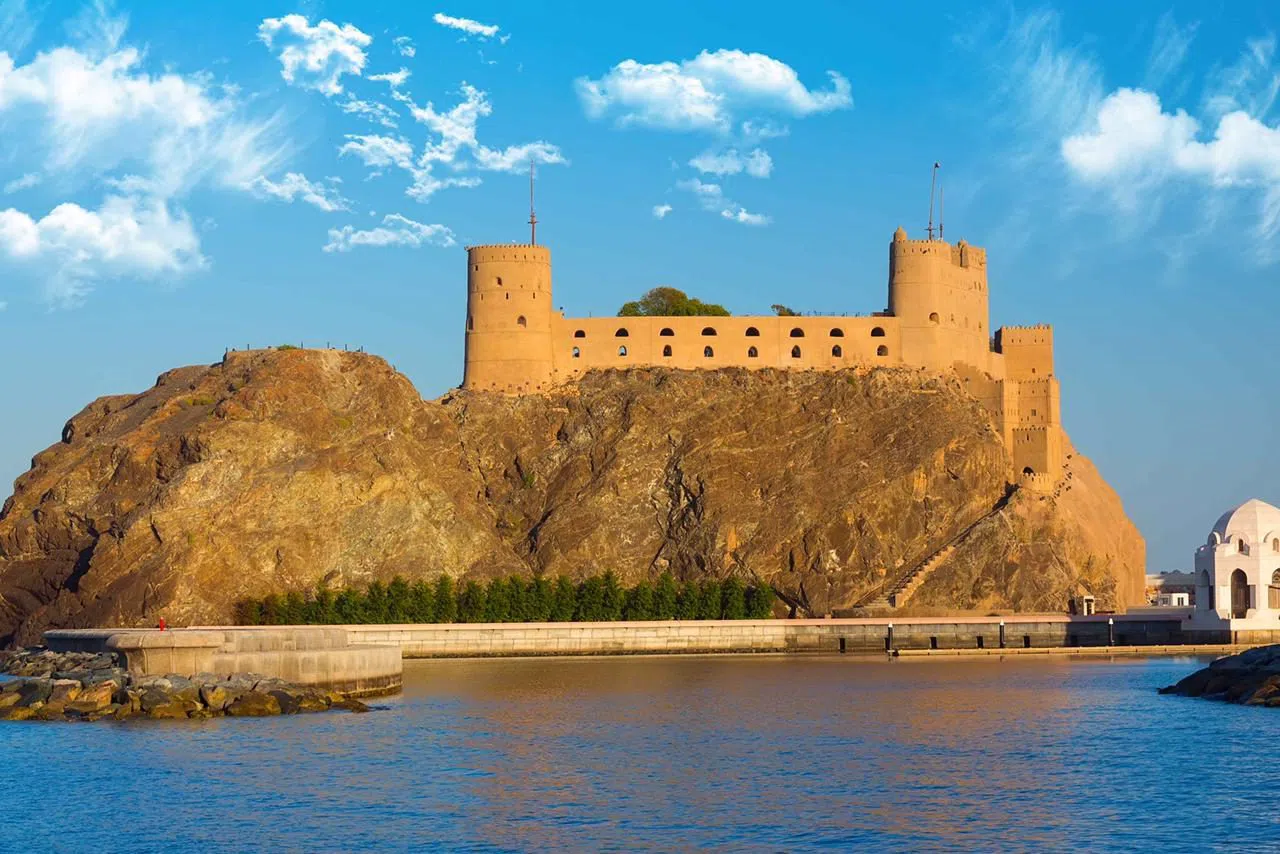
The interior is permit-only through the Ministry of Heritage and Tourism and effectively unavailable to tourists. Do not book anything that promises you inside it. The viewpoints you shoot it from are public and unrestricted.
Plan your Muscat trip
Live prices from our booking partners.
Free cancellation on many rooms. We may earn a commission when you book.
Across the square from the gates
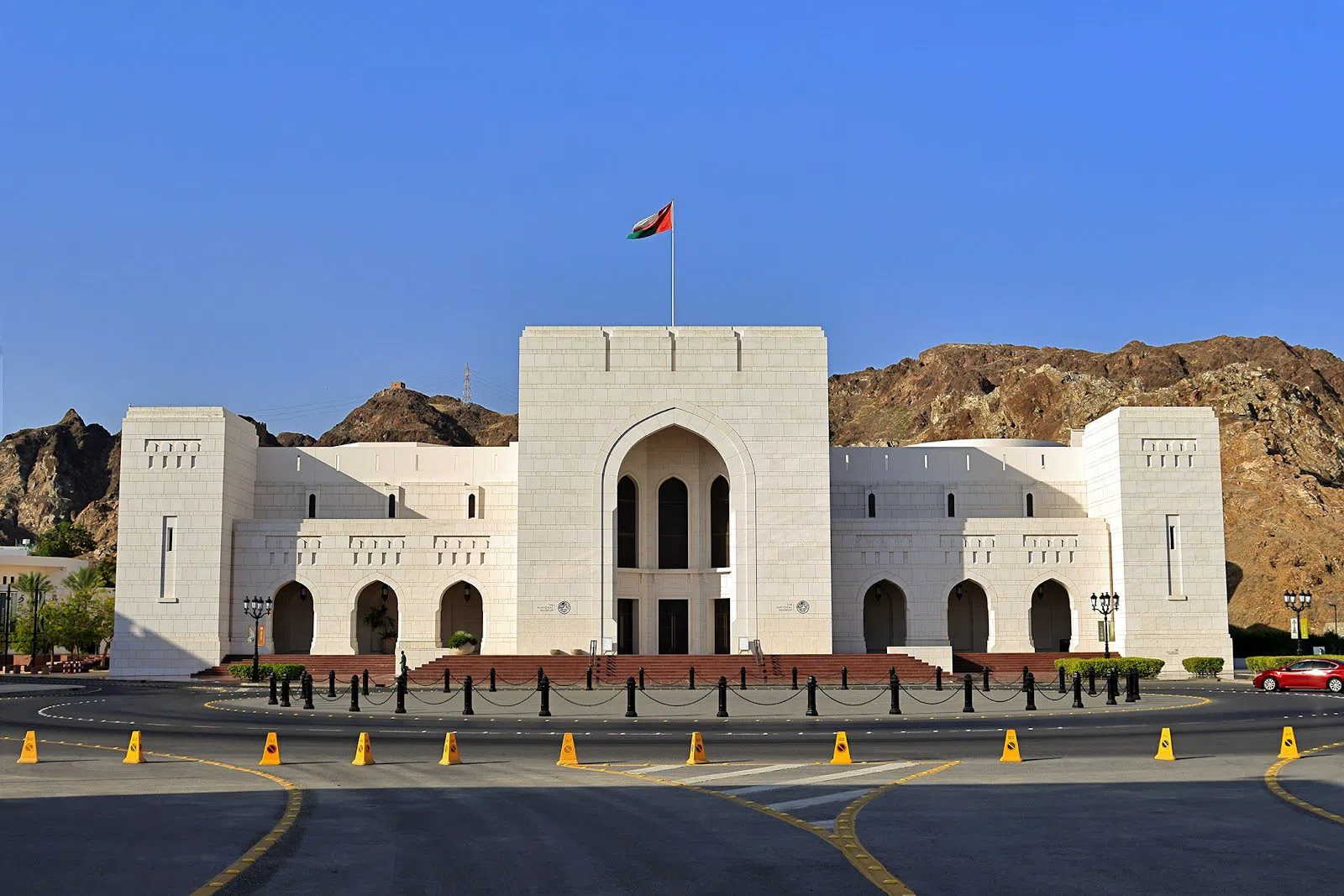
National Museum of Oman is directly opposite the palace gates in Old Muscat, a pale limestone cube with deep-cut geometric timber screens and oversized brass-studded Omani doors. Galleries are lit low around maritime instruments, and an open-storage restoration lab sits behind glass. It is the single best reason the trip to Old Muscat is worth making.
Entry is RO 5 for a non-resident adult and RO 2 for a resident. Omani and GCC nationals pay RO 1. Students and visitors with disabilities enter free, as do certified tour guides. Guided tours in several languages assemble in the Land and the People gallery, and private family tours can be arranged.
The museum is the only air-conditioned refuge on the square, with lifts, Arabic Braille and prayer rooms.
Bait Al Zubair Museum is a five-minute walk from the palace: five whitewashed Omani townhouses around a courtyard garden with a running falaj channel and a miniature mud-brick village model. Indoors, wall racks hold silver khanjar daggers and embroidered regional dress. It is the best place in the country to understand Omani dress, jewellery and weaponry.
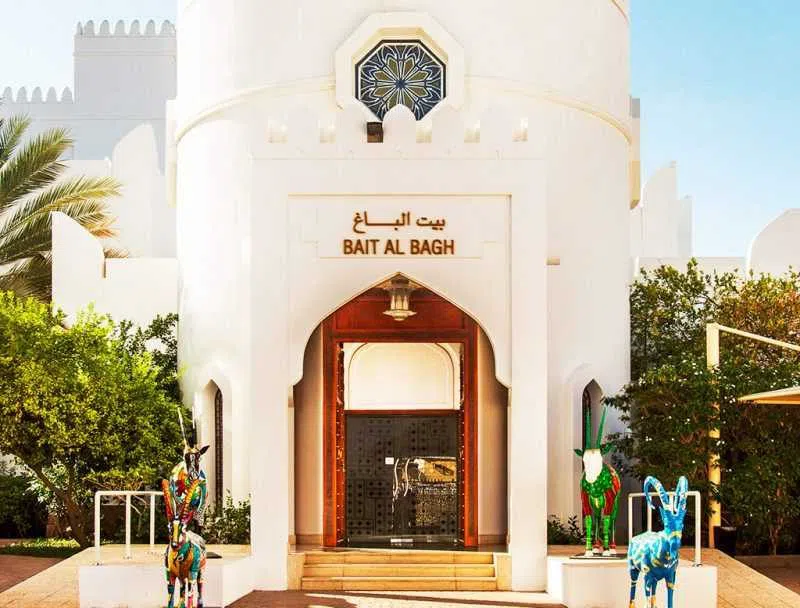
Adult entry runs RO 1 to RO 3 and children go free. Published rates differ by source, so confirm at the desk. The museum closes on Fridays. Ring or email ahead; the rooms are domestic-scale and fill quickly.
A royal interior you can walk into
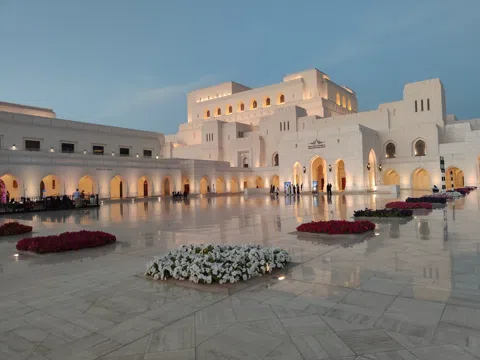
Royal Opera House Muscat was commissioned by the royal court and, unlike the palace, it lets you in. Honey-coloured Omani limestone arcades ring a formal courtyard. Inside sit carved teak, marble and brass, a timber-panelled auditorium ceiling and retractable stage machinery.
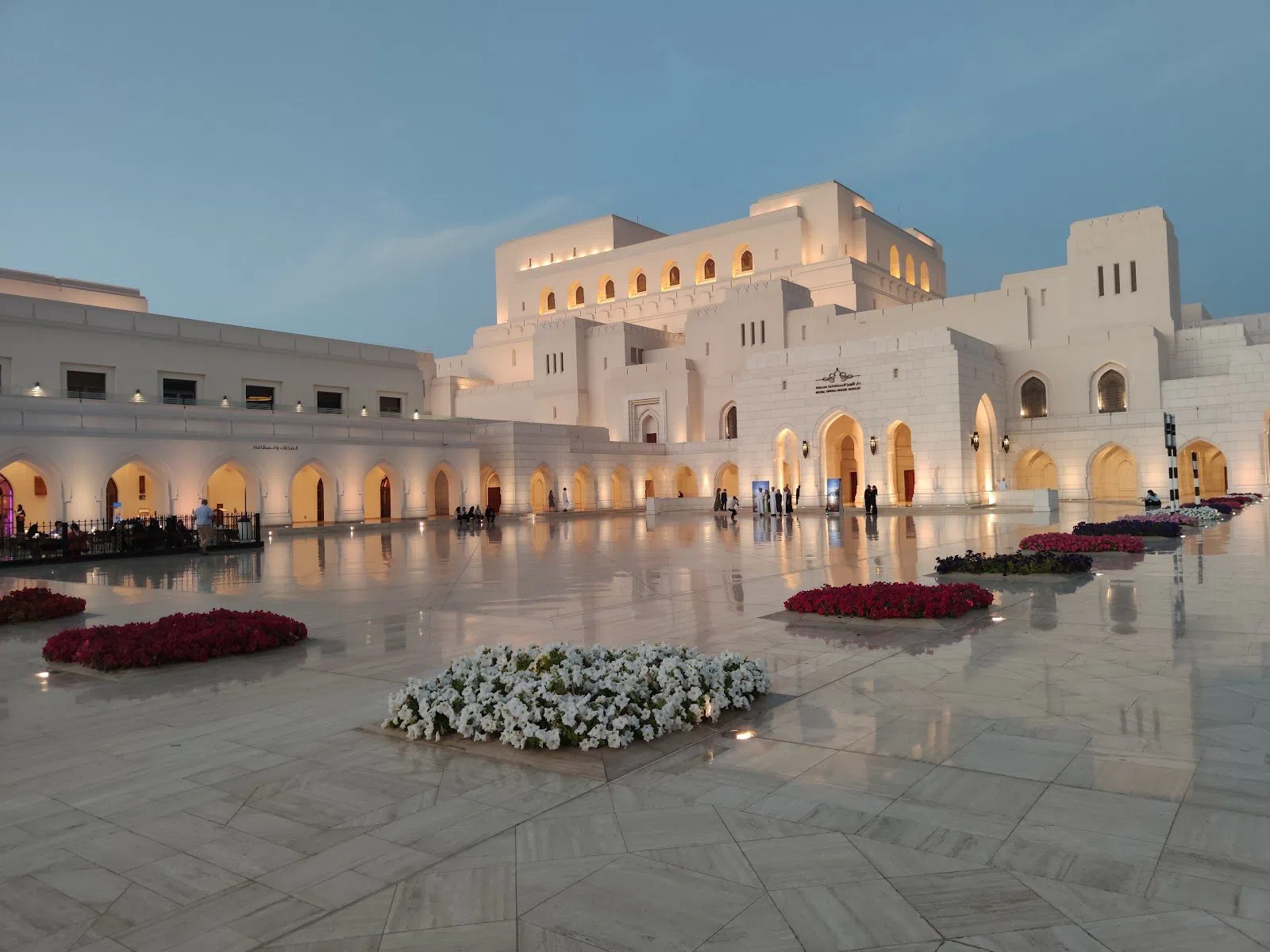
House tours leave every 20 minutes in English and Arabic. They run Saturday to Thursday, 08:30 to 17:30, subject to auditorium availability. Adult admission is RO 3.15 and a child is RO 1.05. Groups of 10 or more pay RO 2.10 each, and a private tour is RO 7.35 per person. Buy at the box office.
Down the coast road to Mutrah
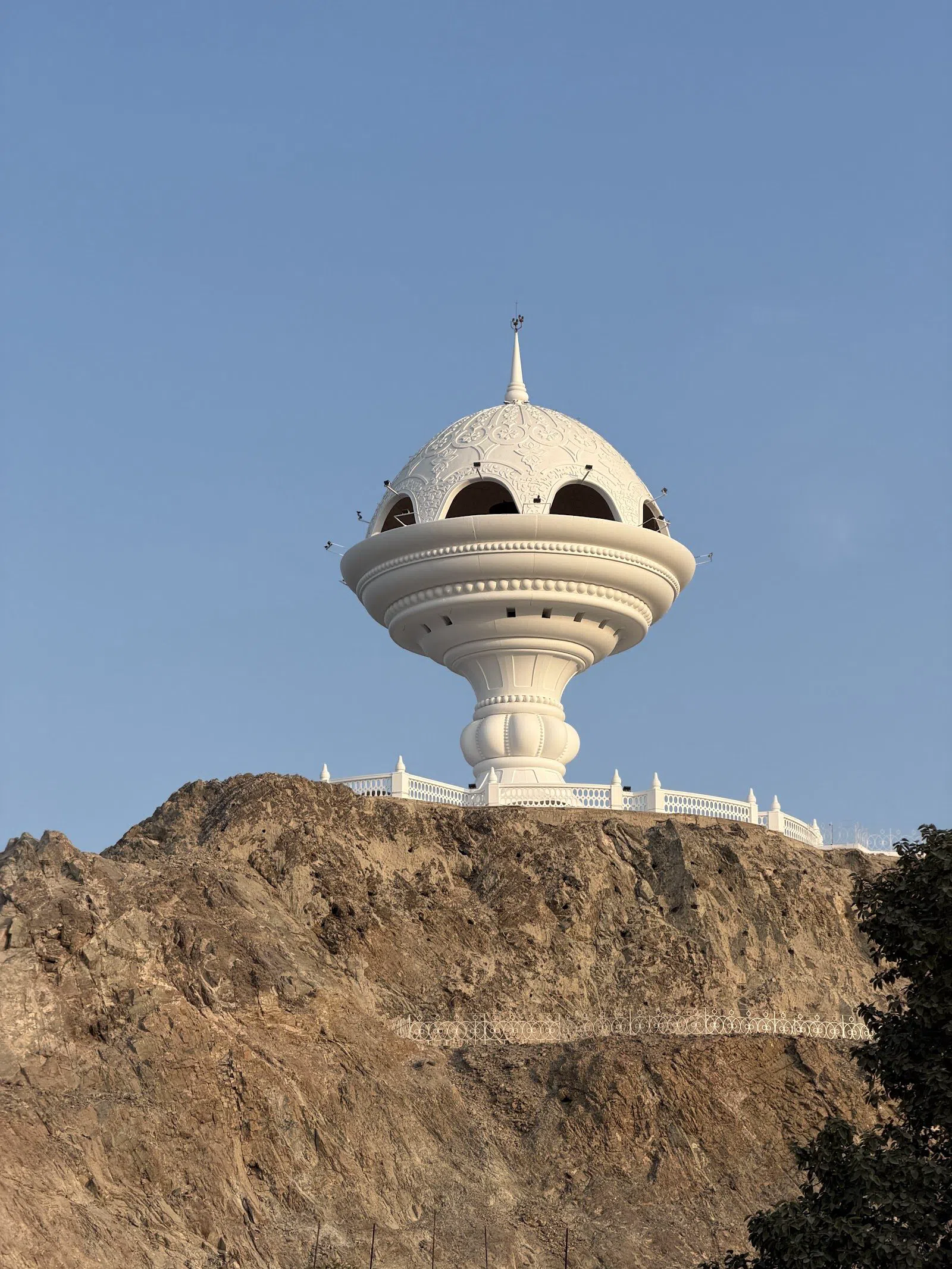
Al Riyam Park and Incense Burner Monument is the panorama stop on the road between Old Muscat and Mutrah. A colossal white Omani censer stands on a bare hilltop above the coast road, with shaded picnic shelters and playgrounds on the slope below and the Gulf of Oman beyond. You view the censer from the park. Entry is free and unticketed, and a cable-car station is being built behind the park.

Mutrah Corniche is three kilometres of red granite promenade with domed shade pavilions. White merchant houses with carved wooden balconies line one side, moored dhows and fort-topped crags the other. Walking it costs nothing and access is unrestricted. Paid orange-signed parking bays apply at peak times Sunday to Thursday.
Mutrah Souq (Al Dhalam) opens off the corniche through an ornate gilded gateway. The lanes run as a warren under a carved wooden fretwork ceiling pierced by shafts of daylight, with hanging brass lanterns, frankincense smoke and stalls of silver khanjars and pashminas. It is one of the oldest working marketplaces in the Arab world and the standard second half of a palace visit. Browsing is free and haggling is expected on everything.
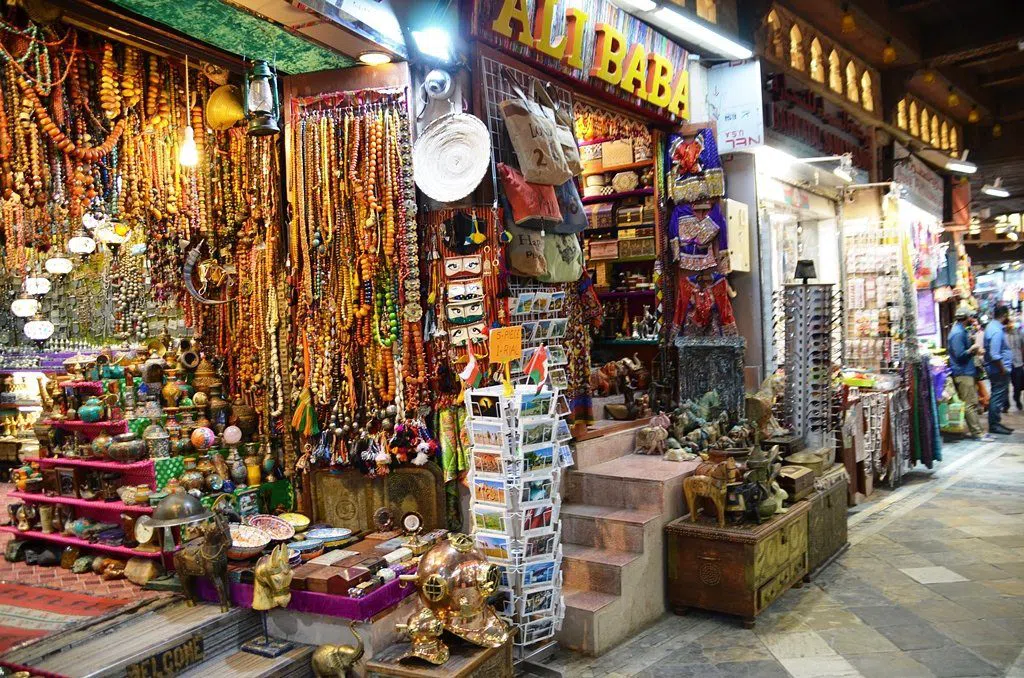
The lanes are narrow and the sellers work groups hard. Split a large party and agree a meeting point at the main gate.

Muttrah Fort is the restored fort you can go inside: three whitewashed circular towers stepping up a rocky spur above Muttrah harbour, cannon platforms and narrow stone passages, cruise ships and dhows laid out directly below. It holds the best elevated harbour view in Muscat, and a small Fort Cafe sits at the top. Tickets are sold at the gate, RO 3 for a non-resident adult and RO 2 for a non-resident child. Resident adults pay RO 1. Guided tours come on request, and the stairs and passages force single file.
Ghalya's Museum of Modern Art occupies a traditional Mutrah merchant house in a lane directly below the fort, and it is routinely missed. Rooms are dressed as a 1950s Omani family home with period furniture and mannequins, and contemporary Omani canvases hang through the upper floors. Entry is RO 1, an hour covers it, and it closes Fridays.
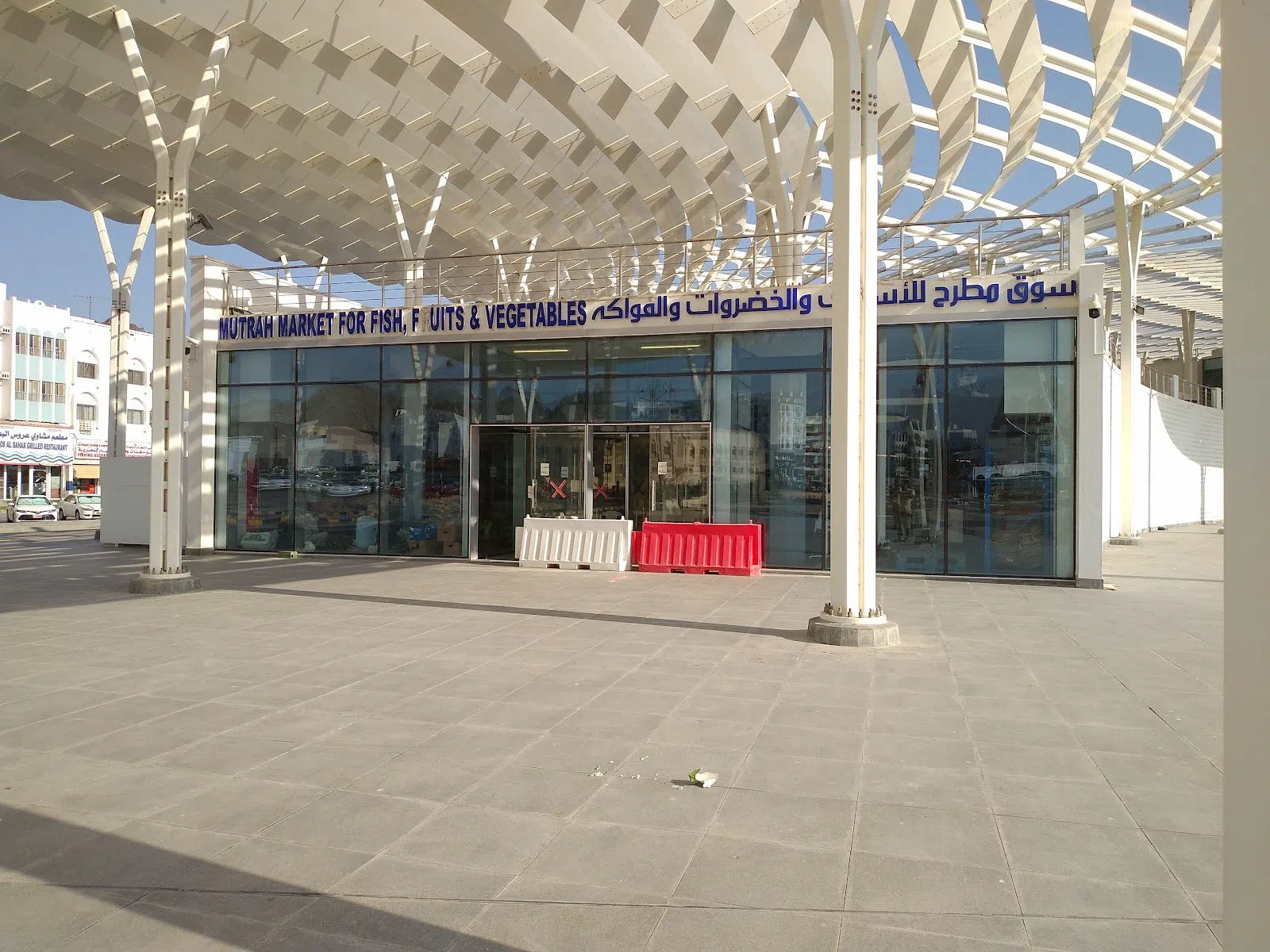
Muttrah Fish Market is a piece of modern architecture on the corniche, a sweeping perforated aluminium canopy curling over the quayside with a mirror-finish underside that reflects the water. Under it runs an open concrete hall of steel slabs, kingfish and tuna laid in rows and cutters working at the back. More than 100 sellers trade here, with coffee shops and a rooftop restaurant above. The building is public and free to walk through at any time, and the fish and the rooftop restaurant are priced separately.
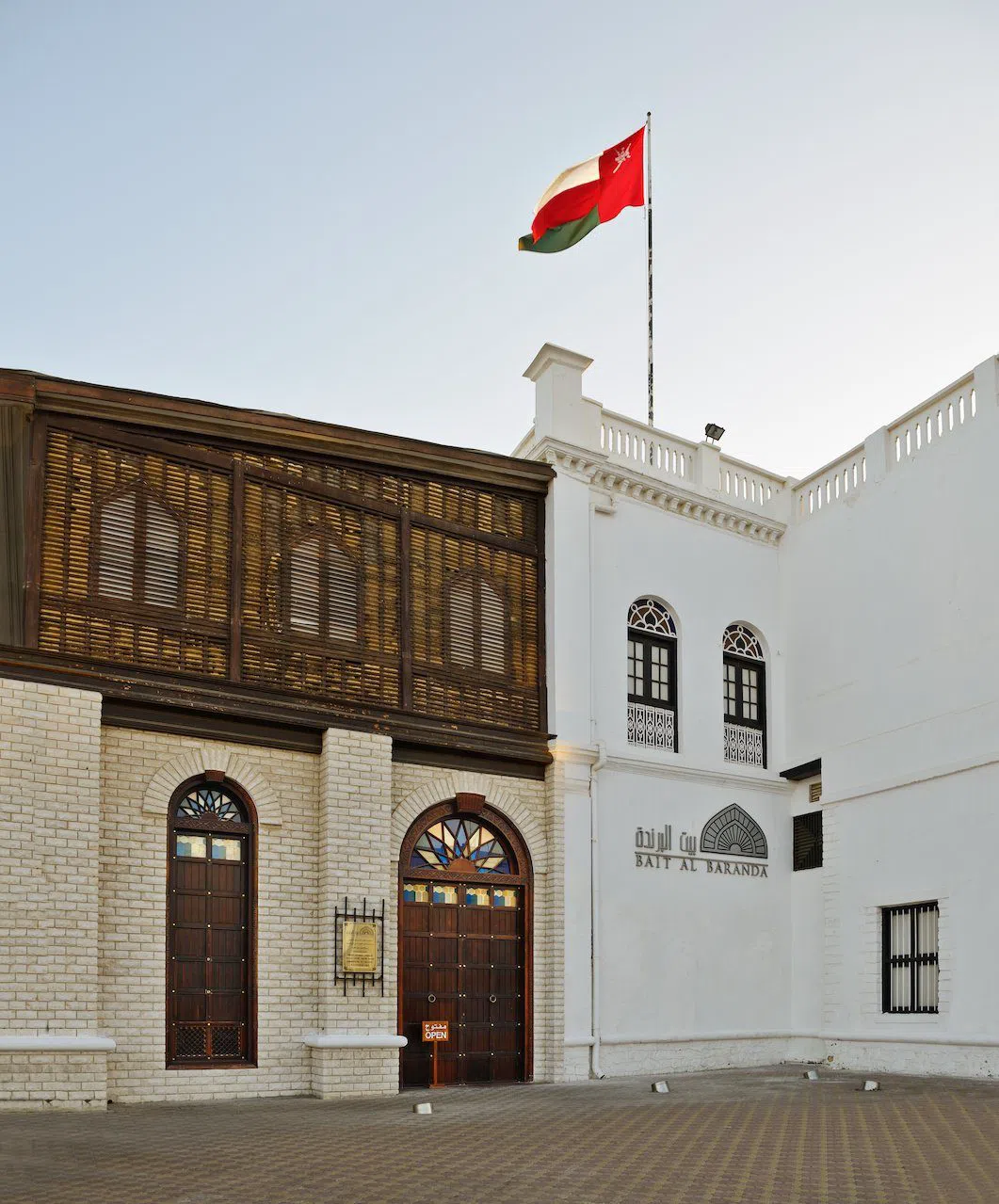
Bait Al Baranda on Al Mina Street in Mutrah is the clearest short explainer of how Muscat came to be, geology upwards. The house is a restored early 20th-century veranda building in ochre and white, and the interior runs 3D dioramas and touchscreens around a reconstructed dinosaur skeleton. Allow 60 to 90 minutes. Adult entry is RO 1, less for children and student groups. It closes Fridays and public holidays.
Where to eat between the palace and the harbour
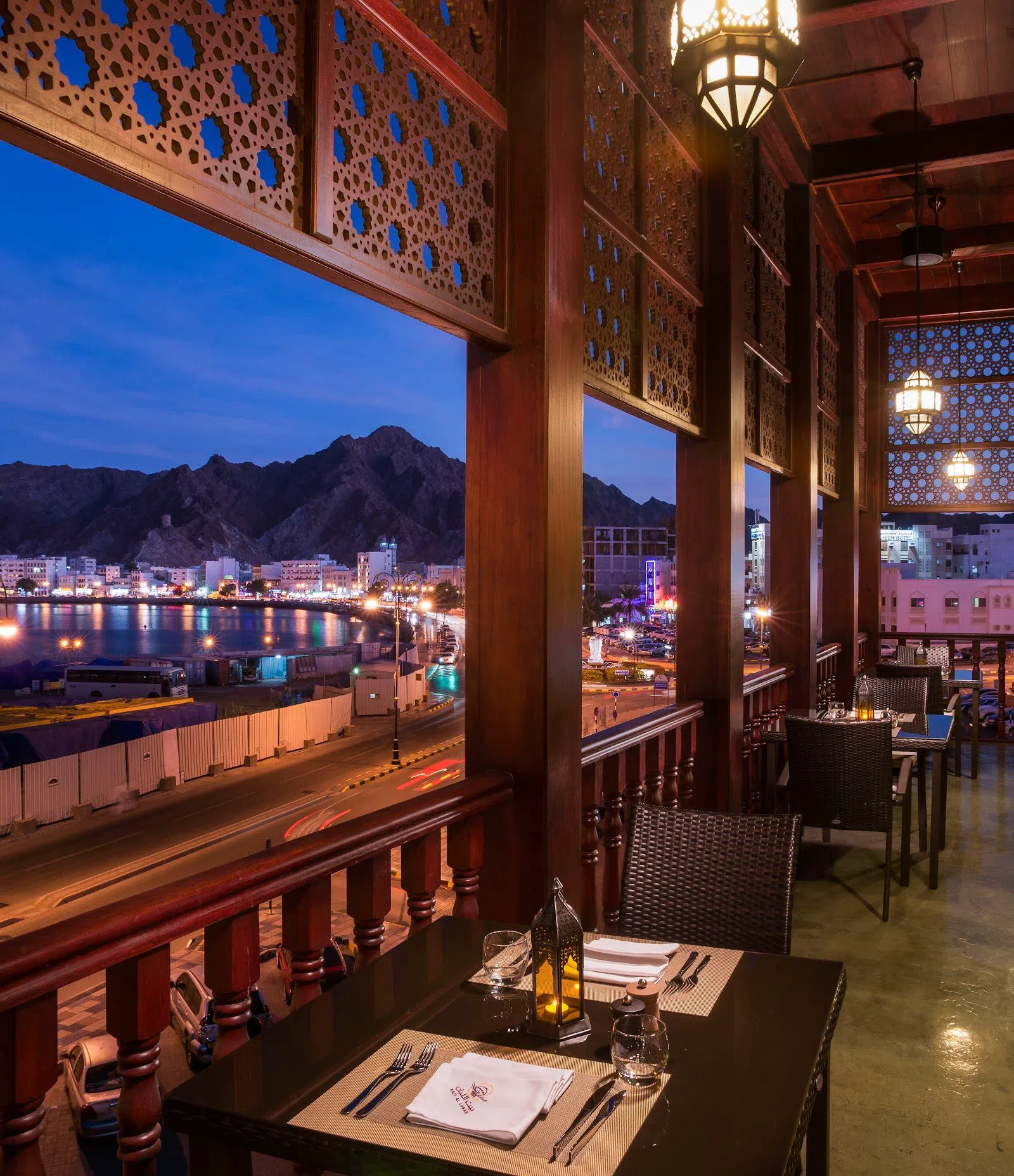
Bait Al Luban fills a restored stone warehouse at the north end of the corniche in Mutrah. Upstairs majlis rooms are low cushioned seating in vivid reds and oranges, and rooftop tables look across the harbour lights. Shuwa lamb and grilled kingfish carry the menu, and the kitchen opens daily from midday. The price band is RO RO RO. Reserve by phone, especially for the rooftop, because waits run long.
Anna Café sits at street level beneath the Naseem Hotel in the middle of Mutrah, plain tables behind a glass front looking straight out over the bay. Coffee, cake and light meals are cheap and unpretentious. The price band is RO. It is the handiest place to wait out the souq's midday closure.

The palace from the water
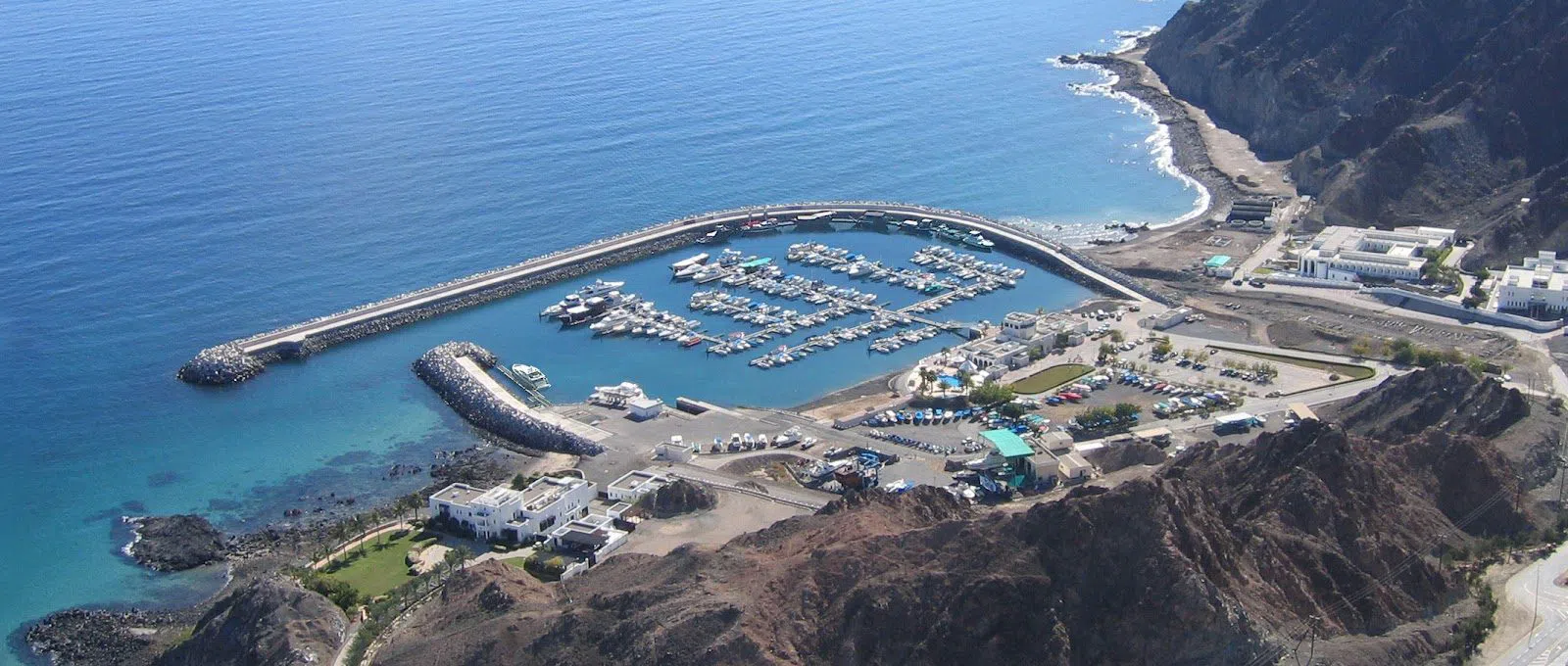
Marina Bandar Al Rowdha lies in a cove ringed by sharp brown cliffs south of the old city, pontoons of white boats and the departure point for most Muscat boat operators. A shared two-hour dolphin trip costs RO 10 to RO 17 per adult, and private charters run from the same pontoons. Book at least a day ahead. Spinner dolphins are present year-round and sightings are not guaranteed.
From the water you get the palace and its two cliff forts at the angle the Portuguese built them to face. The neighbouring Al Bustan Palace hotel is shut for renovation until 2028.
Best time to go
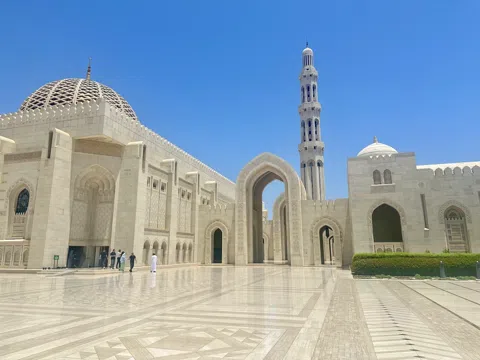
Sultan Qaboos Grand Mosque has to lead the day. Non-Muslim visitors are admitted Saturday to Thursday, 08:00 to 11:00, and never on Fridays, so it cannot be bolted on after the palace. Entry is free and no booking is needed. The dress code is enforced at the door: women need a headscarf and full-length covering, men long trousers and sleeves. Loan fabric is not guaranteed. White Indian sandstone arcades run around vast courtyards under a 50-metre main dome and tall minarets, and the prayer hall holds one enormous hand-knotted Persian carpet and a crystal chandelier.

The palace plaza and the National Museum take the rest of the morning. Muttrah Fort is almost entirely unshaded. Go early or late, not midday.
The souq shuts for a long midday break, and afternoon arrivals should aim for after 16:00. The corniche is fully exposed to the sun earlier in the day, and Muscat comes out to walk it after 16:00. Al Riyam Park carries the shade the fort and the corniche lack, and the monument is floodlit after dark. At the fish market the catch looks best early morning, and Fridays are the busiest.
Tickets at the door and what to book
The palace needs no ticket and no permit, and the gate plaza is open to anyone who walks up. The museums and Muttrah Fort sell at the desk or the gate, and the opera house sells at its box office. Only the boat and the table need booking: a day ahead for the marina, a phone call for the rooftop. Private guided city tours of these landmarks run seven days a week, which is useful when a cruise call or a single free morning fixes your date.
Is it worth it
The palace gives you a facade and nothing else. It suits a visitor who wants the National Museum, the cliff forts and Mutrah inside the same half day and who treats the gates as one frame in that circuit.
Practical notes
Bait Al Zubair Museum, Ghalya's Museum of Modern Art and Bait Al Baranda all close on Fridays, Bait Al Baranda on public holidays too, and the opera house runs tours Saturday to Thursday. Reserve the boat trip and the Bait Al Luban rooftop by phone before you arrive. See the Muscat guide and the Muscat hotel search.
Before you go
Can you go inside Al Alam Palace?
No. Nobody is allowed inside. The boulevard and the gate plaza outside are public and free, you need no permit or booking, and you can photograph the facade from the street.
How long should I allow for the palace?
Fifteen to 20 minutes. It is one stop on a wider Old Muscat circuit rather than a destination of its own, and the National Museum of Oman is immediately opposite the gates.
Do I need a ticket or a tour to see it?
No ticket and no permit. The plaza takes full coach groups without booking. A private guided city tour is worth it only if you want the surrounding landmarks driven and explained; those tours run seven days a week.
Can I get inside Al Jalali Fort next to the palace?
No. The interior is permit-only through the Ministry of Heritage and Tourism and in practice closed to tourists, so do not book anything promising you inside. Muttrah Fort is the one you can enter, RO 3 for a non-resident adult.
What is the best time of day to visit?
Start at Sultan Qaboos Grand Mosque, open to non-Muslim visitors Saturday to Thursday, 08:00 to 11:00, then the palace and the museum through late morning. Leave Mutrah Souq for after 16:00 if you arrive in the afternoon.