The Muscat issue
A Week Around Oman That Starts and Ends in Muscat
A seven-day loop out of Muscat built around the four things in Oman that keep their own hours: the mosque window, the Friday goat market, the capped turtle sessions and the desert camp's closed season.

By Bram VisserForts, wadis and the long way round
Muscat is pinched into a thin strip between the Hajar mountains and the Gulf of Oman, which is why every road out of it reaches something worth stopping for inside two hours. In one week you can snorkel over coral on a Monday morning, watch a green turtle dig a nest on Tuesday night, and stand at 1,900 metres on an unfenced cliff edge by Friday afternoon, then sleep in the city you landed in. The driving is the easy part. The scheduling is not, because four things in Oman keep their own hours and the rest of the week has to bend around them.
The fixed points that set the week
Build outwards from what cannot move.
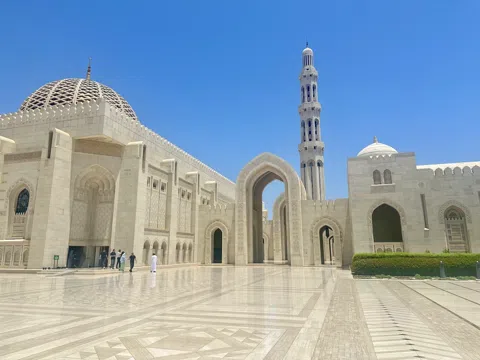
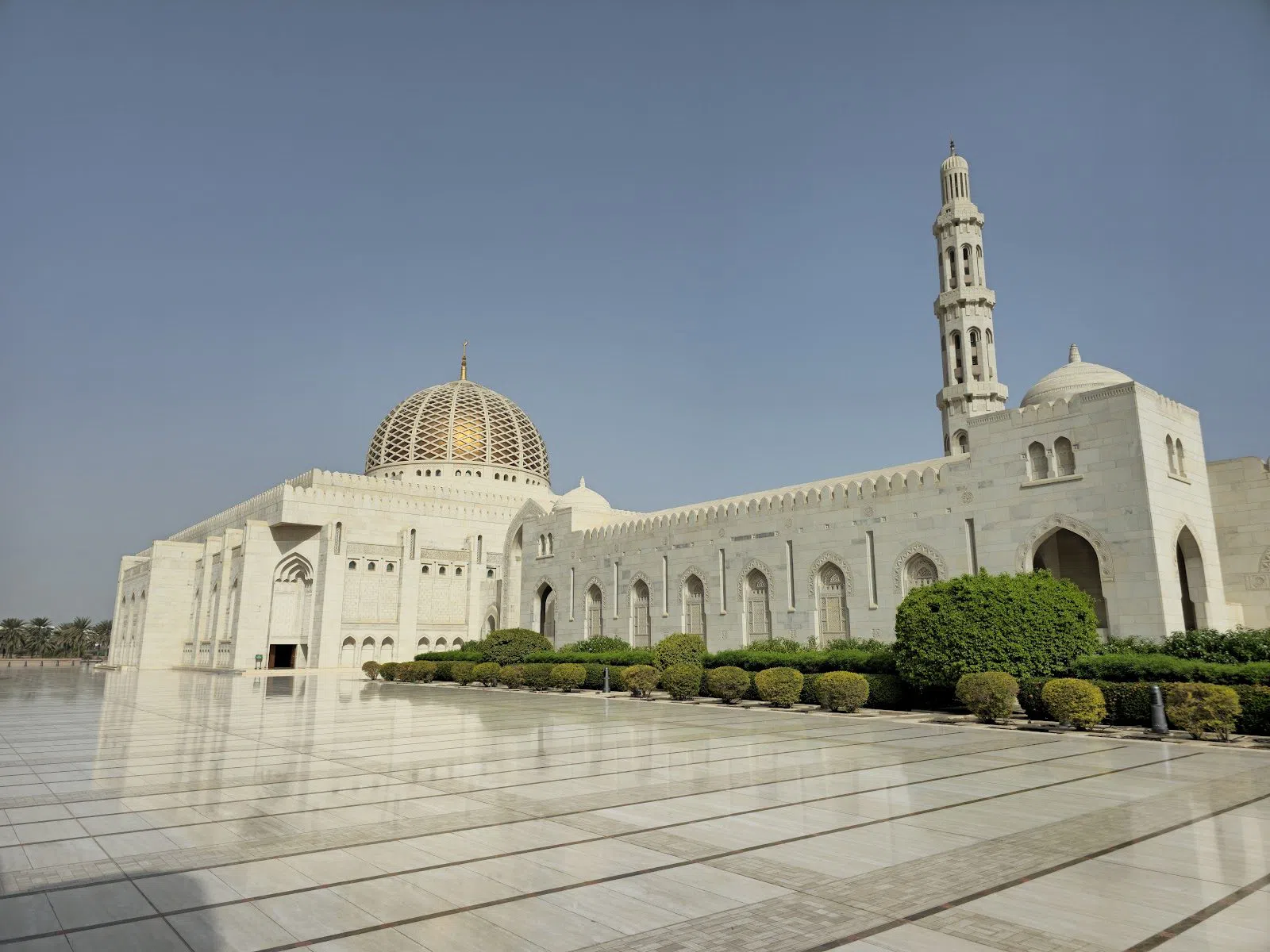
The Sultan Qaboos Grand Mosque (Ghubrah, on the main highway west of the centre) admits non-Muslim visitors only in a fixed morning window, roughly 08:00 to 11:00, Saturday to Thursday, and is closed to visitors on Friday morning. Entry is free, and abaya or headscarf hire at the gate costs a few hundred baisa if you arrive underdressed. It handles coach groups without complaint, but the window is the whole problem: a group has to arrive together and early, 08:30 rather than 10:40, when the last hour becomes a queue.
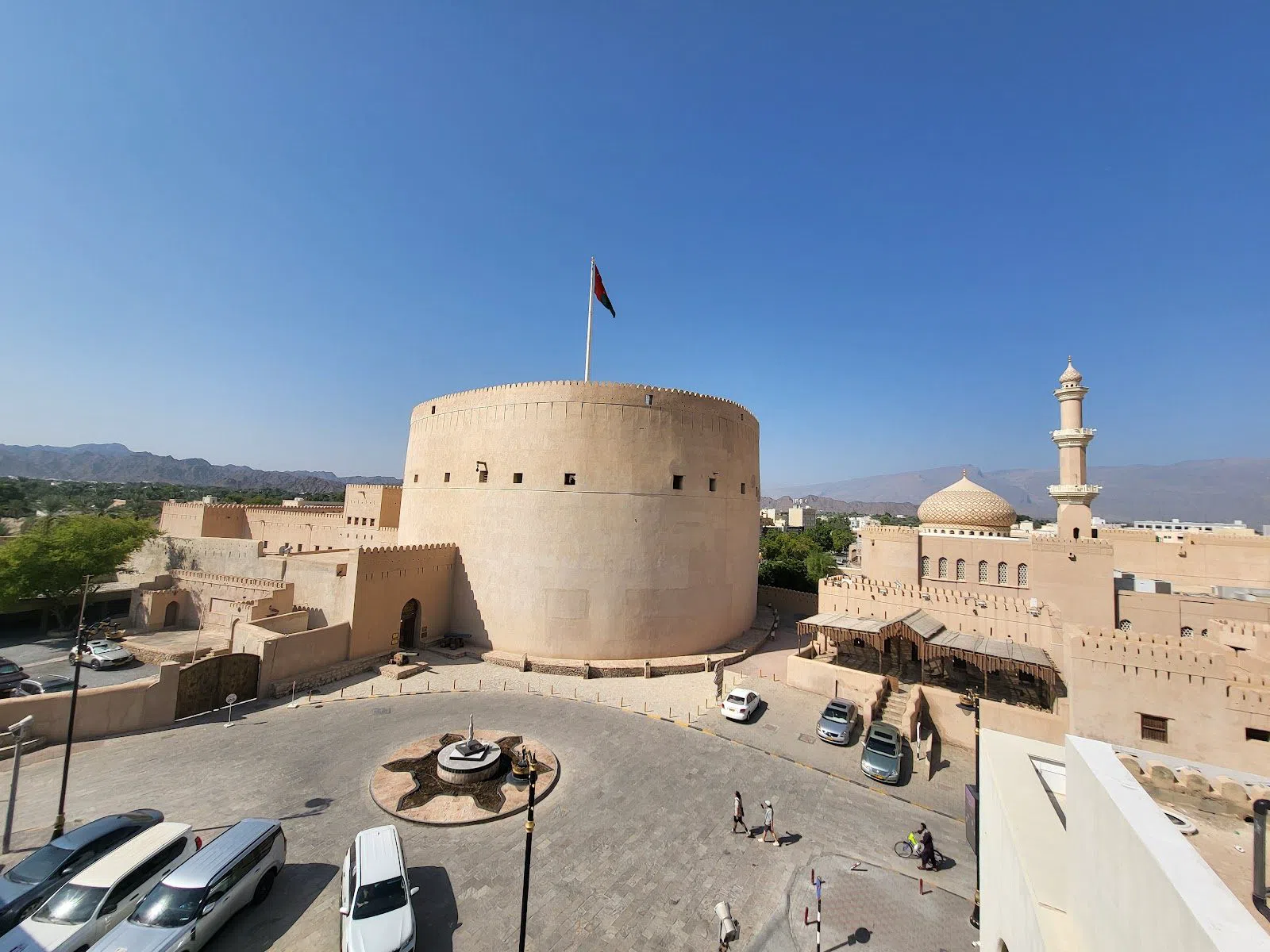
The Friday livestock market at Nizwa Fort and Souq (Nizwa, inland behind the mountains) runs about 06:30 to 10:30, with the real trading between 07:30 and 09:30. There is no other day it happens.
Ras Al Jinz Turtle Reserve (Ras Al Jinz, the far eastern tip) runs two guided sessions a night, each capped at around 25 people with a reserve guide. In the July-to-October peak they sell out weeks ahead, and guests staying in the on-site guesthouse get priority.
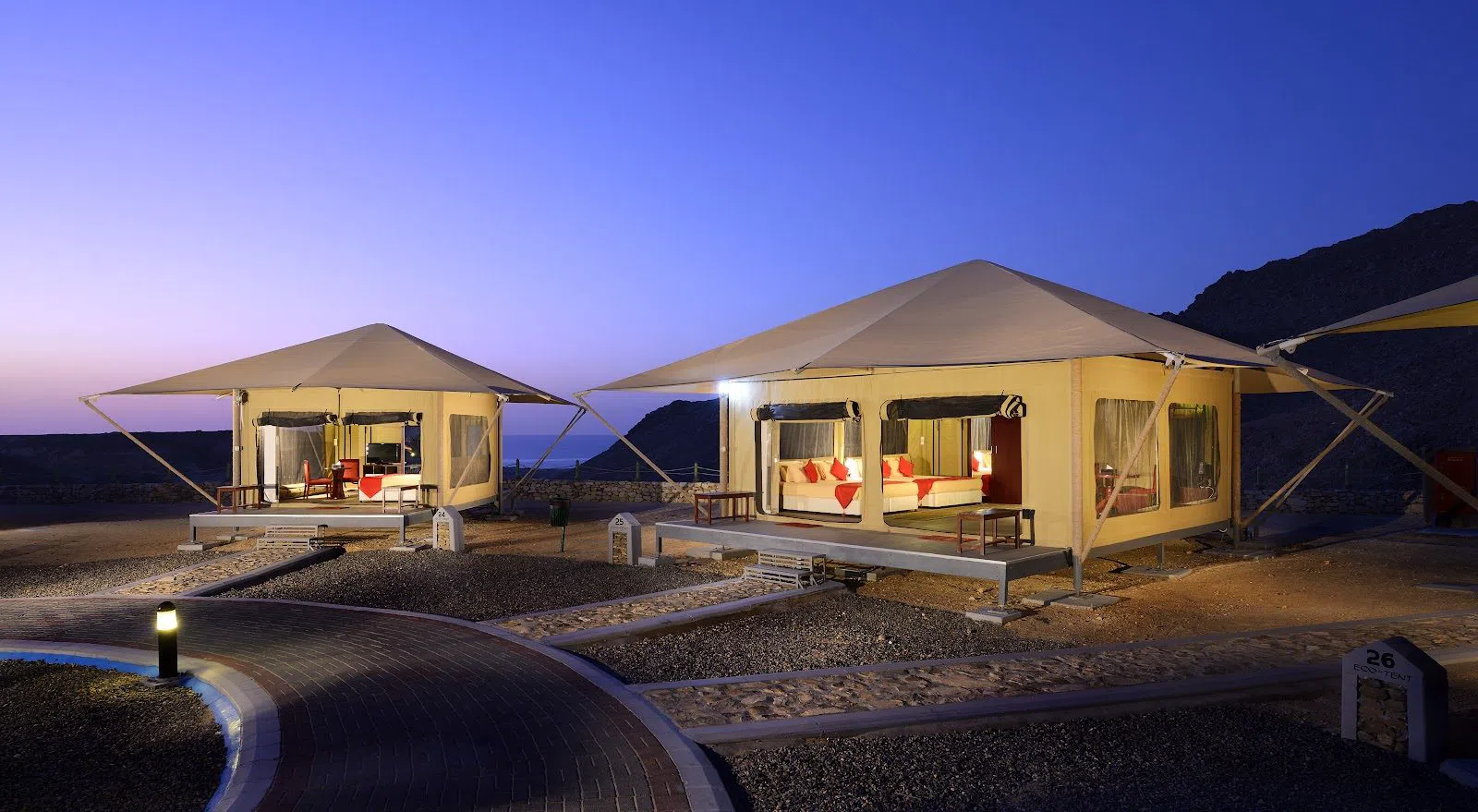
Desert Nights Camp (Sharqiya, in the Wahiba Sands) shuts over high summer, roughly May to the end of August. Check the reopening date before you build a desert night into the plan.
Line those up and the week wants to begin on a Sunday: mosque on day one, Friday free for the goat market, the mountains at the end once you have got used to Omani roads.
Plan your Muscat trip
Live prices from our booking partners.
Free cancellation on many rooms. We may earn a commission when you book.
Day one in Muscat, from the mosque to the corniche
Be at the mosque by 08:30. Give it ninety minutes. The prayer hall carpet and the chandelier are the postcard, but the arcades around the courtyard are where the building actually breathes, and they are empty at that hour.
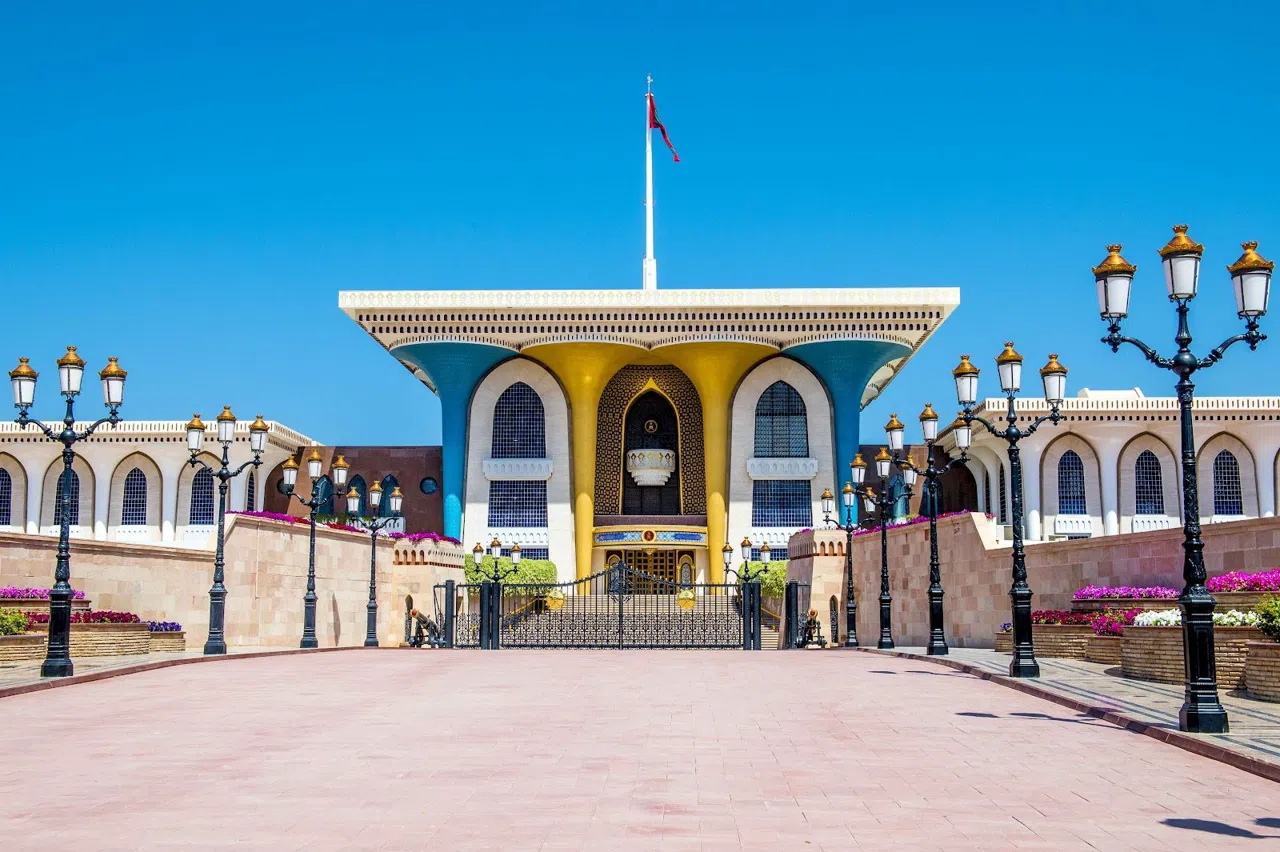
By 10:30 you can be at the National Museum of Oman (Old Muscat, directly opposite Al Alam Palace), about twenty-five minutes east along the coast road. Adults pay around 5 OMR, children less, and there are guided and audio options in several languages. Thirty focused minutes here is the highest-value half-hour of the week: the forts, the falaj irrigation channels and the maritime trade all get explained before you drive out and look at them cold. Groups fit comfortably.

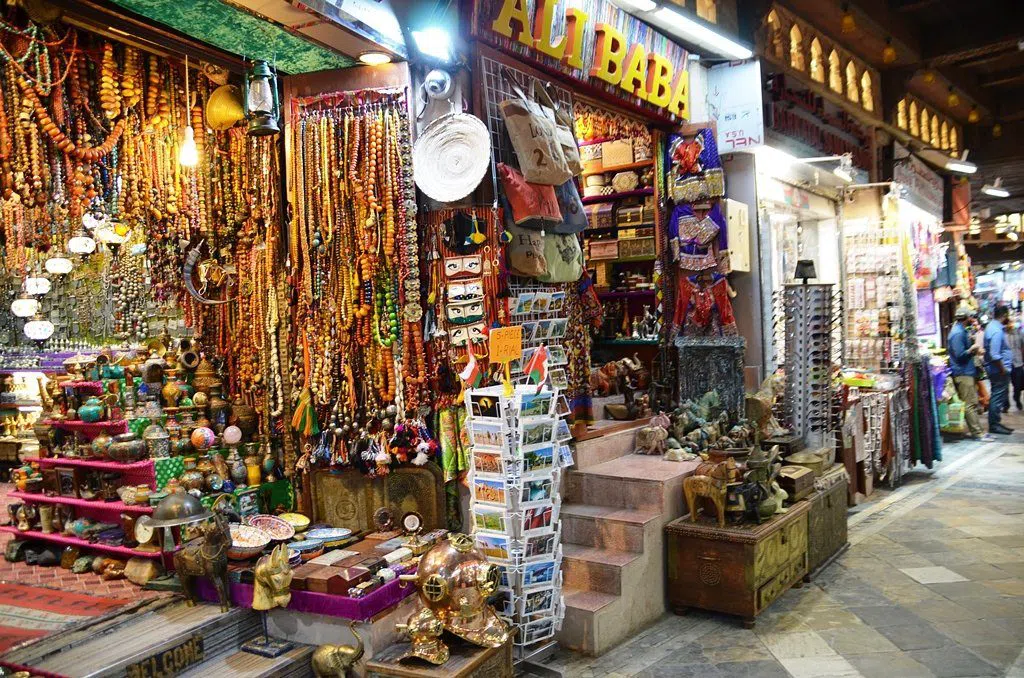
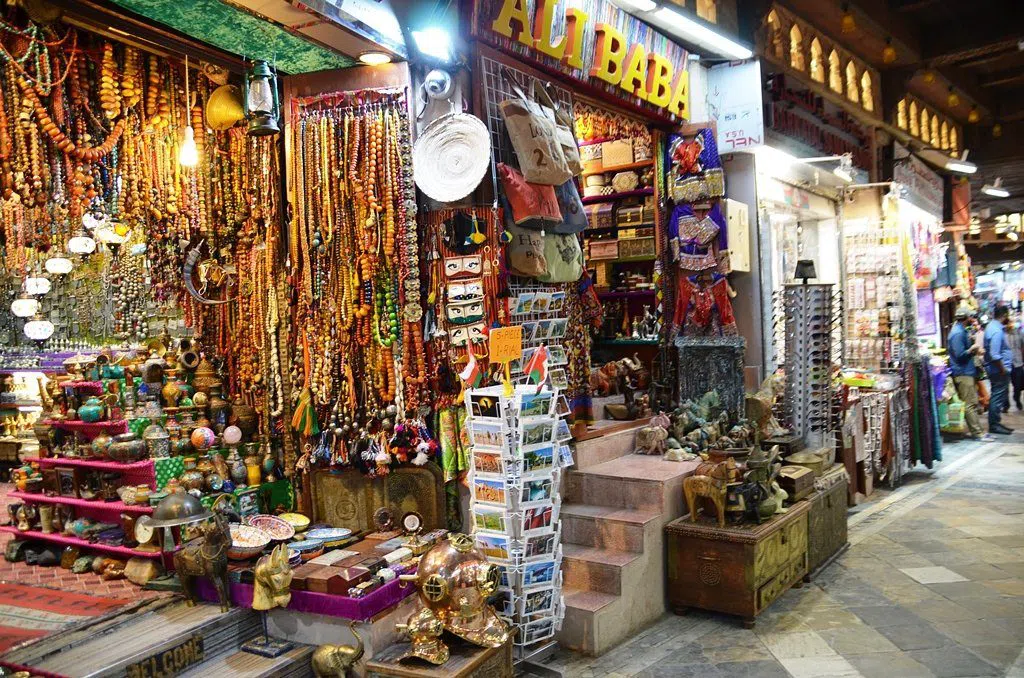
Let the afternoon go slack, then take Mutrah Souq (on the Mutrah corniche, ten minutes back west) from about 16:00, when the shops reopen after the midday shut and the corniche stops radiating heat. Frankincense and a clay burner start around 2 OMR; silver from roughly 15 OMR. Haggling is expected and stays gentle. Walk away and the price follows you about ten percent. The alleys are narrow and unmarked, so any group over about eight will fragment within minutes. Agree a meeting point on the corniche before you go in, not after.
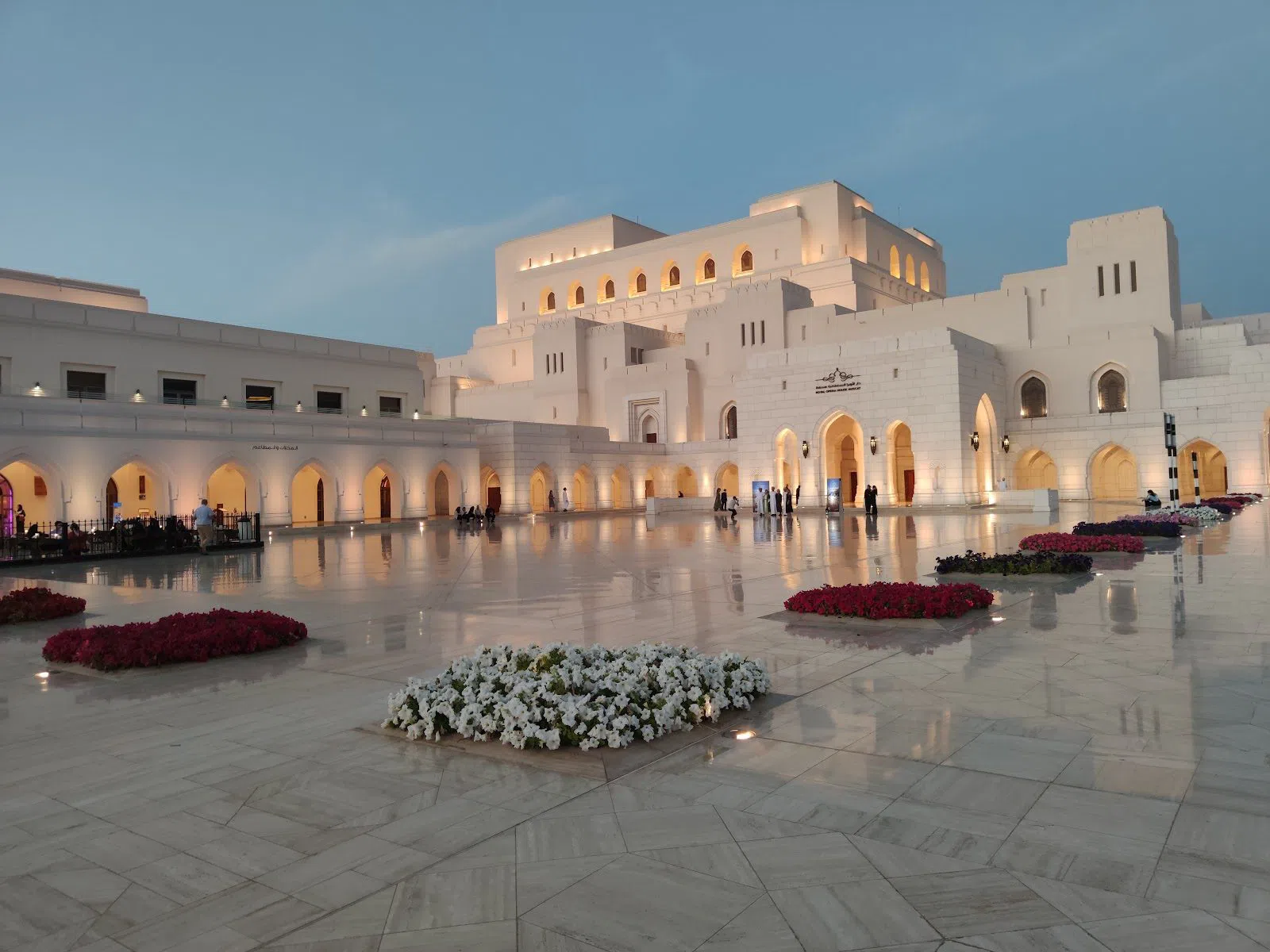
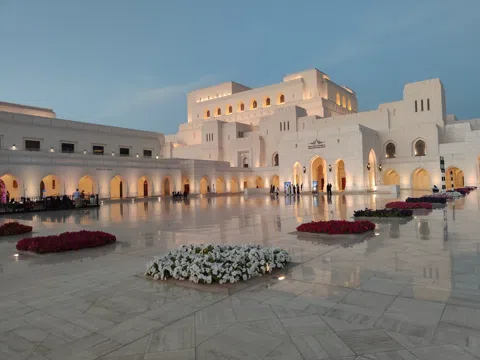
If the calendar is kind, the Royal Opera House Muscat (Shati Al Qurum) is the evening. Its fifteenth-anniversary season runs October 2026 to May 2027 with 28 productions across opera, ballet, jazz and Arab music, so an evening here is bookable around a road-trip week. Tickets run from about 10 OMR to 60-plus; block and group bookings go through the box office. Smart dress is enforced and shorts will not get you through the door. If nothing is on, the daytime building tour costs less and still shows you the interior. Base yourself near Shati Al Qurum or Al Mouj for the first two nights. The Muscat hotel search shows what sits where, and the Muscat guide covers how the city's scattered districts fit together.
Day two on the water at the Daymaniyats
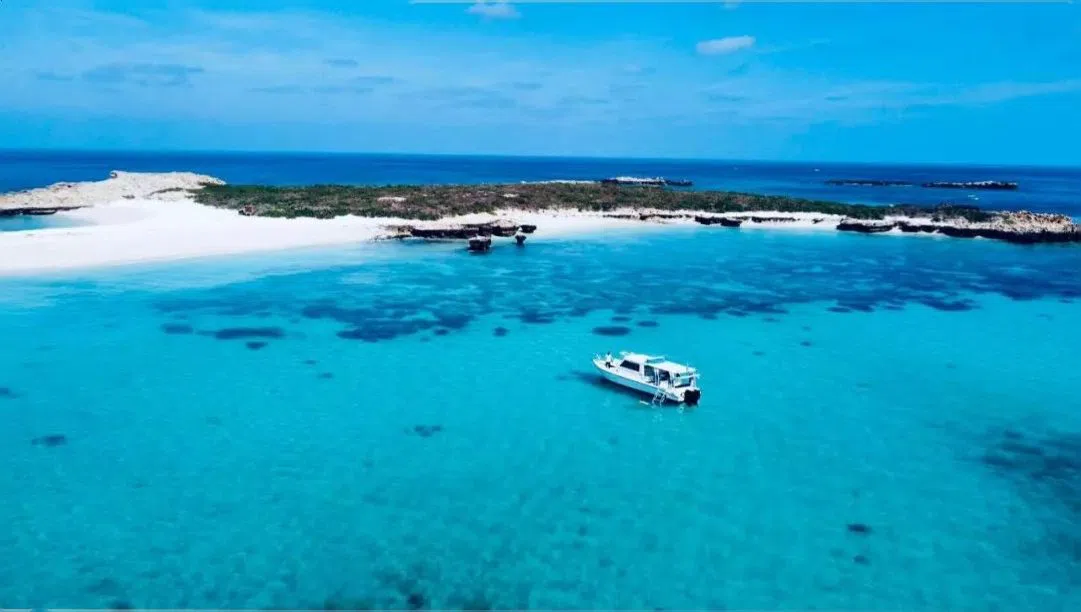
The Daymaniyat Islands Nature Reserve is a protected archipelago offshore to the west, and it is the only part of this week you cannot do under your own steam. Access requires a permit-holding licensed operator, and the Environment Authority permit costs about 3 OMR per non-Omani adult on top of the boat.
SeaOman Dive Academy (Al Mouj Marina, fifteen minutes from Muscat International Airport) is the clean way to do it: a PADI 5-star centre with scheduled group snorkel and dive departures. It also takes private charters and arranges hotel pickup. Snorkelling day trips run roughly 35 to 45 OMR; two-tank dives cost more, permits on top. It is about forty minutes out from the marina and you are back by early afternoon, which is what lets it fit inside a one-week loop instead of eating a whole day.
Beach landings are only permitted from November to April, while turtles and seabirds nest. Outside those months the water zones stay open, so a summer trip still works. You just stay wet the whole time and never set foot on sand. Boats typically carry 8 to 20 people, so a group of ten can charter the whole thing and set its own pace.
Day three down the coast to the turtles
Collect the hire car and drive south-east. This is the long day and the best one.
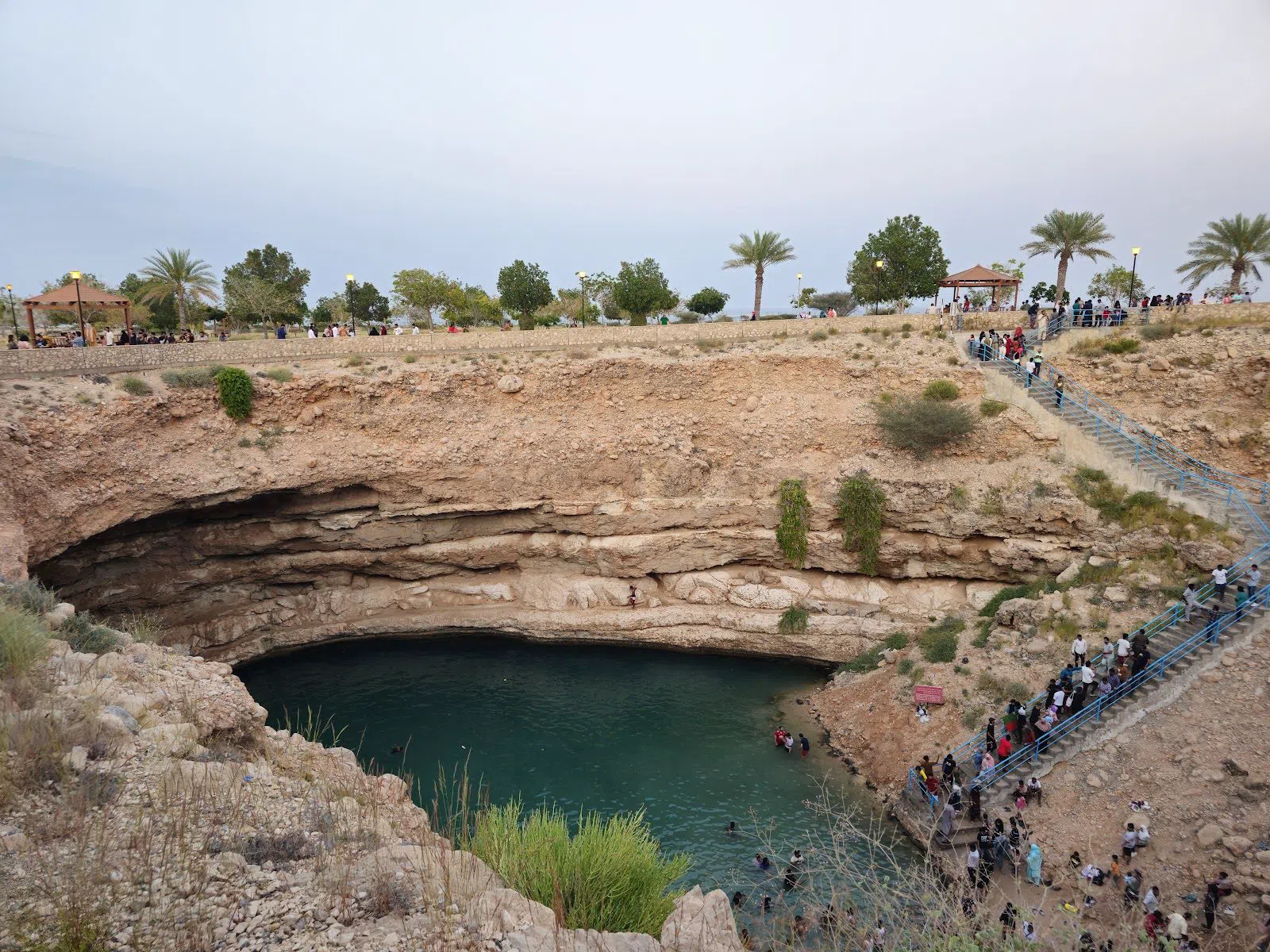
Bimmah Sinkhole (Hawiyat Najm Park, on the Quriyat-Sur coast road, about ninety minutes out) is a collapsed limestone crater of green-blue water reached by a short flight of steps. No booking, no gate, no cap on numbers, and the car park takes minibuses. It is free and open roughly 08:00 to 20:00. Small fish nibble your feet, which children find either delightful or unbearable, with no middle position.
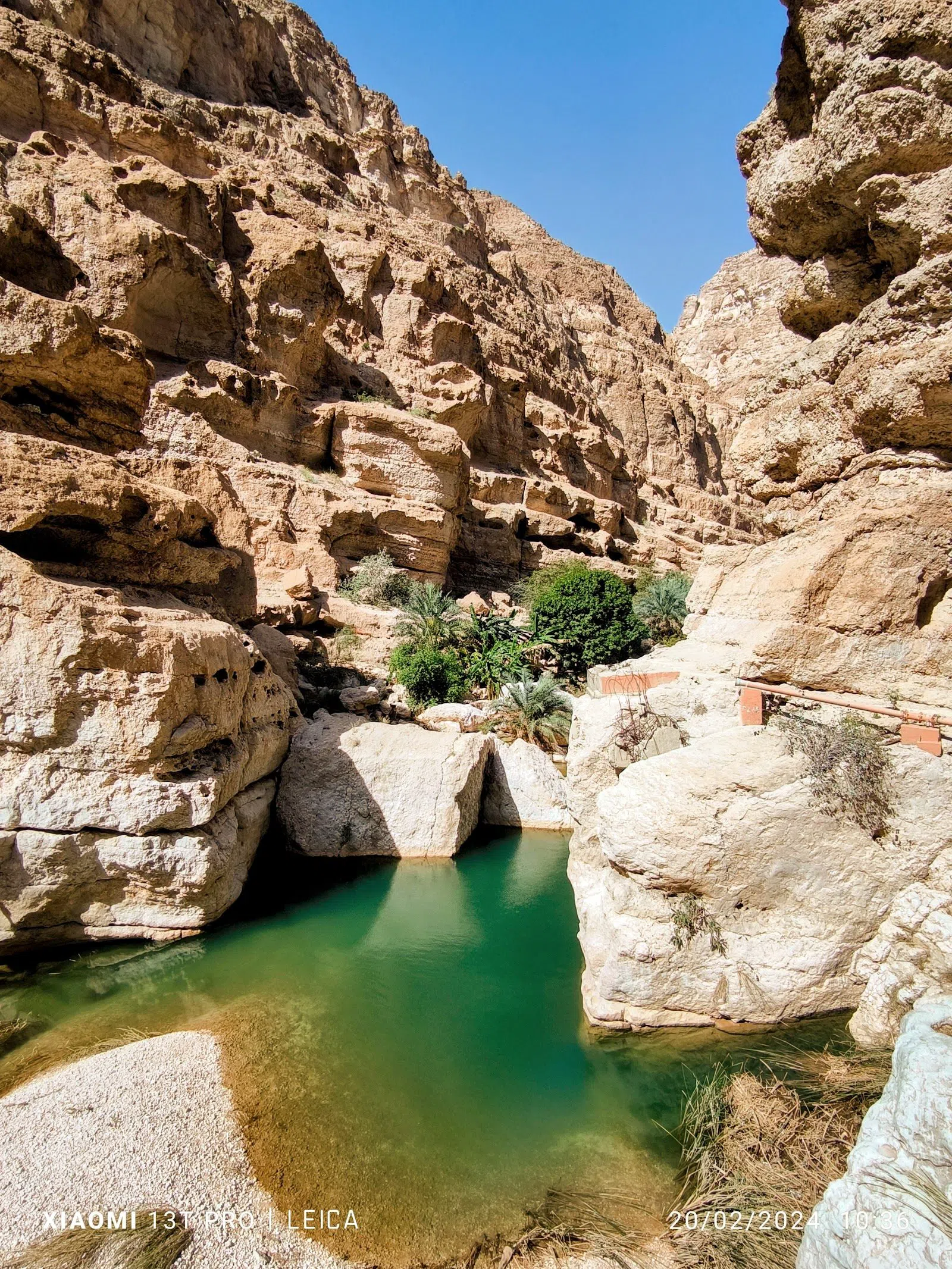
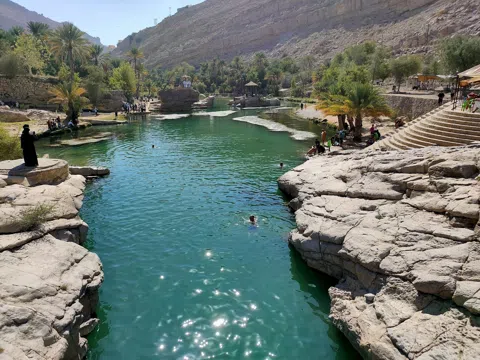
Twenty minutes further on is Wadi Shab (Tiwi), the single best half-day outside Muscat. It is free; a boat ferries you across the pool at the mouth for 500 baisa each way, and the boats stop running around 17:00. What follows is a 45-minute scramble each way over boulders, and the final chamber requires a confident swim through a gap in the rock. Start early, before the tour buses land, and be honest with yourself about the swim. The boat carries only a handful at a time, so a group crosses in waves and should agree where to regroup on the far bank. Check flood forecasts: wadis flash after rain, and this one has no alternative exit.
Get to Ras Al Jinz for the evening. The reserve costs about 7 OMR for adults, 4 OMR for children aged 6 to 17, under-6 free, and it has a 14-room guesthouse. Green turtles nest here year-round with a July-to-October peak. Book the session weeks out in season, and stay either at the guesthouse or in nearby Sur. Driving back to Muscat after a 21:00 session is a stupid amount of night driving for no reward.
Day four from oasis pools to the dunes
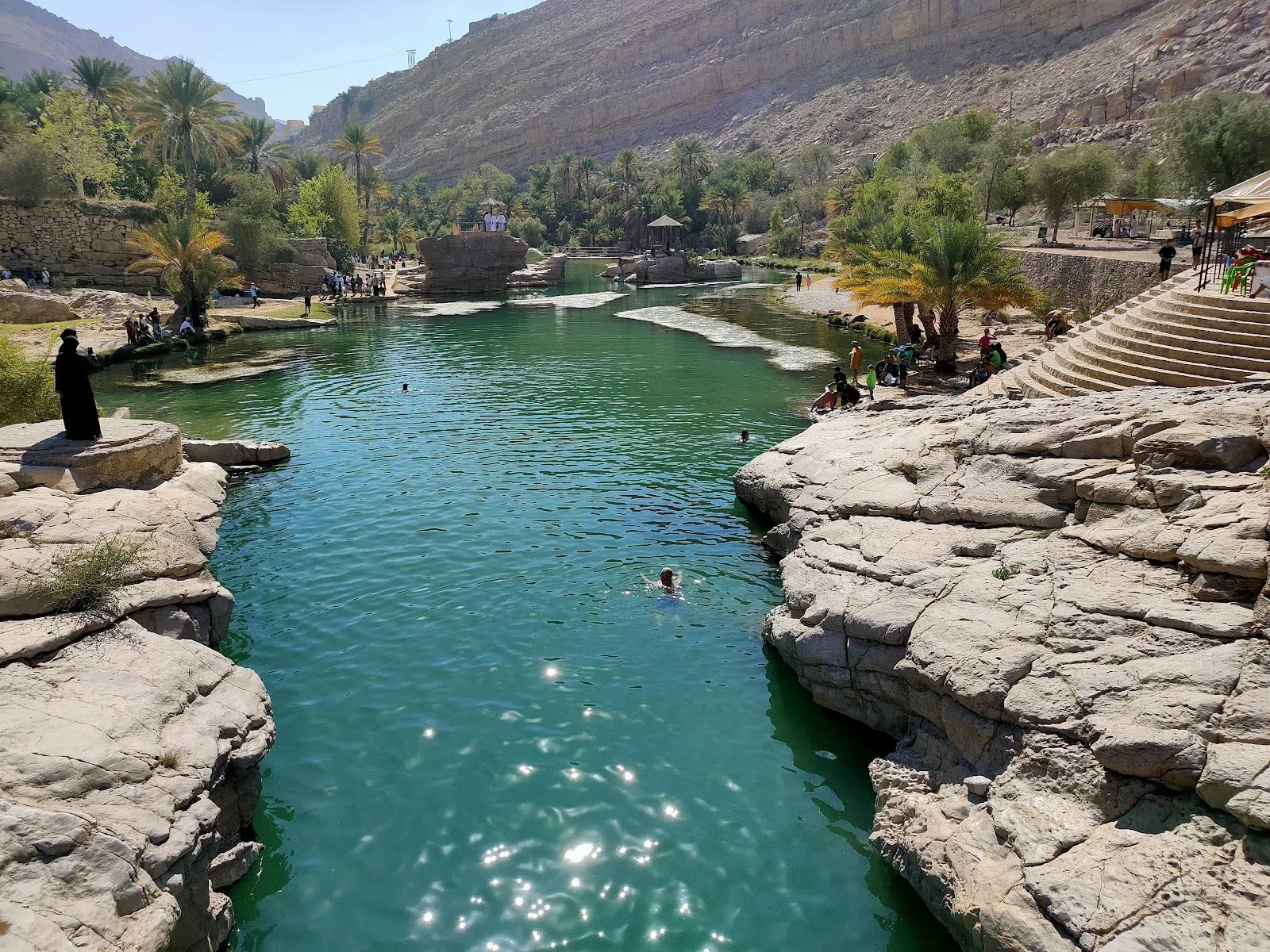
Head inland to Wadi Bani Khalid (Sharqiya, roughly two hours from the coast). Free public access, a car park, a café and toilets, and it copes with coach groups easily. The reason to pair it with today rather than compete with Wadi Shab is simple: you can be swimming within two minutes of the car. No scramble, no boat. Modest swimwear is expected. This is a village pool, not a resort, and people who ignore that get looked at.
From there it is a short run to the sands. Desert Nights Camp has around 55 tents plus rooms and villas, takes families and sizeable groups, and puts you on a 4x4 transfer from a tarmac meeting point rather than letting you drive in yourself. Rates run roughly $130 to $620 a night depending on tent and season, usually half board, with the sunset dune drive and the morning camel ride included. Do the sunset drive even if it sounds staged; the dune field at that hour is the reason people come.
Day five across to the forts
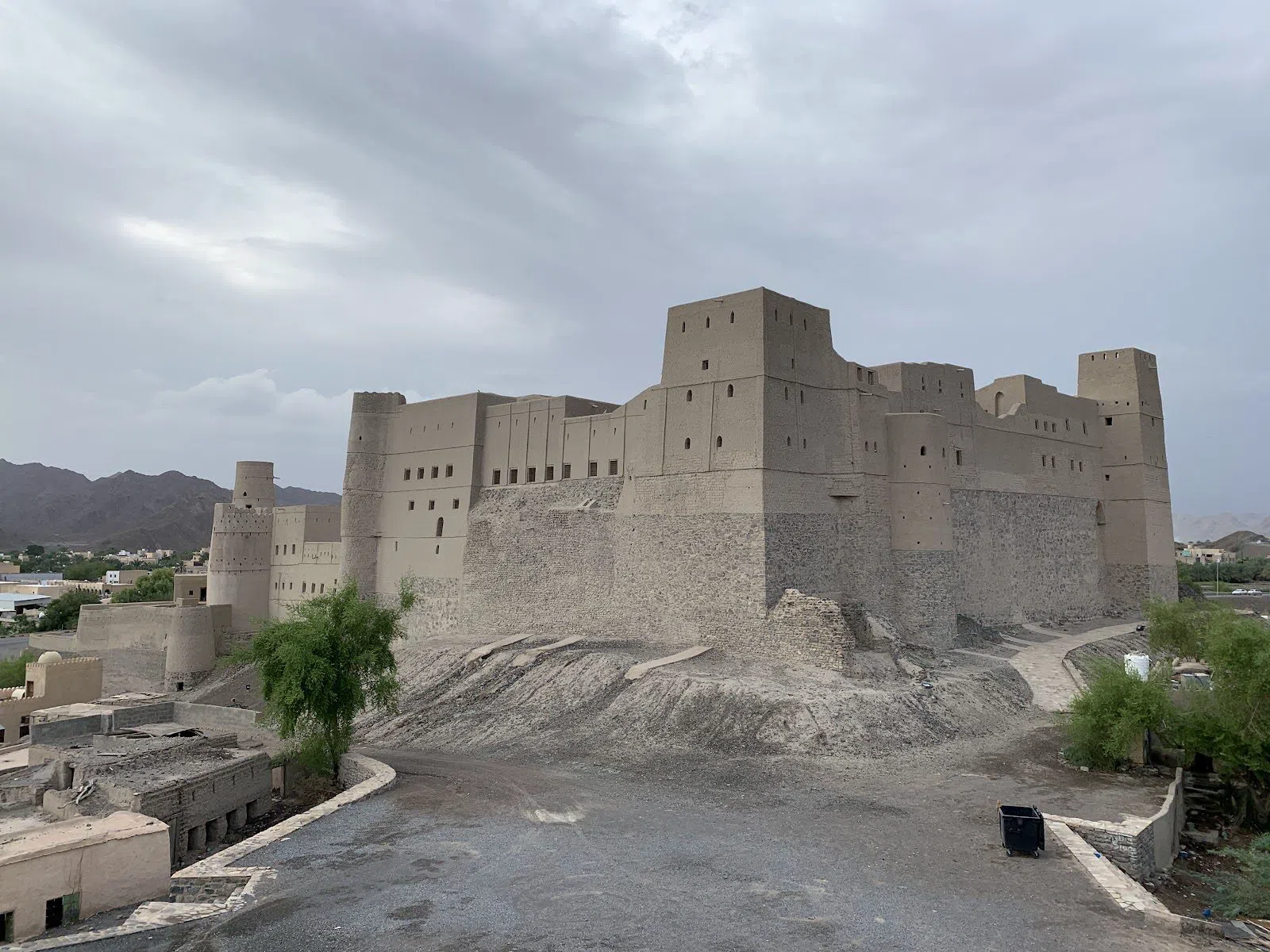
Drive west to Bahla and Nizwa, about three hours. Bahla Fort (Bahla, a 40-minute detour past Nizwa) is Oman's only UNESCO-listed fort, ticketed at roughly 1 to 5 OMR, open Saturday to Thursday mornings until about 16:00 with short Friday hours. It pairs naturally with Jabreen Castle down the road if forts interest you. If they don't, say so and skip it. One fort a day is plenty for most people.
Get back to Nizwa Fort itself before it closes at 18:00 (Saturday to Thursday; split hours on Friday). Adult entry is around 5 OMR; the souq alongside is free. Sleep in Nizwa. That Thursday night is what buys you the next morning.
Day six, goat market then the mountain edge
Be in the souq circle by 07:15. The Friday livestock market is a crowded open-air ring of men walking goats and cattle past seated buyers, and it is over by 10:30. Large groups get in the way here. Spread out, stand at the edge, let the circle move.
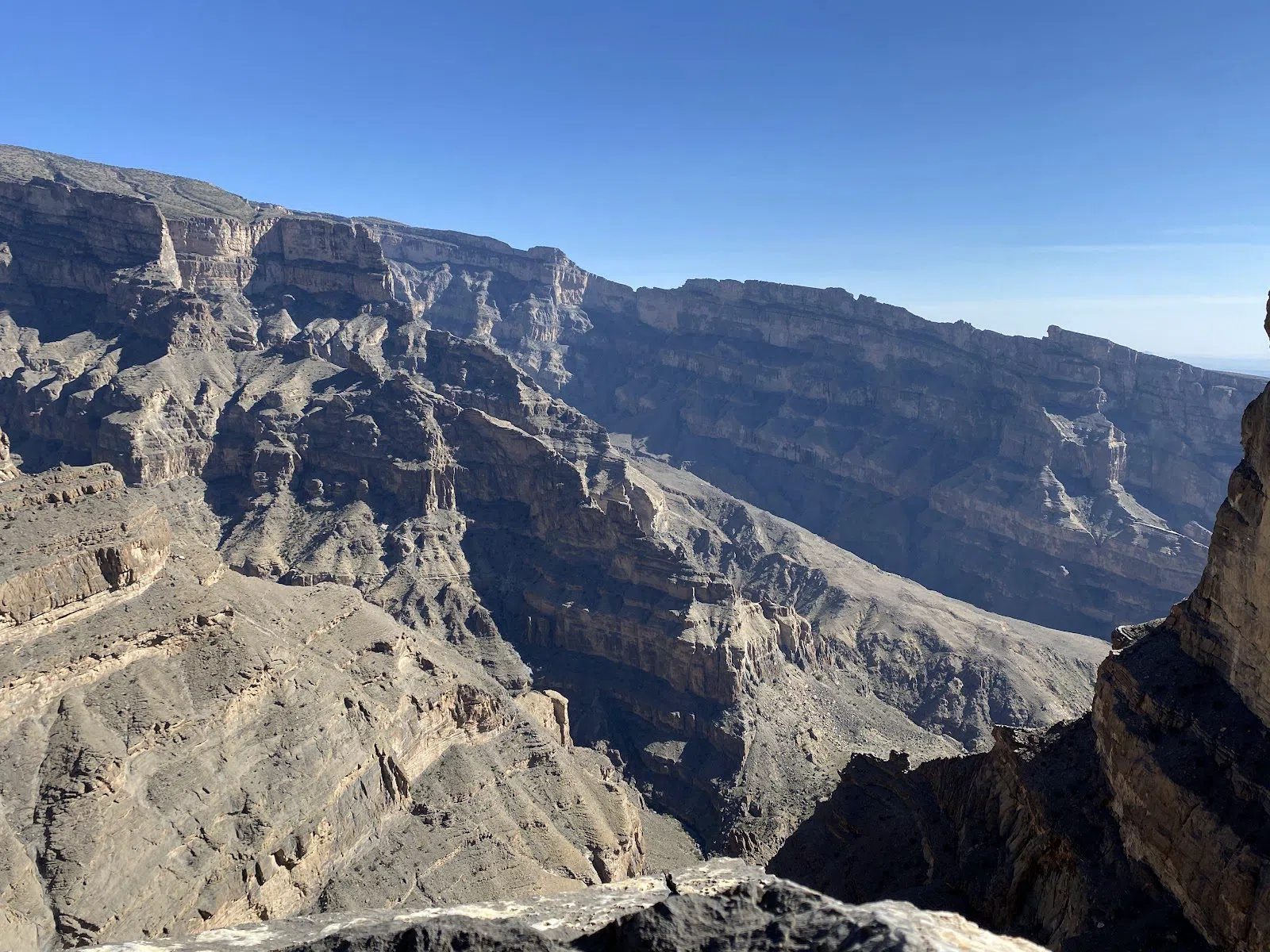
Then climb. The Jebel Shams Balcony Walk (trailhead at Al Khitaym, about two hours from Nizwa) is roughly 8km return, three to four hours, and traverses a ledge above a canyon from a start point at 1,900 metres. No permit, no booking, free. It can be 15°C colder than Muscat up there, so bring layers and real shoes. The exposure is unfenced and continuous, which is why guided groups are common and sensible; Muscat and Nizwa operators run it for about 25 to 50 OMR per group. A 4WD is strongly advised for the final ascent. If anyone in the party is unhappy near edges, this is not a hike they should be talked into.
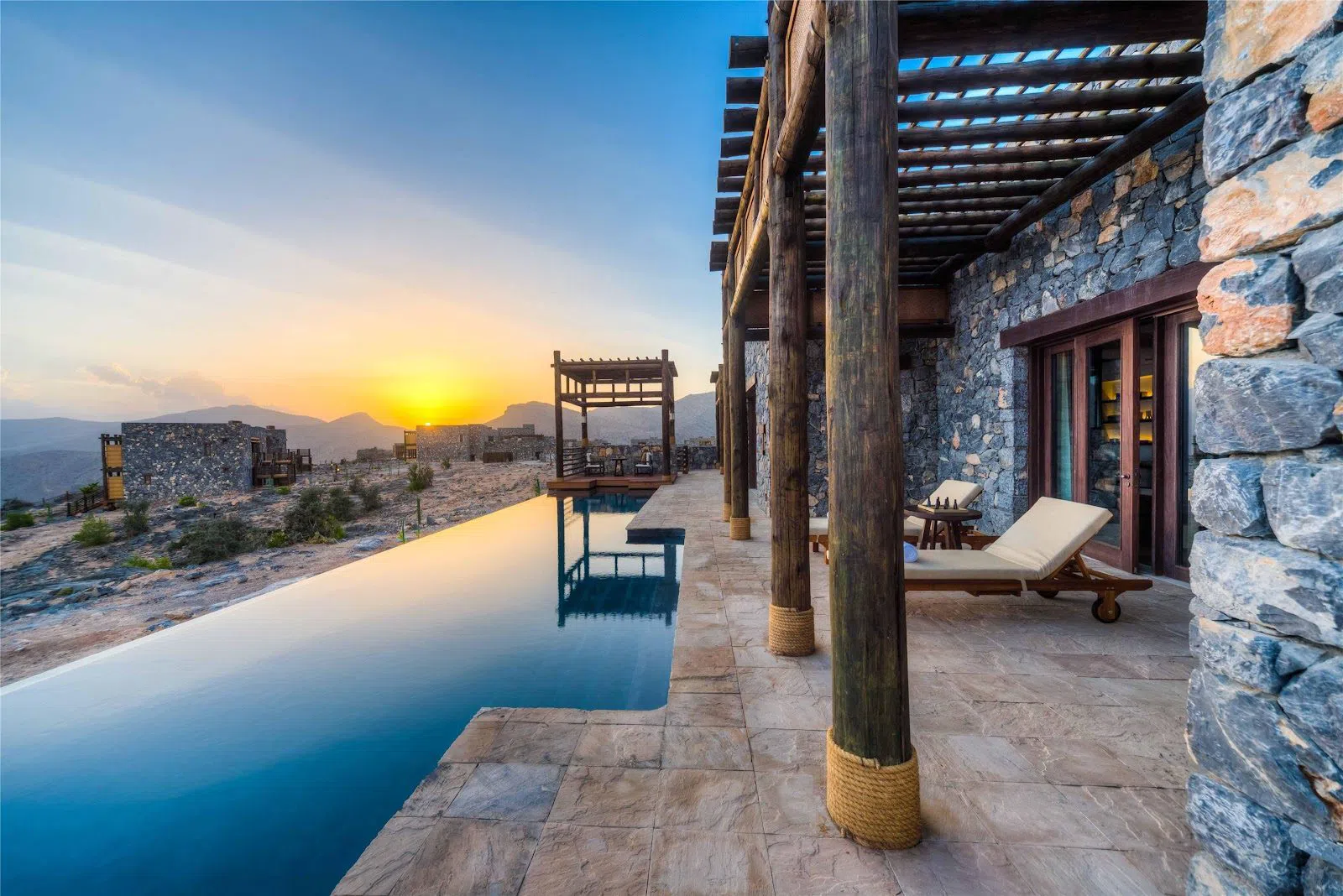
Sleep in the mountains. Misfah Old House (Misfat Al Abriyeen, twenty minutes from the Jebel Shams road) has fifteen simple rooms, takes small groups but not coaches, arranges local guides for village and mountain walks, and serves Omani home-cooked dinners for about $50 to $90 a night with breakfast. Rooms are basic and shoes come off at the door. It is the most atmospheric stop of the week and a proper counterweight to the resorts. The alternative is Alila Jabal Akhdar (on the plateau above Birkat Al Mouz), 86 suites and villas from around $400 a night, with guided village walks, plateau hikes and Damask roses on the terraces in spring. One hard constraint: the access road is 4WD-only by law, and the police checkpoint below Birkat Al Mouz turns two-wheel-drive cars around. Sort the hire car before you book the room.
Day seven back down to Muscat
Walk the village terraces or the plateau early, then drive back, two and a half to three hours to Muscat. That leaves the afternoon free and the last evening open for the opera house if you shifted it from day one, or for a second run at Mutrah Souq now that you know which alley the frankincense sellers are in.
Groups, couples and who this actually suits
Couples and pairs can do the whole loop in a rented 4WD with no bookings beyond the turtle session, the desert camp and a dive day. Families should treat Wadi Shab as optional and Wadi Bani Khalid as the swim.
Groups need more care. The mosque, the museum, Bahla and Nizwa's fort all absorb coaches comfortably. Mutrah's alleys, Wadi Shab's ferry, the Friday goat ring and Misfah Old House do not. The turtle reserve's 25-person cap means a group of fifteen is most of a session and has to book far ahead. Opera tickets go through the box office as a block, with dress code enforced at the door.
Practical notes
Transport. Hire a 4WD, not a saloon. It is required by law for the Jabal Akhdar checkpoint, strongly advised for the last stretch to Jebel Shams, and useful nowhere else, but those two are non-negotiable. Roads elsewhere are excellent and signposted in Arabic and English. Desert Nights Camp does its own 4x4 transfer, so you never drive on sand. If you would rather not drive at all, the loop collapses to Muscat plus SeaOman's boat day plus a private driver for the rest.
Cash. Carry Omani rials in small notes and coins. Wadi Shab's boat is 500 baisa, the mosque's abaya hire is a few hundred baisa, souq stalls and wadi car parks are cash. Everything institutional (museum, forts, opera, dive centre, hotels) takes cards.
Timing. November to April is the comfortable half of the year and the only window for Daymaniyat beach landings. Summer still works for snorkelling and for turtles at their July-to-October peak, but the desert camp is likely shut and midday hiking is a bad idea. Book the turtle session and the desert camp first; everything else can be arranged a week out.
Budget. Per person, excluding flights and hotels: mosque free, museum ~5 OMR, Nizwa Fort ~5 OMR, Bahla ~1 to 5 OMR, turtle reserve ~7 OMR, wadis and sinkhole free, Wadi Shab boat 1 OMR return, snorkelling day 35 to 45 OMR plus the ~3 OMR reserve permit, opera from ~10 OMR, a guided Jebel Shams walk 25 to 50 OMR split across the group. Accommodation is the swing factor: one desert night and one mountain night can cost more than the other five combined, and both are worth it.
Before you go
How many days do I actually need for a loop like this?
Seven days is the honest minimum for Muscat plus the coast, the desert, the forts and the mountains without a day that is nothing but driving. Six works if you drop either the Daymaniyat boat day or the mountain night. Under six and you are choosing between the sea and the mountains rather than doing both.
Do I need a 4WD for the whole week?
You need one for two specific stretches. The access road to Alila Jabal Akhdar is 4WD-only by law, and the police checkpoint below Birkat Al Mouz turns two-wheel-drive cars back. A 4WD is also strongly advised for the final ascent to the Jebel Shams trailhead. Everywhere else on this route is normal sealed road, and since both stretches fall on the same two days, most people just hire the 4WD for the week.
Can I visit the Sultan Qaboos Grand Mosque on a Friday?
No. Non-Muslim visitors get a fixed window of roughly 08:00 to 11:00, Saturday to Thursday, and the mosque is closed to visitors on Friday morning. Entry is free, and abaya or headscarf hire costs a few hundred baisa at the gate. Arrive by 08:30, because the last hour of the window is the busiest.
Is the Daymaniyat Islands trip worth it in summer?
Yes, with one caveat. Beach landings are only permitted from November to April while turtles and seabirds nest, so a summer trip means you stay in the water the whole time. The snorkelling and diving zones stay open year-round. You have to go with a licensed operator holding a permit; SeaOman Dive Academy at Al Mouj Marina runs scheduled departures from around 35 to 45 OMR, plus about 3 OMR for the Environment Authority permit.
How far ahead should I book the Ras Al Jinz turtle session?
Weeks, if you are travelling in the July-to-October peak. There are two guided sessions a night, each capped at about 25 people, and guests staying in the reserve's 14-room guesthouse get priority. Adults pay around 7 OMR, children 6 to 17 around 4 OMR, under-6 free. Plan to sleep at the reserve or in Sur, because driving back to Muscat after a 21:00 session is a long, pointless night on the road.