The Muscat issue
How to Time a Muscat Trip Around the Heat
Between June and November, Muscat gives you two outdoor windows a day. This is what to put in each one, and what to book for the long hot middle.

By Aisha Al-BalushiEating Muscat, from souq to shuwa pit
By half past nine on a September morning the corniche at Mutrah is already too bright to look at directly, and the shopkeepers have their doors open onto the shade of the covered lanes rather than onto the sea. Muscat in the second half of the year runs to a timetable, and the sun writes it. Get the hours right and you will eat outdoors under fairy lights, swim in water that is properly cold, and stand in a marble courtyard in comfortable air. Get them wrong and you will remember Oman as a sequence of car parks.
Muscat runs on two windows and a long middle
Plan by the window, not by the day. First light until about nine, then about six in the evening until late: those are the hours the city hands you outdoors from early summer through to the end of October. Don't try to tough out the middle. Afternoons run into the forties, the coastal humidity keeps the nights heavy, and the sea, which you would expect to help, stays bath-warm well into the autumn. Locals do not fight this. Shops shut at one and reopen at four, and the whole social life of the city moves to after dark.
Which month you pick changes the trip more than which hotel you pick. September is the hardest of the shoulder months: the heat is still full strength and the humidity makes the evenings sticky rather than pleasant. October improves week by week, and it is the last week of October when a slow walk through Old Muscat stops being an endurance test. November is the reward, with daytime you can actually spend outside and evenings near the mountains that want a light layer.
Those dates carry a trade-off. Turtle nesting peaks from July to October, so the hottest months are the best wildlife months. The Daymaniyat islands, on the other hand, are closed to visitors until 1 November. A late-September trip buys you turtles at their most reliable and nothing at sea; an early-November trip buys you the islands, cooler days and thinner turtle numbers. You cannot have both at full strength.
Where you sleep does more work in a hot month than in a cool one, because every wasted transfer is spent in a car at 42°C. Mutrah puts you inside the souq-and-dinner evening; Shatti Al Qurum lets you walk to the sand at six in the morning; the Seeb side suits an early flight and the perfume factory. Compare the areas properly on the Muscat hotel search before you fix anything else, because the address decides your mornings.
Plan your Muscat trip
Live prices from our booking partners.
Free cancellation on many rooms. We may earn a commission when you book.
The first three hours belong outdoors
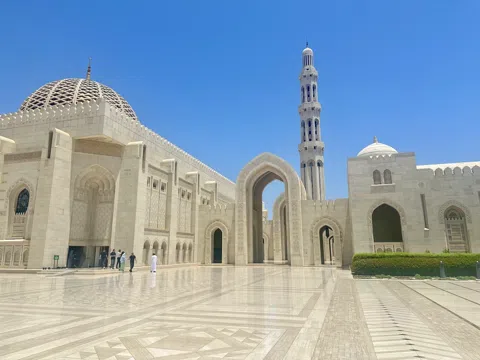
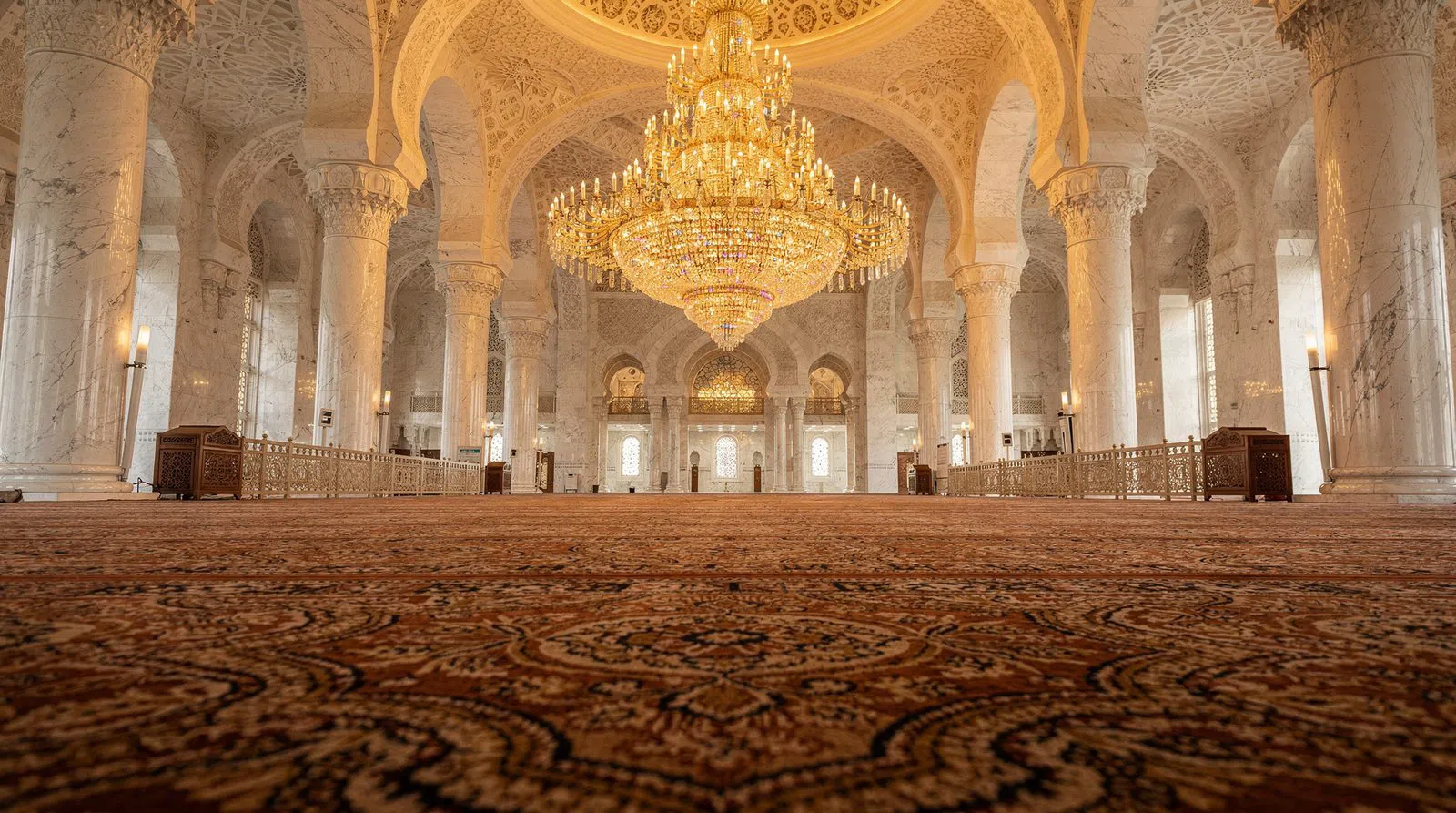
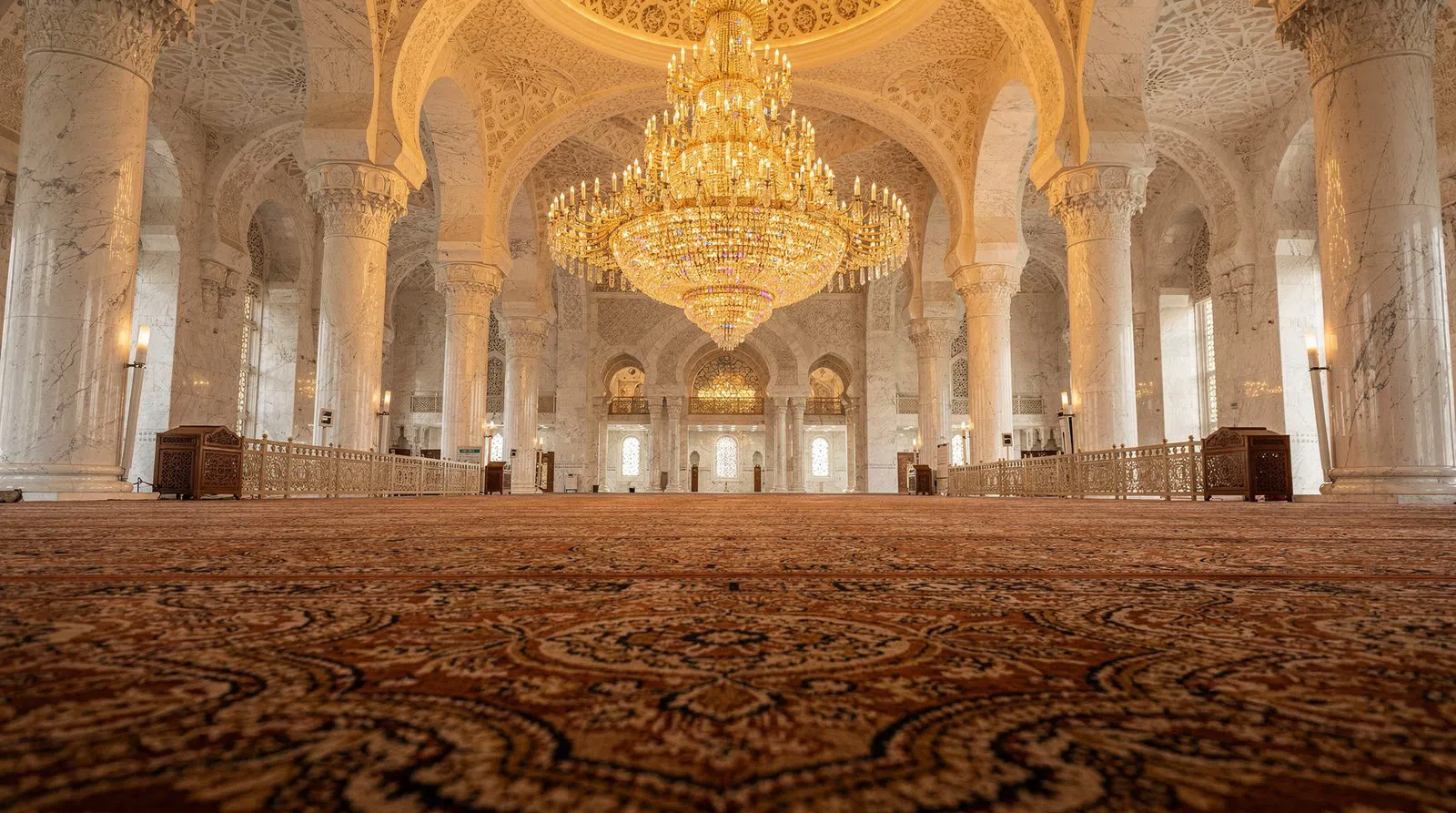
Sultan Qaboos Grand Mosque (Ghubrah, on Sultan Qaboos Street) is the hardest constraint in Muscat, and it is also the reason the early start sells itself. Non-Muslim visiting runs 8am to 11am, Saturday to Thursday, closed on Fridays. Arrive by 9.30 or you will be moved along politely and quickly, and by then the marble courtyard is throwing heat back at you anyway. Entry is free; abaya and scarf hire is about OMR 2 at the gift shop if you have not brought your own. Women cover shoulders, ankles and hair; men wear long trousers. Coach groups start rolling in from 8am and the site copes with them well. If you are a large party, split across the door and stay on the marked visitor route rather than moving as a block.
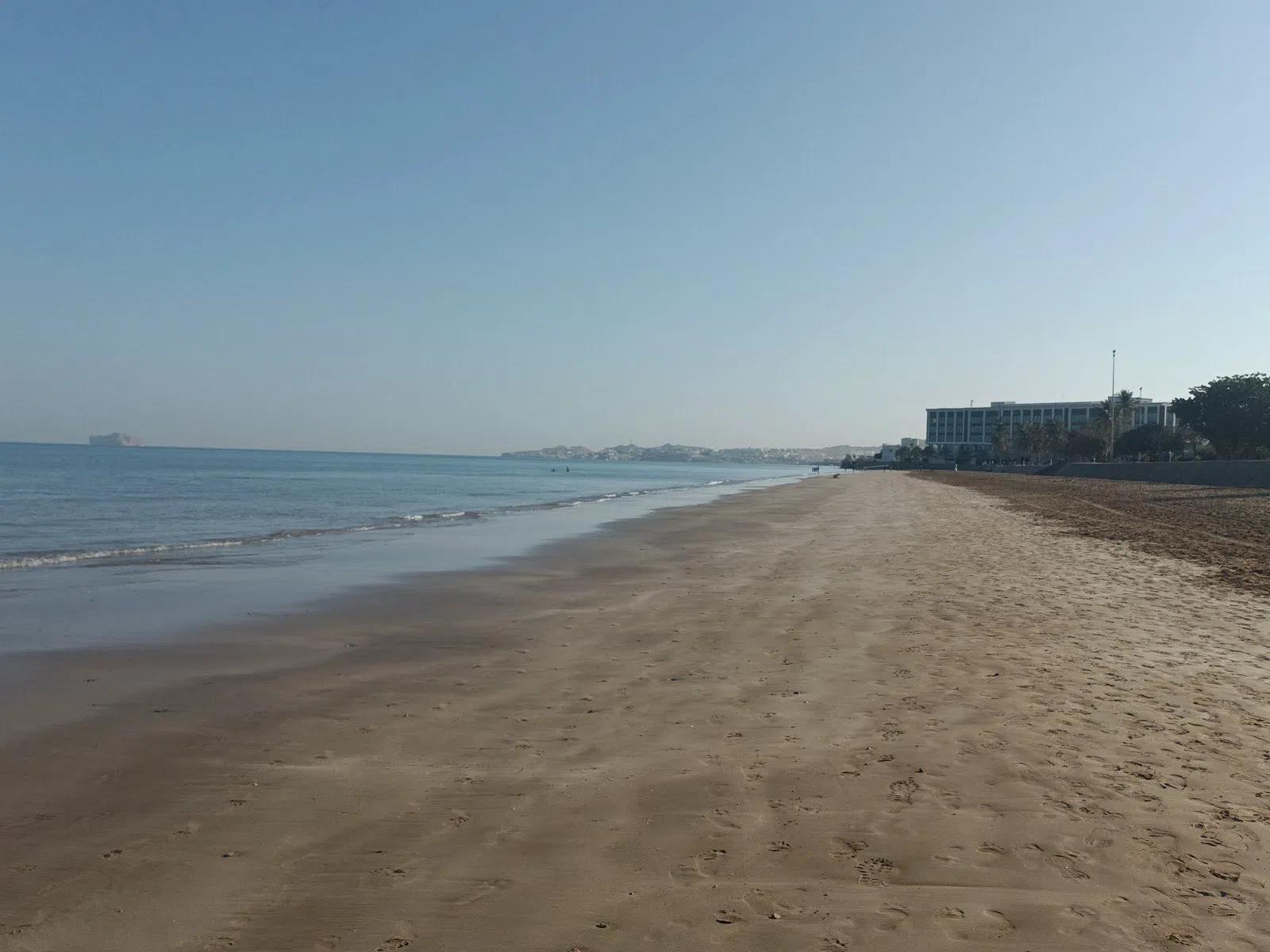
Shatti Al Qurum beach and promenade (Shatti Al Qurum) is the default dawn move on any morning you are not at the mosque. It is public, free and unrestricted, with plenty of parking at the Shatti end, and it works for any size of group because there is simply a lot of sand. It is walkable and swimmable before about eight and again after sunset. Do not expect the sea to cool you down in early autumn, when it is bath-warm. Treat this as a walk with a dip in it.
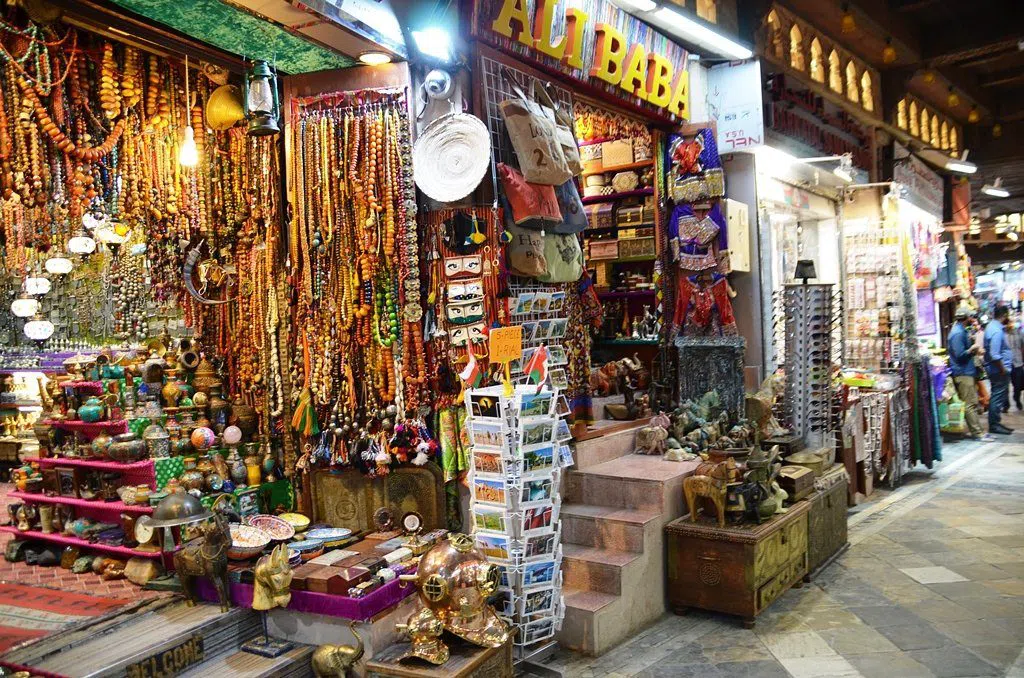
Mutrah Souq (Mutrah, behind the corniche) runs the same split shift as the city: roughly 8am to 1pm, then 4pm to 10pm. That is the whole point of it. The souq opens in exactly the two windows when the corniche outside is unwalkable, and the roof over the lanes makes it one of the very few shaded outdoor experiences in Muscat. Entry is free and haggling is expected. The lanes are narrow, so move in twos and threes; a group of ten walking abreast will spend the visit apologising.
The coast road east, on a six o'clock alarm
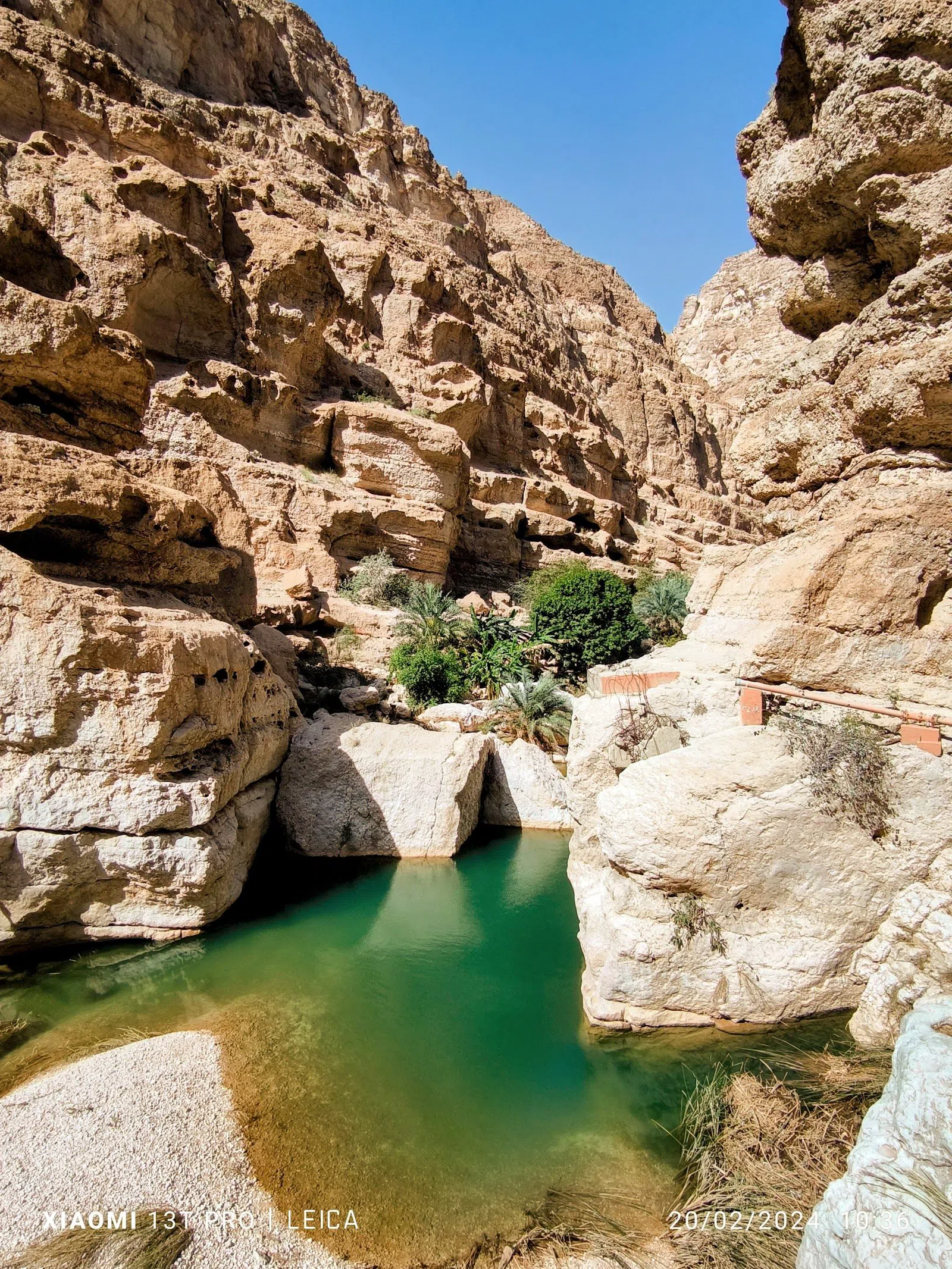
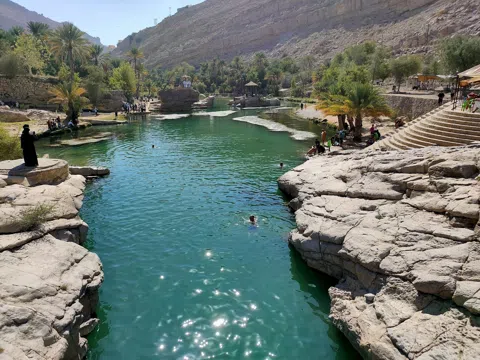
Wadi Shab (the coast road east, roughly two hours out) is worth an alarm you will resent. It is open 8am to 6pm, there is no gate control or booking, and the return boat across the pool at the entrance costs about OMR 1 per person with free parking. The walk in is exposed and completely unshaded, 45 minutes of stone with the sun on it, so do the hike early and take the swim at the end as your reward. The final swim-through into the cave is single-file and needs confident swimmers; groups are fine on the walk, but that last section will sort you out honestly. If anyone in your party is unsure in water, plan for them to wait at the last pool.
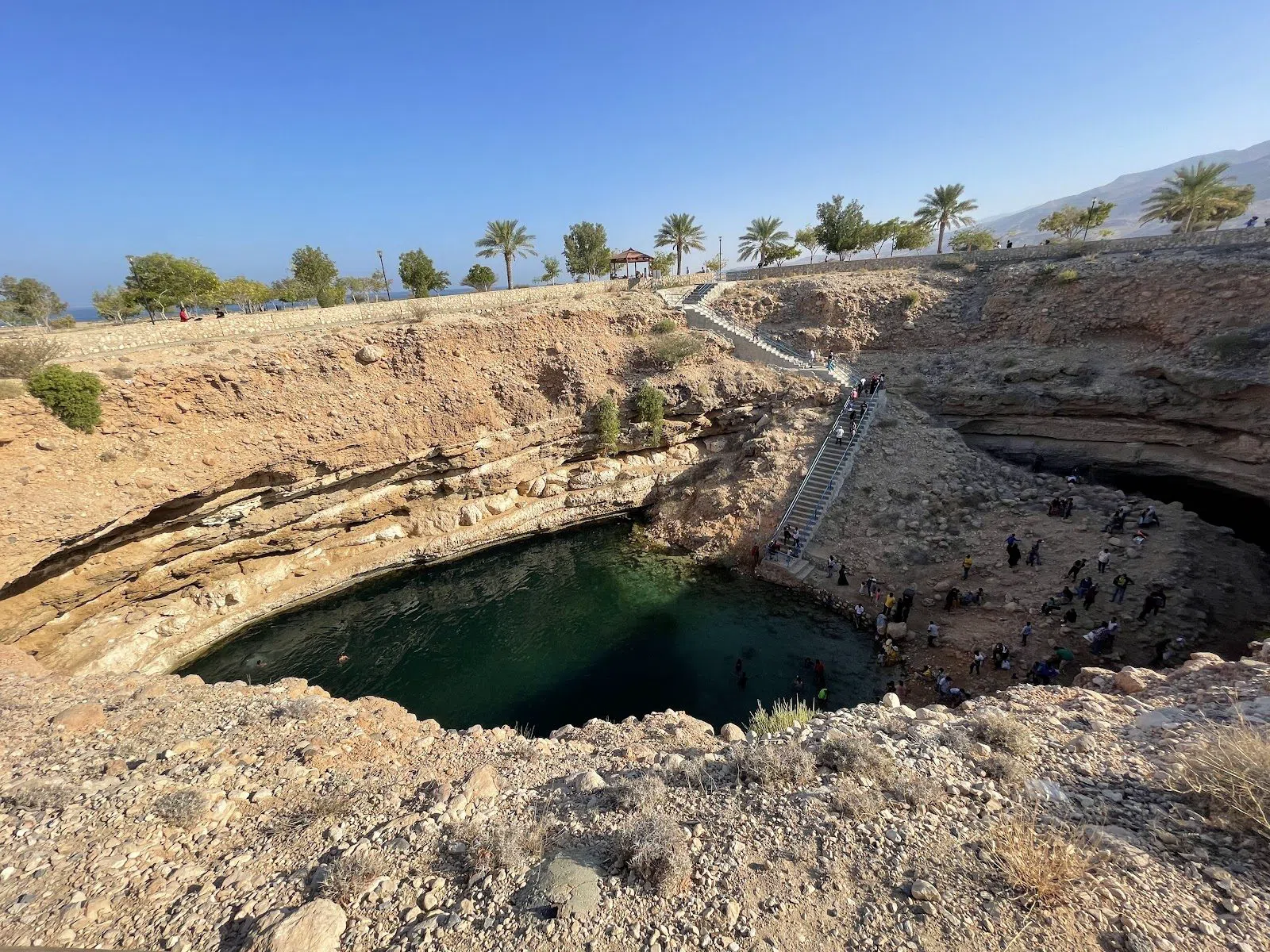
Hawiyat Najm Park (Bimmah Sinkhole) sits on the same coast road, short of the wadi, and slots naturally either side of it. It is a public park, 8am to 6pm, 500 baisa per person with free parking, and there are picnic shelters that suit groups. There are no lifeguards, so you swim at your own risk. In hot months it earns the stop because the water sits well below ground level and stays noticeably cooler than the sea, which by September is no help at all.
The reserve that decides its own dates
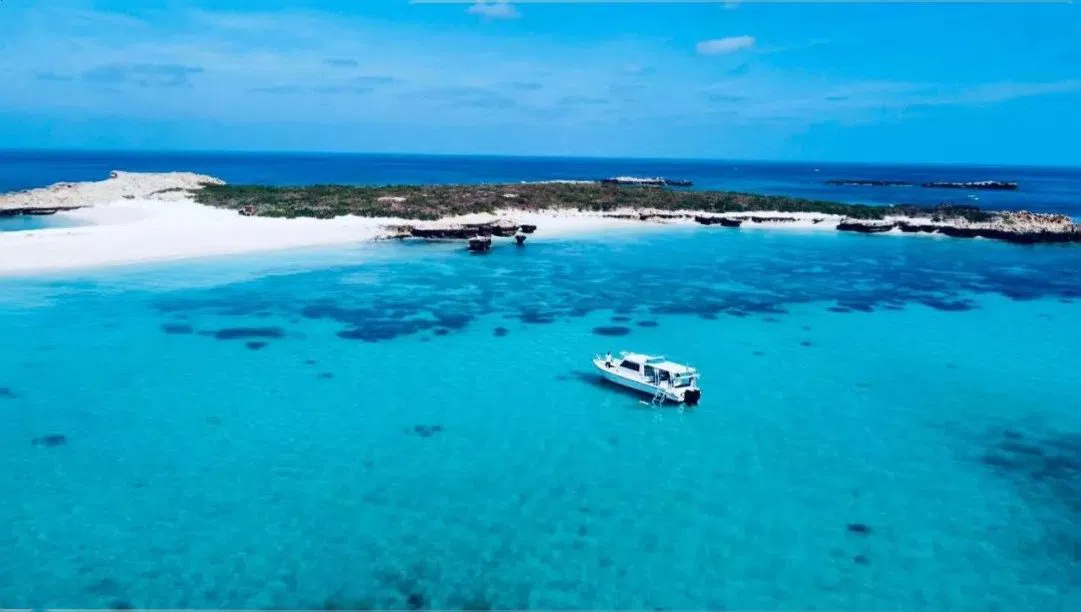
Daymaniyat Islands Nature Reserve (day boats from the coast north-west of the city) is the one entry on this list where the calendar makes the decision for you. The reserve is closed to all visitors from 1 May to 31 October for turtle and seabird nesting, and reopens on 1 November. Boats run as shared or private charters and handle groups well; budget roughly OMR 25 to 45 per person for a day boat, plus a paid Environment Authority permit that rangers do check on the water. Book a morning departure, so the snorkelling is done and the boat is heading back before the afternoon.
Buying back the middle of the day
Book the hot hours in advance and you keep them. Treat 11am to 5pm as indoor time you have already paid for.
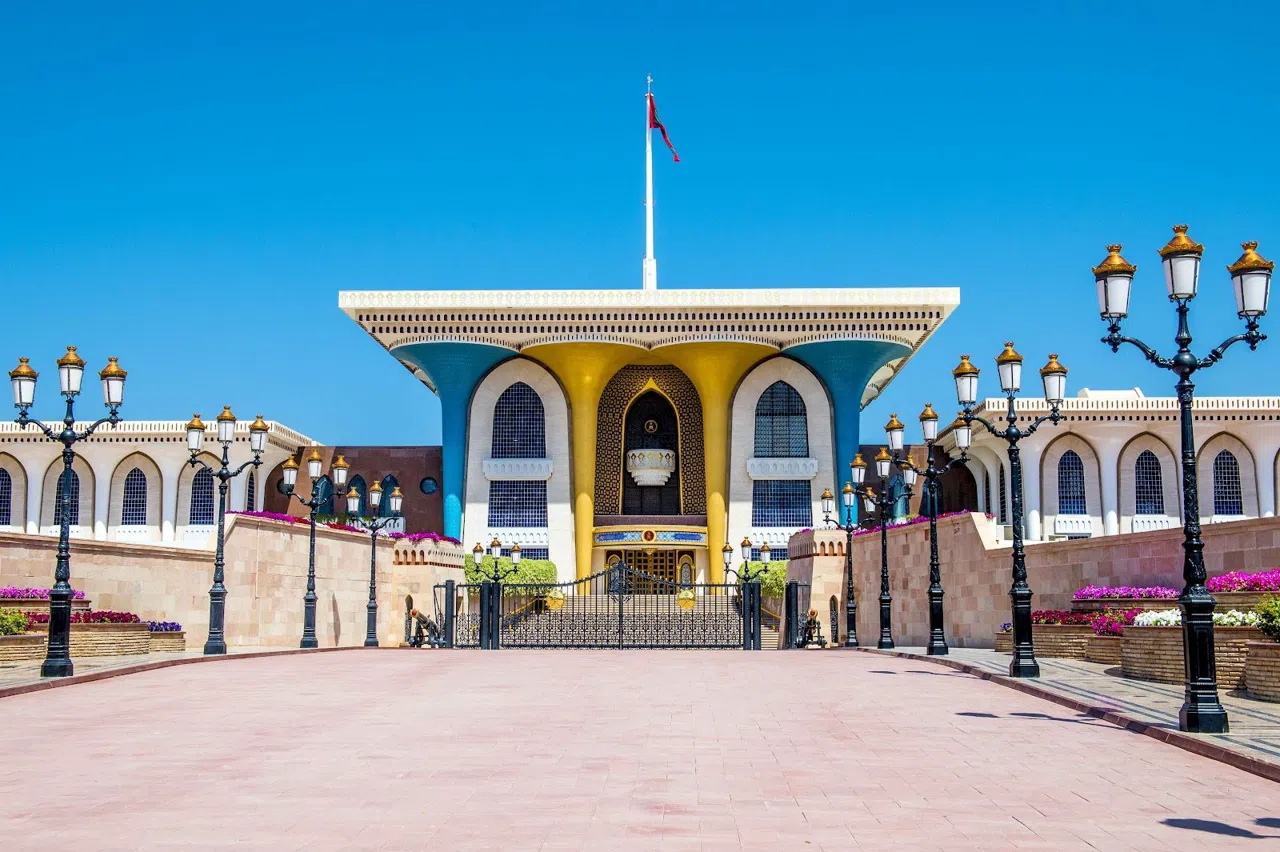
National Museum of Oman (Old Muscat, directly opposite the palace) is the best-built indoor block in the city and its position is deliberate. Do the palace exterior at 8am while the light is low, then cross the road as the temperature climbs. Tickets are OMR 5 for tourists, OMR 2 for residents, OMR 1 for citizens and GCC nationals. Guided group visits are bookable in advance, and there is a cloakroom and café on site.

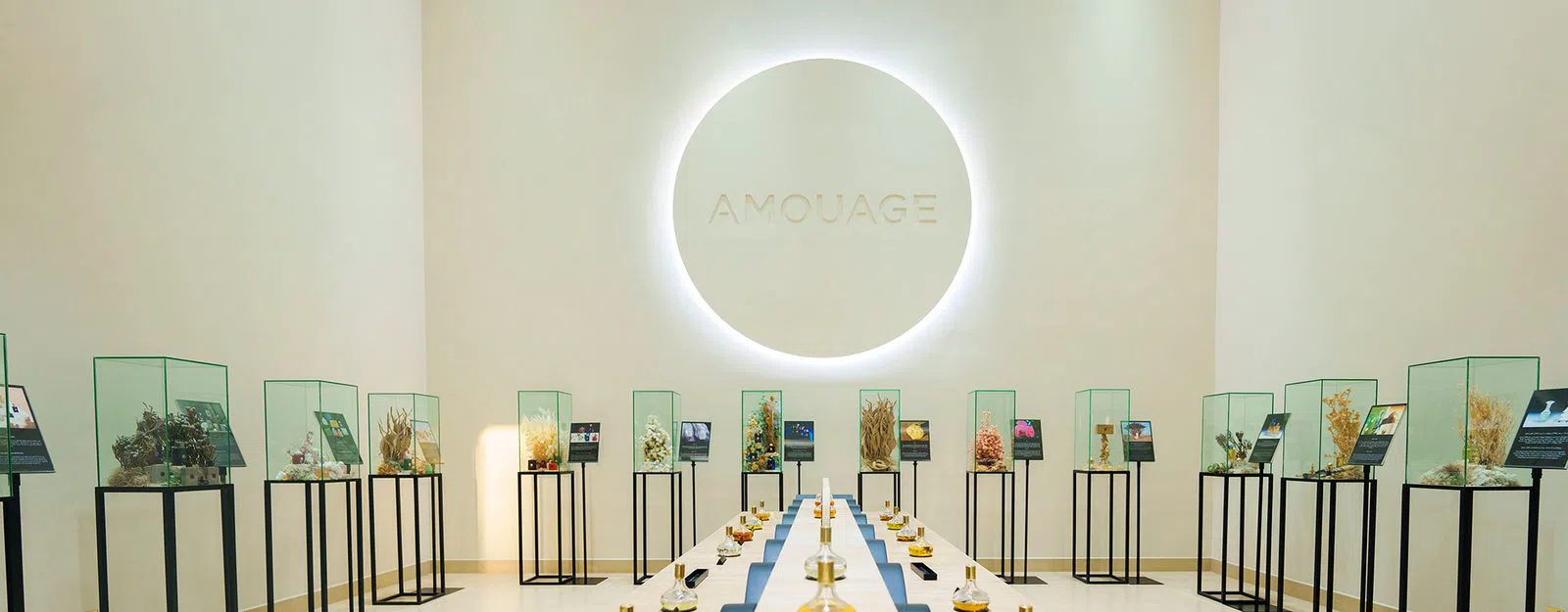
Amouage Manufacture and Visitor's Centre (Seeb) gives you ninety fully air-conditioned minutes and is built for groups, with guided tours by appointment and hotel and operator parties arriving all day. Book ahead; walk-ins are not reliable. Direct entry is free to low, while packaged tours including transfers run from around OMR 40. It earns its place if you are staying near the airport and want a midday block that is not another museum.
Snow Oman (Mall of Oman, Bausher) is the most literal answer to a 40°C afternoon anyone has built, and with children it is the best one. Passes run roughly OMR 10 to 20 per person depending on which you buy, group rates and lockers exist, and jackets and boots are included in the price. Bring your own gloves and thick socks, which is the difference between an hour and two hours in there. Children need adult supervision throughout.

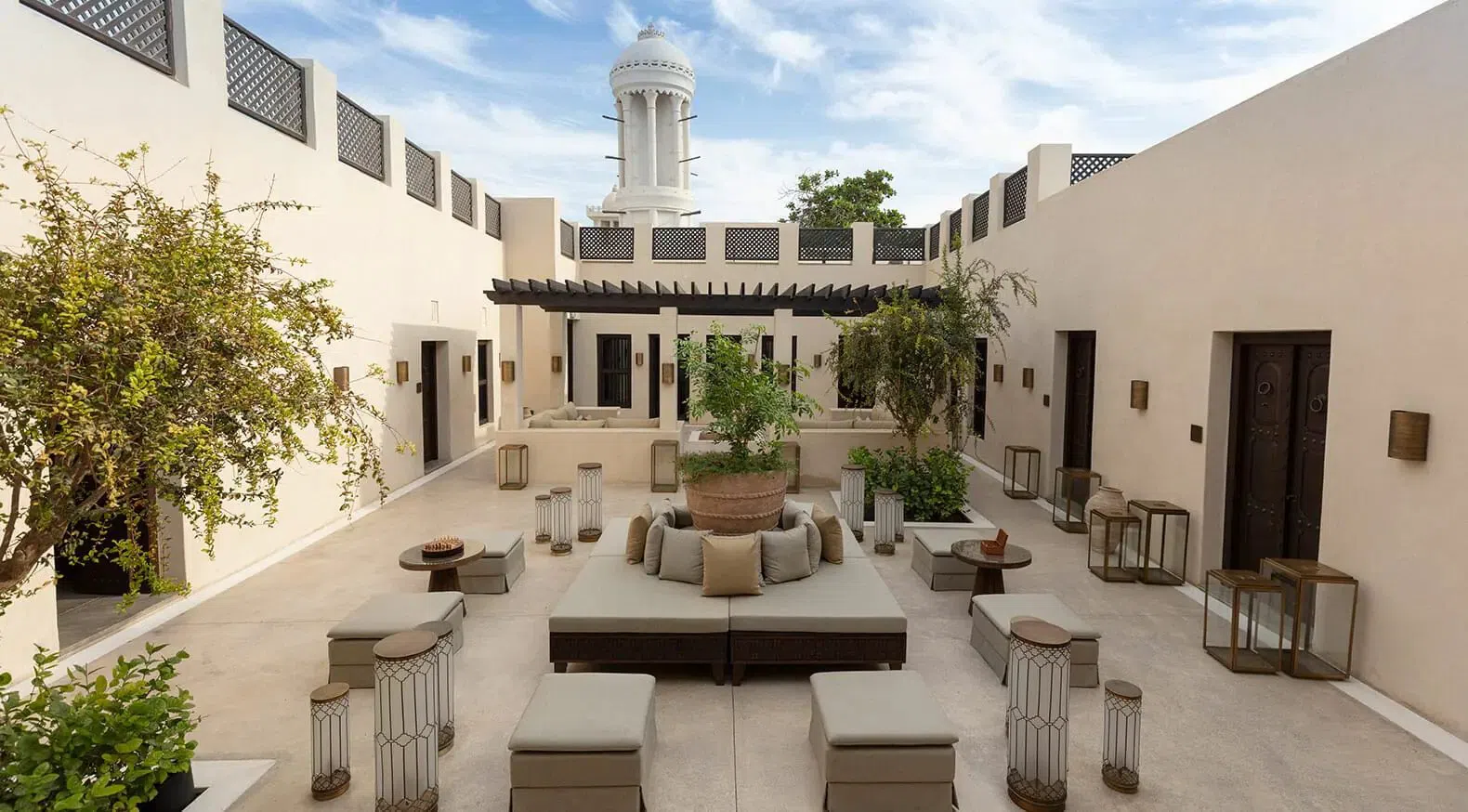
The Chedi Muscat (Ghubrah, on the beach) sells day passes to non-residents, and this is the civilised way to wait the afternoon out. Expect roughly OMR 40 and up, typically including up to OMR 30 of food and drink credit, with pools open 8am to 6pm. The Long Pool is adults-only, so mixed-age groups end up splitting between pools, which is worth knowing before you promise the children anything. Book the pass ahead on Fridays and Saturdays, which is the Omani weekend.
The long drive that stays air-conditioned
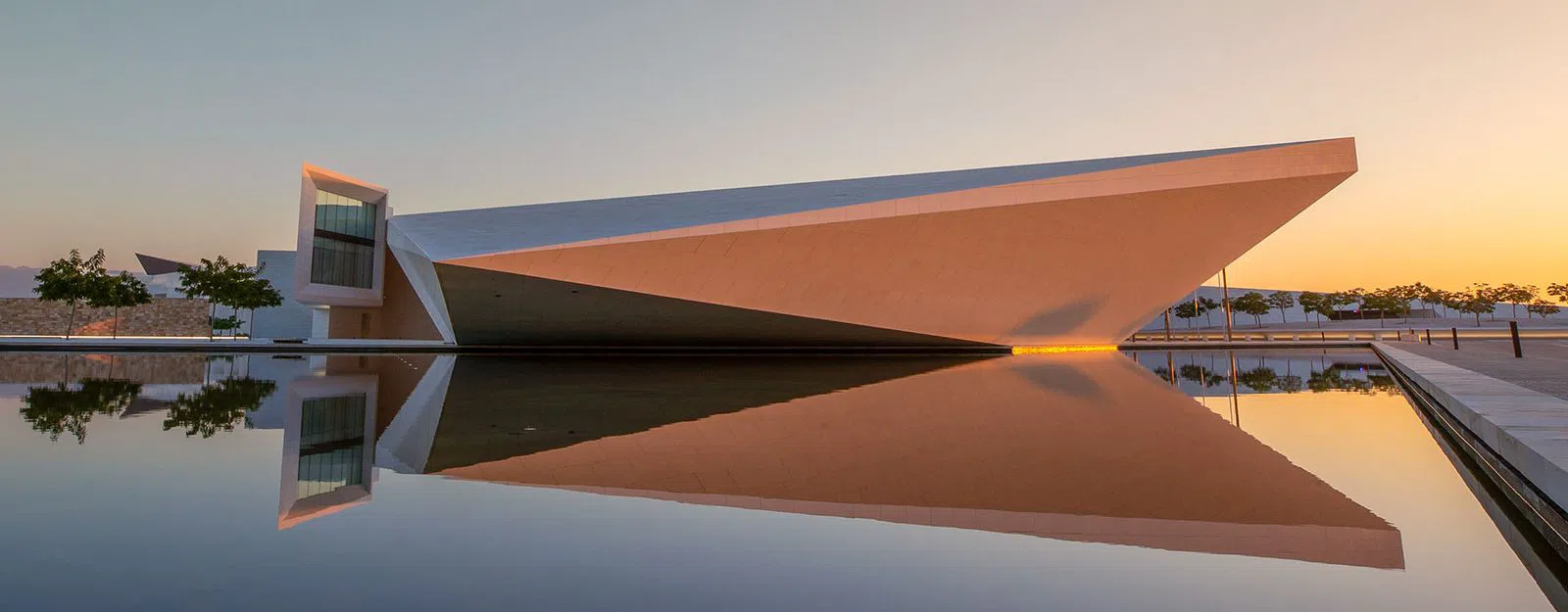
Oman Across Ages Museum (the interior, 140km from the city) is a day trip shaped exactly around the problem. It opens 9am to 9pm, so you drive out in the cool of early morning or late afternoon and spend the hot middle entirely indoors. Tickets are OMR 5 for adult tourists, free for children and students under 25. There is a large free parking garage, wide circulation inside and group tickets available, which makes it one of the few day trips that works for a coach party without becoming a queue.
Two hours up for air that is ten degrees cooler
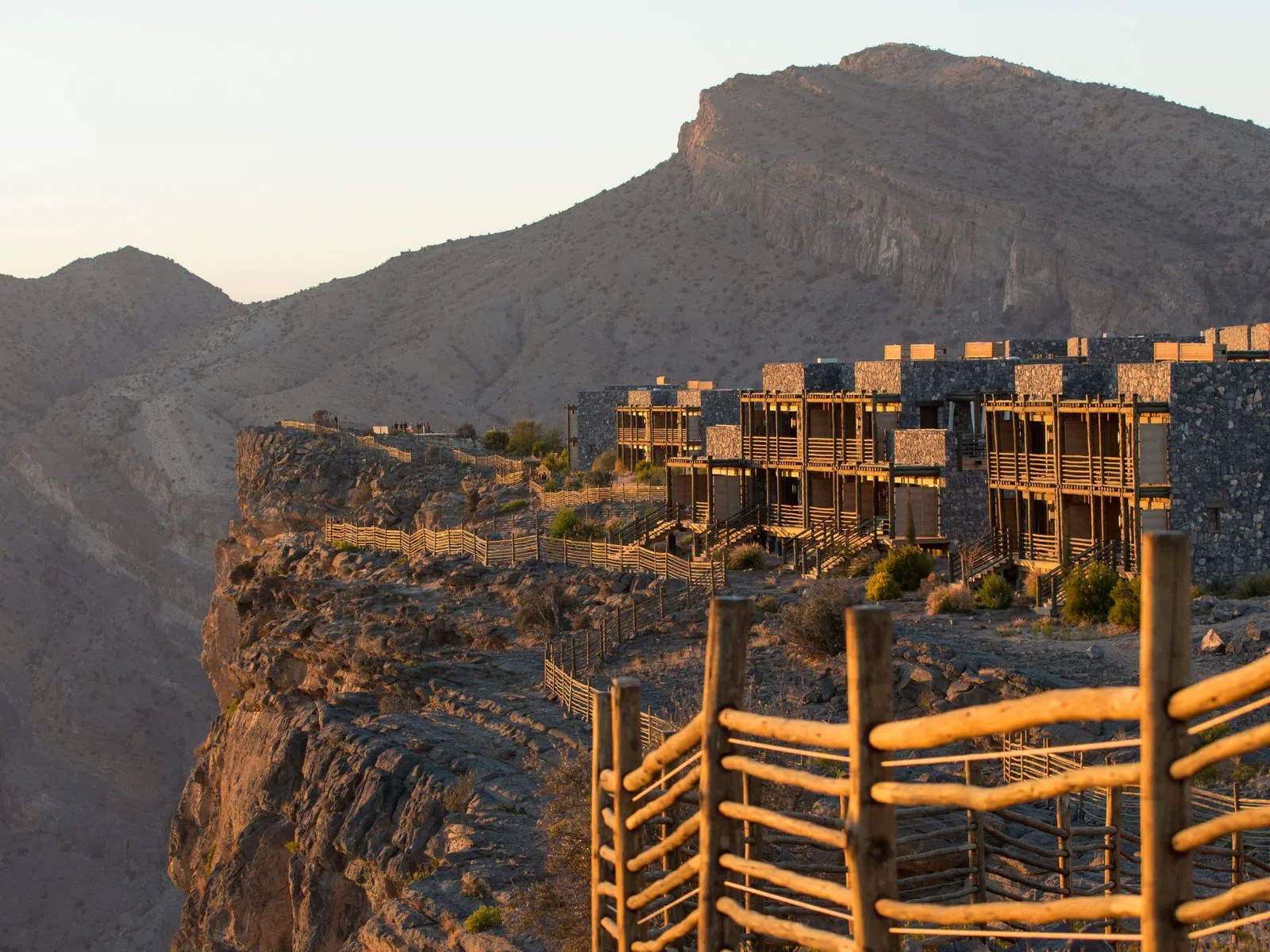
If you want one normal outdoor day without leaving the country, go up. Alila Jabal Akhdar (Jabal Akhdar) sits about two hours from Muscat and is reliably 10 to 15°C cooler, which turns a retreat back into a walk. It has 86 suites and villas, takes groups and buy-outs, and runs guided village walks and a via ferrata. Rooms are roughly OMR 150 and up per night, which is the real cost of that temperature drop. A 4x4 is required by law on the ascent road and this is enforced at the checkpoint, so book the right vehicle at the airport rather than arguing on the mountain.
Muscat after dark
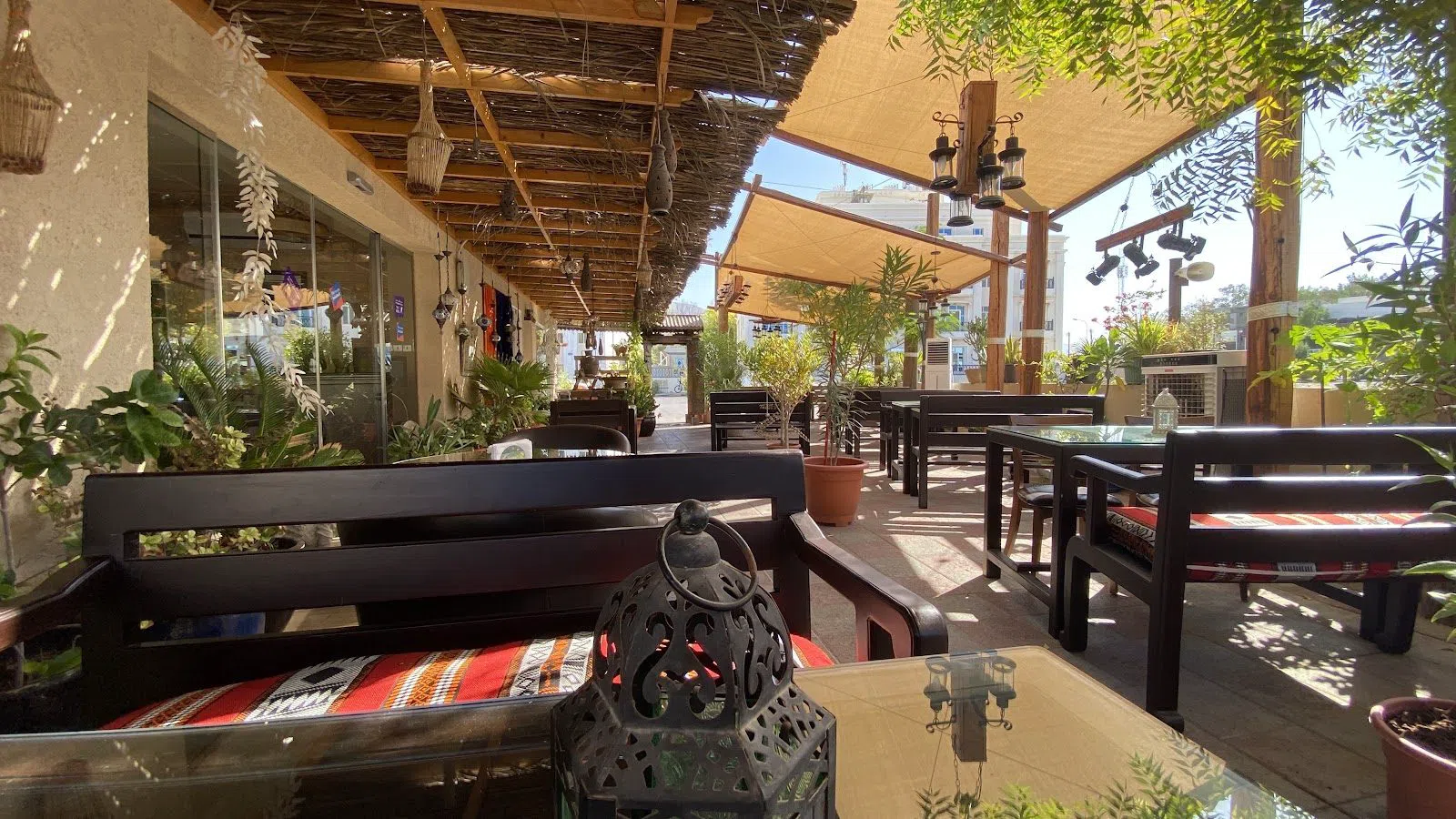
Kargeen Caffe (Madinat Qaboos) is built entirely around eating outdoors after the sun has gone, and its garden is the only reason I would sit outside in Muscat before November. It is open until 1am, costs about OMR 8 to 15 a head, and is excellent for groups with large majlis areas and long tables. Reserve for six or more, particularly on Thursday and Friday nights. Order the shuwa and let the Omani mezze fill the table; that is what the kitchen does well and it is what I eat there.
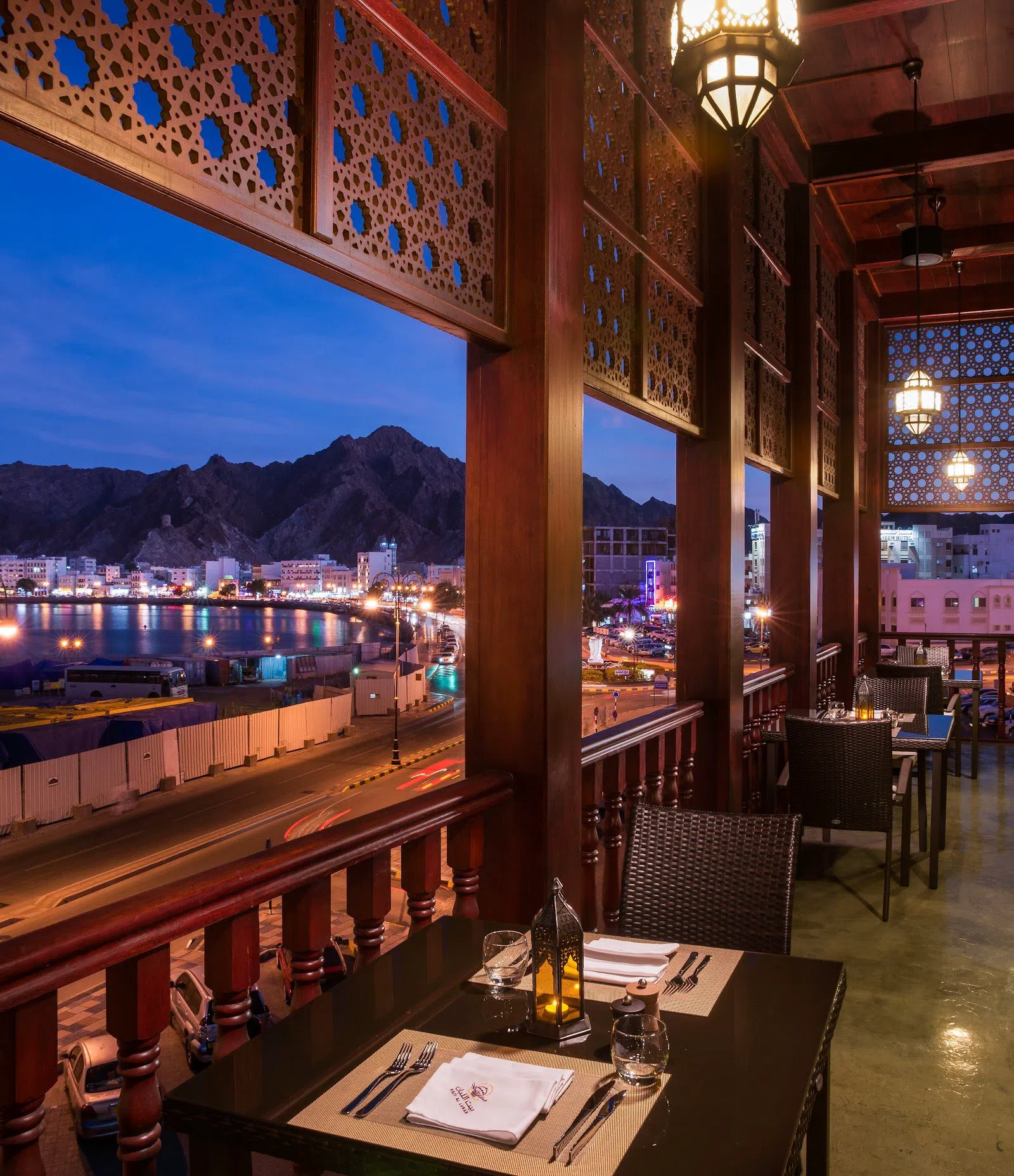
Bait Al Luban (Mutrah, on the corniche) is the right end to a souq evening: thick stone walls, cold air and a window over the harbour, at about OMR 10 to 20 a head. The shuwa, the qabuli rice and the frankincense ice cream are the order, and the ice cream sounds like a novelty until you eat it. Booking is essential at peak hours. Groups go upstairs, and the staircase makes it awkward for anyone with limited mobility, so say so when you reserve.
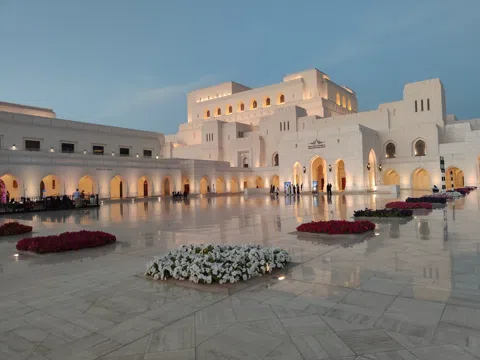
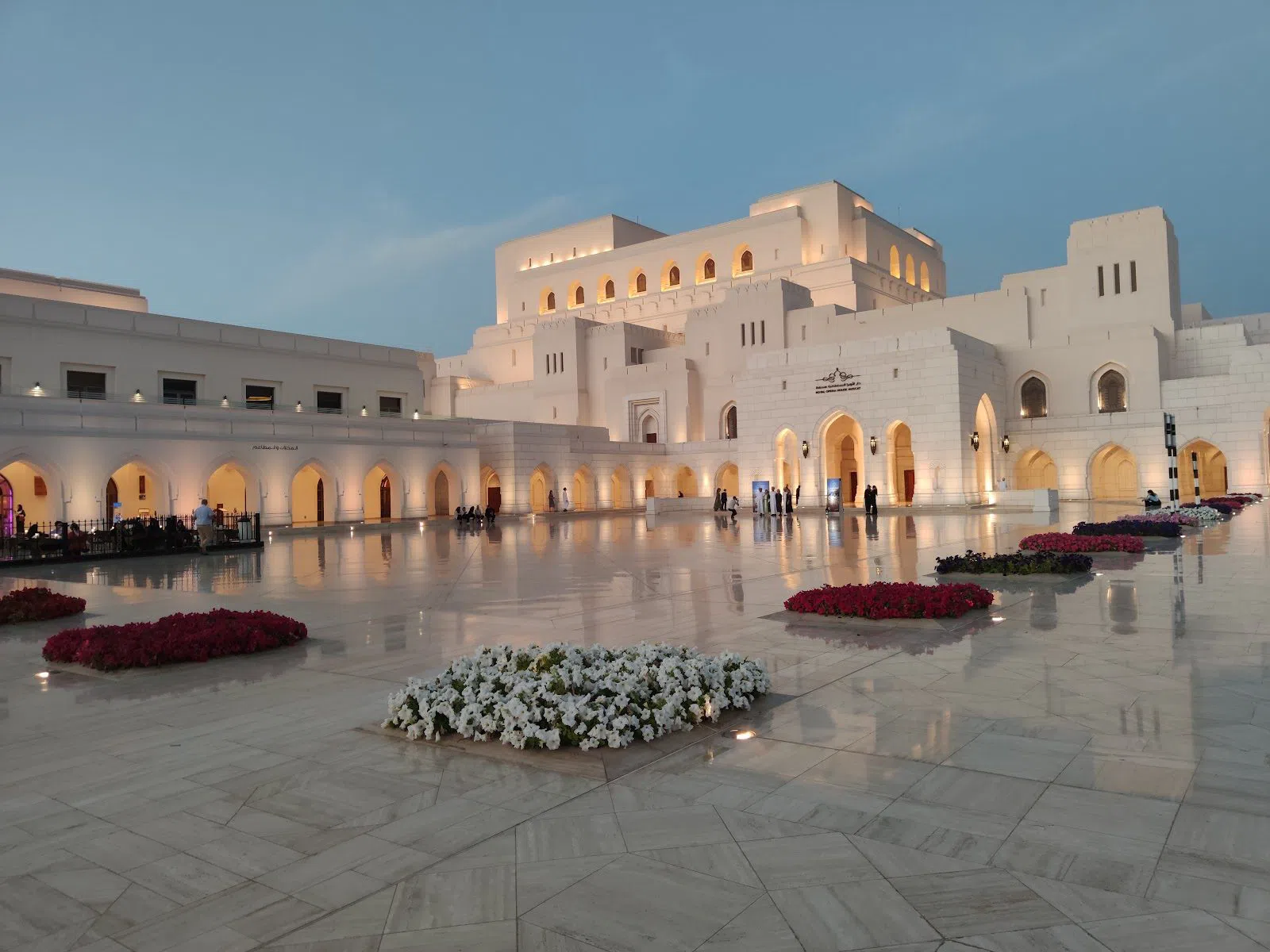
Royal Opera House Muscat (Shatti Al Qurum) is an evening indoors that begins exactly when the outdoor day has ended. The 2026-27 programme is its 15th anniversary season, running October to May and opening with Verdi's Rigoletto. Tickets run roughly OMR 10 to 70 depending on the production, and daytime guided tours of the building cost about OMR 3 if you want the architecture without a performance. Smart dress is enforced, with no shorts and no sandals in the auditorium, and group bookings are standard.
Turtles at nine and eleven
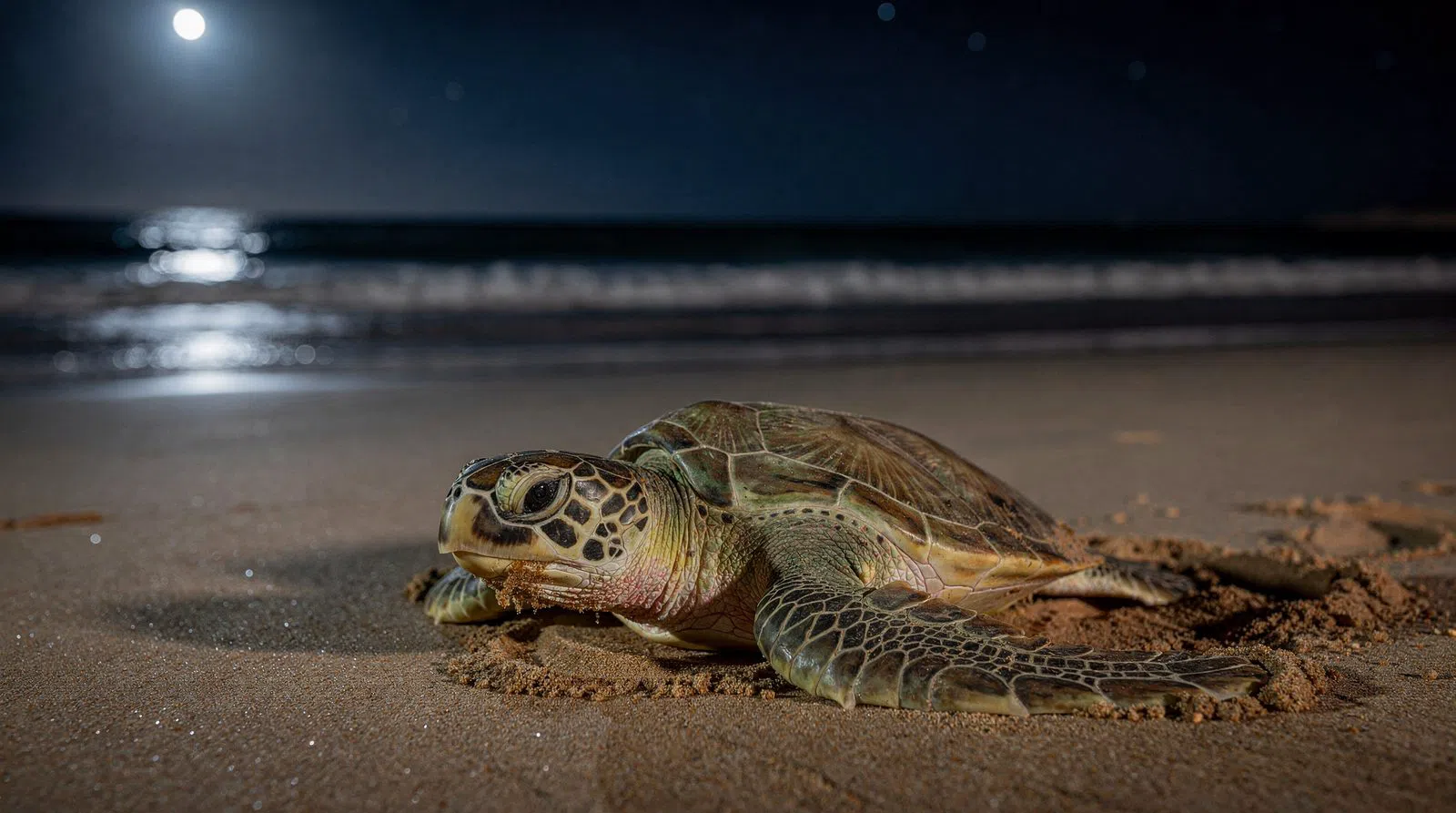
Ras Al Jinz Turtle Reserve (the far eastern coast) is strictly capped at 25 people per guided session, at 9pm and 11pm nightly. Adults are OMR 7, children 6 to 17 are OMR 4, under-6s free. Large groups must be split across the two sessions and booked well ahead; this is the one place on the list where turning up hopefully will fail. Peak nesting runs July to October, which means the hottest months are the best turtle months, and the whole encounter happens in the dark. Take the guesthouse on site, because the drive back to the city at one in the morning is not a good end to the day.
Practical notes
Hire a car. The roads are excellent and distances are the only real cost: the wadi and the sinkhole are a two-hour run east, the interior museum is 140km, the turtle reserve further still. A saloon is fine for all of the coastal sites and every car park mentioned here, and the only place you legally need a 4x4 is the mountain ascent. Taxis in the city are unmetered, so agree the fare before you get in, and ride-hailing apps operate in Muscat. Parking is free at almost everything above.
Cards work in hotels, malls and restaurants. Carry rials for the souq, the OMR 1 wadi boat, the 500 baisa sinkhole entry and small reserve fees, and remember that 1000 baisa make one rial. The rial is one of the strongest currencies in the world at roughly USD 2.6 to 1, so figures that look small on paper are not.
The mosque is closed to non-Muslim visitors on Fridays, and the weekend is Friday and Saturday, when the Chedi pool passes and Kargeen tables both need booking ahead. Build every day the same way: outdoors before nine, indoors and paid-for from eleven, outdoors again after six. Carry three litres of water per person on any wadi day and start it at six.
A modest day is easy here. A free mosque, an OMR 5 museum and an OMR 12 dinner comes in under OMR 20 a head. The expensive days are the deliberate ones: the island boat at OMR 25 to 45 plus permit, the resort day pass at OMR 40 and up, the mountain night at OMR 150 and up. Spend on the ones that buy you temperature. For the rest of the city, planning by the hour costs nothing, and the Muscat guide shows how the districts fit together.
Before you go
Is September or October better for sightseeing in Muscat?
October, and specifically its last week. September afternoons still run into the forties with heavy coastal humidity, so you get outside before 9am or after sunset and not in between. Temperatures fall through October, and by the final week you can walk slowly through Old Muscat without suffering for it. November is better again.
When can non-Muslims visit the Sultan Qaboos Grand Mosque?
8am to 11am, Saturday to Thursday, closed Fridays. Arrive by 9.30 at the latest or you will be moved along. Entry is free, abaya and scarf hire runs about OMR 2 at the gift shop, women cover their hair and men need long trousers.
Where can I swim if the sea in Muscat is too warm?
Hawiyat Najm Park (Bimmah Sinkhole) is below ground level and stays noticeably cooler than the sea. Entry is 500 baisa per person and there are no lifeguards. Wadi Shab is the other genuinely cold water, open 8am to 6pm, with an OMR 1 return boat. Snow Oman, at OMR 10 to 20 a pass, is where you go when the afternoon is unworkable.
Can I see nesting turtles and snorkel the Daymaniyat Islands on the same trip?
Only from November onwards, and you trade one for the other. The Daymaniyat Islands Nature Reserve is closed to all visitors from 1 May to 31 October and reopens on 1 November, while turtle nesting at Ras Al Jinz peaks July to October. Come in early November and you get the islands with thinner turtle numbers; come in September and you get reliable turtles and no islands.
Do I need a 4x4 to get around Muscat and the day trips?
No, except for one road. A saloon car handles the city, the coast road east to Wadi Shab and the sinkhole, and the 140km inland drive to Oman Across Ages Museum. The law requires a 4x4 on the ascent to Jabal Akhdar and it is checked, so book the right vehicle at the airport if the mountain is on your list.