The Muscat issue
The Halwa Kitchens Behind Every Muscat Welcome
Where to buy, watch and eat Oman's national sweet in Muscat: the makers worth the detour, the shops that suit groups, and the restaurants that serve halwa you can finish.
By Tarek NassarMuscat after dark, minus the hype
The pot is a metre across, the paddle is the length of an oar, and the man leaning into it has pushed the same slow figure-of-eight for two hours while the mix went from pale to amber to the colour of wet tobacco. What comes out is Omani halwa (rosewater, saffron, cardamom, ghee, a rubble of cashews), and in this country it does not wait for the end of a meal. It arrives within a minute of you sitting down, beside a thimble of kahwa, before anyone has asked why you came.
What you are actually being handed
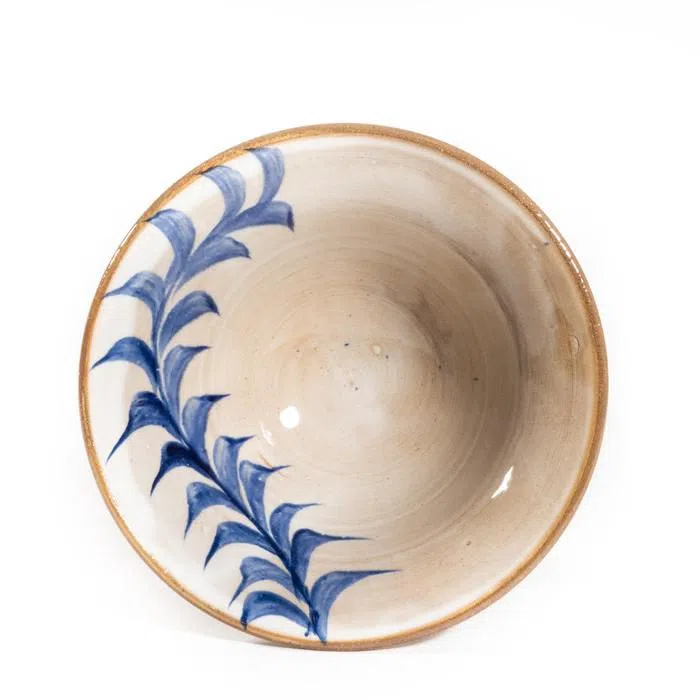
Halwa is not dessert here. It is the opening move of a conversation, and refusing it reads roughly the way refusing a handshake would elsewhere. The standard form is a small brass or ceramic dish set down with cardamom coffee, eaten with a spoon or with the right hand, one or two mouthfuls and no more, because it is dense enough that a third is a mistake. You will meet it in homes, at Eid, at weddings, in a majlis before business gets discussed, and in every shop on this list, where tasting is free and expected.
The cooking explains the price. Sugar or date syrup, starch, ghee, rosewater, saffron and cardamom go into a wide copper pot over a wood fire, and somebody stirs continuously for two to four hours. There is no shortcut and no machine that does it as well, which is why a good kilo costs what it costs, and why halwa made this morning is a different substance from halwa that has sat for a week: glossier, looser, less claggy on the roof of the mouth.
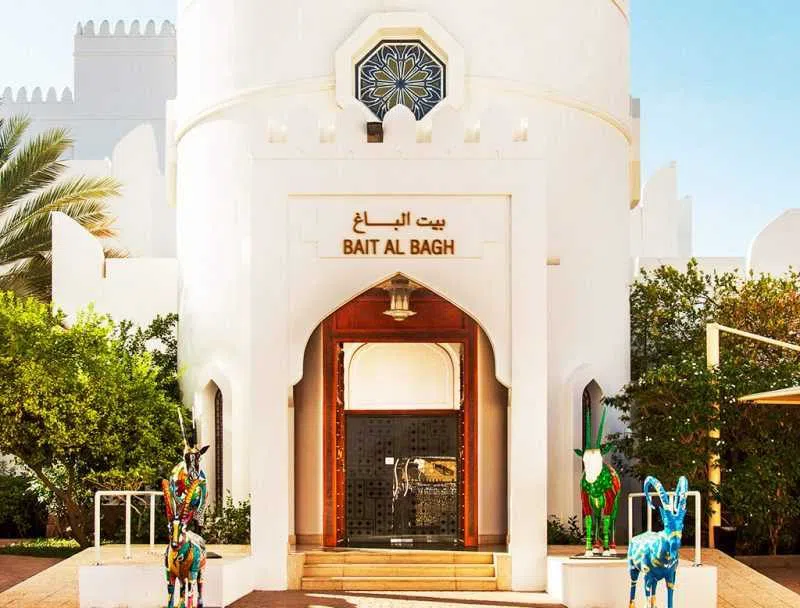
If you want that context before you start shopping, Bait Al Zubair (Old Muscat, the museum quarter below the palace) is the stop that makes the rest of the list legible. It treats the coffee-and-halwa welcome as a social contract rather than a snack, and the programme occasionally includes craft demonstrations, halwa making among them. Open daily except Friday, 9am to 5pm, museum entry a few rial with the café charged separately. The demonstrations are not permanent, so check the current programme before you build a morning around one, and arrange group visits or workshops with the museum in advance rather than springing them on the front desk.
Plan your Muscat trip
Live prices from our booking partners.
Free cancellation on many rooms. We may earn a commission when you book.
Start in the souq, and start early
Mutrah Souq (Mutrah, along the corniche) is the historic centre of the halwa trade and the cheapest way in: free to enter, on every city tour, with halwa from around OMR 1.50 per half-kilo. The lanes where the sweet sellers cluster hold shops that have run for generations, and that is the reason to go. It is also the most touristed retail in Muscat, and the quality spread inside a hundred metres is wide.
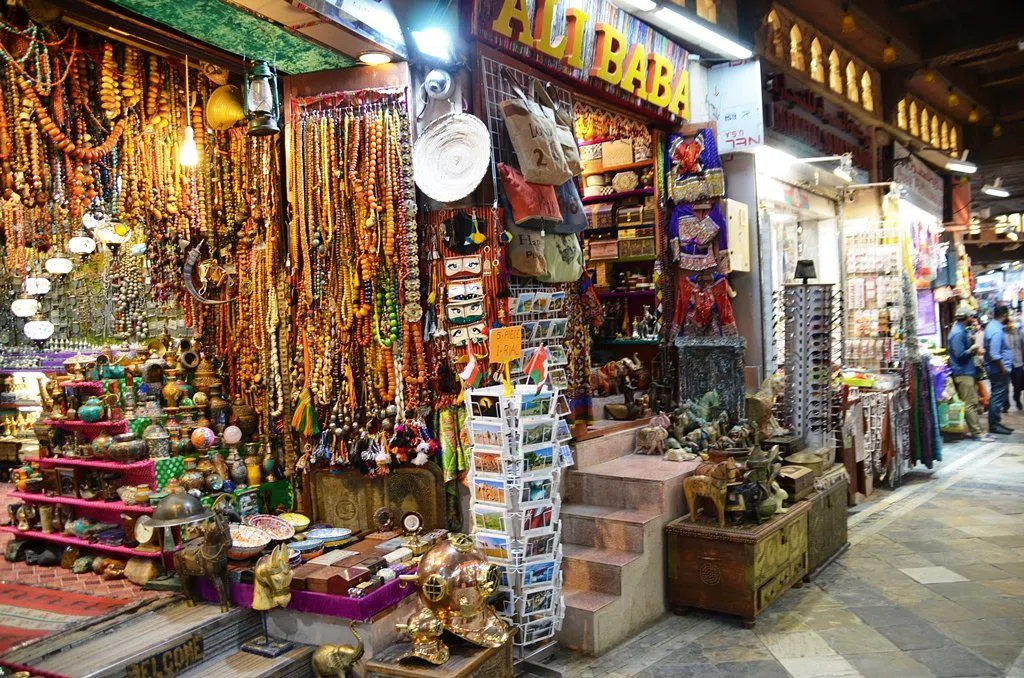
One rule protects you. Buy only where you can see the pot or the tray it came out of, and buy in the morning. Ask when the batch was made; a shop proud of the answer will tell you, and a shop that hesitates is selling you last week. Expect firm sales patter, expect to haggle, and expect the lanes to be shoulder-to-shoulder by mid-morning when the tour coaches land. Go at opening and you will have the place, the freshest trays and the better half of the sellers' attention.
Five makers and how to choose between them
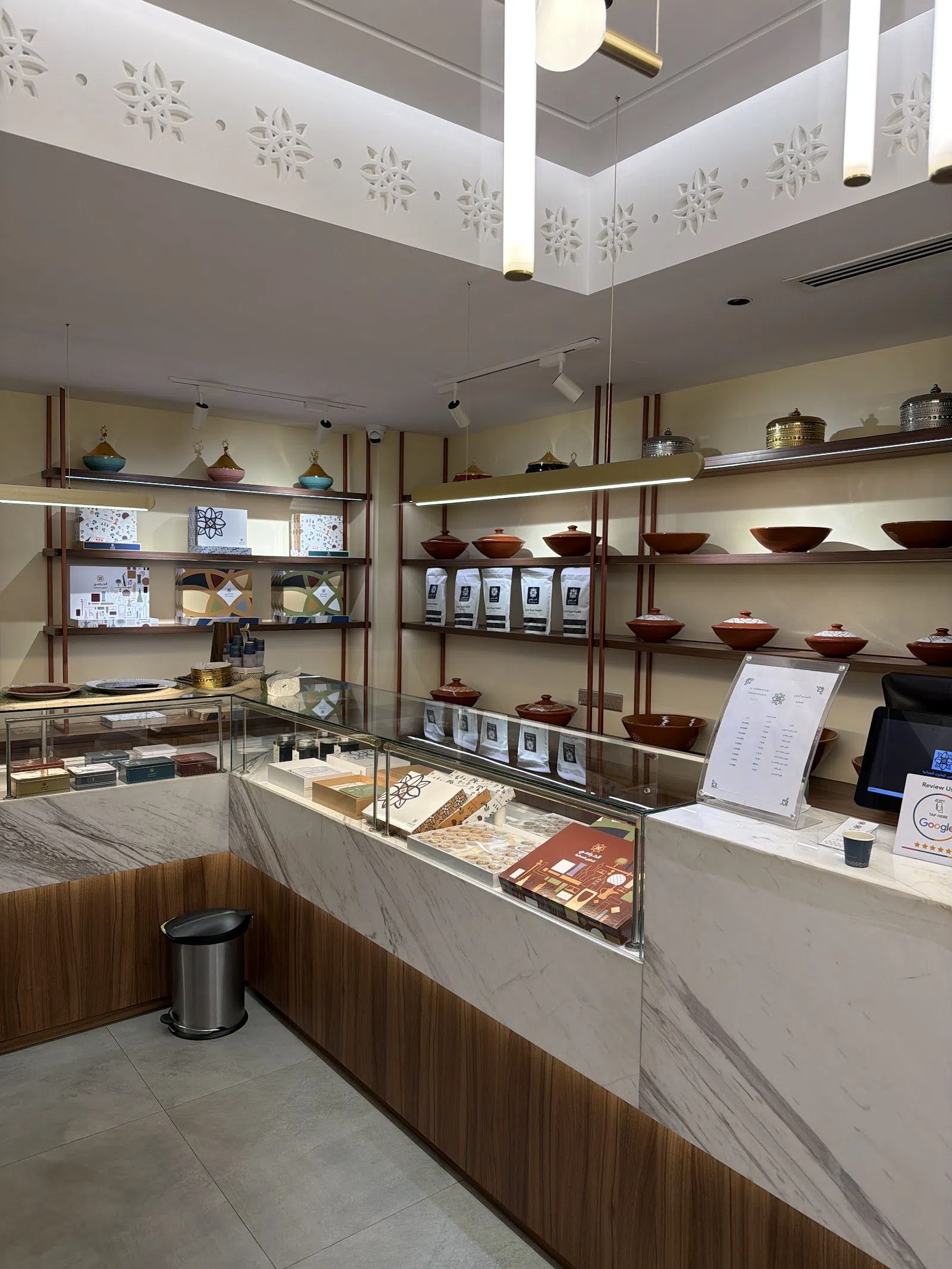
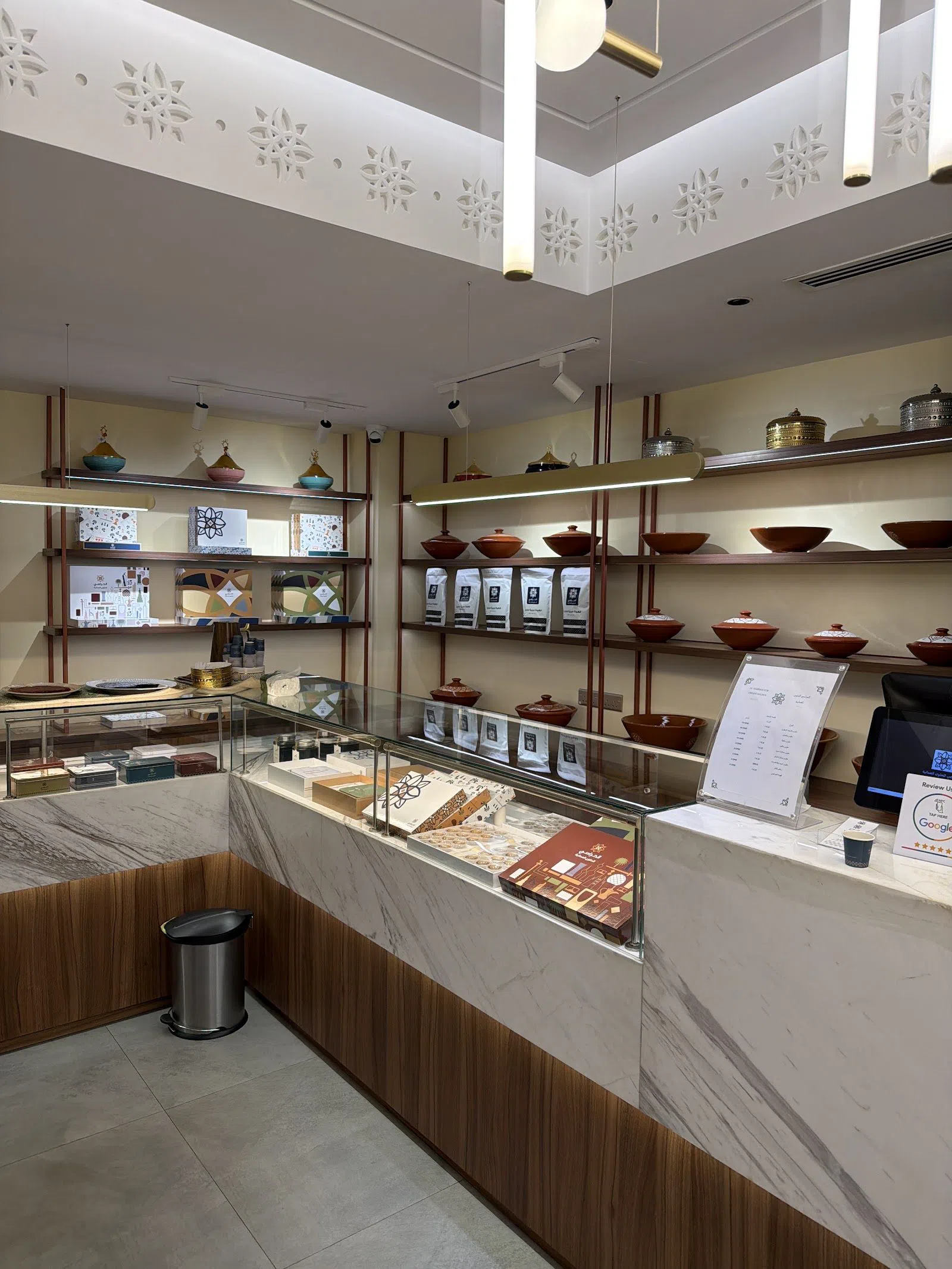
Al Harrasi Omani Halwa (walk-in retail counter, no booking) is the connoisseur's pick and the name Omanis themselves reach for: 4.9 out of 5 across more than 200 reviews, and widely called the best halwa brand in the country. Ask for the plain classic with no additives before you go anywhere near the saffron, because the whole point of the house is what it does without decoration. Roughly OMR 3 to 7 per kilo, with gift tins costing more. The shop floor is compact, so a group of ten or more should split into waves rather than pile in. Its own website was returning a server error at the time of writing, so phone or simply turn up.
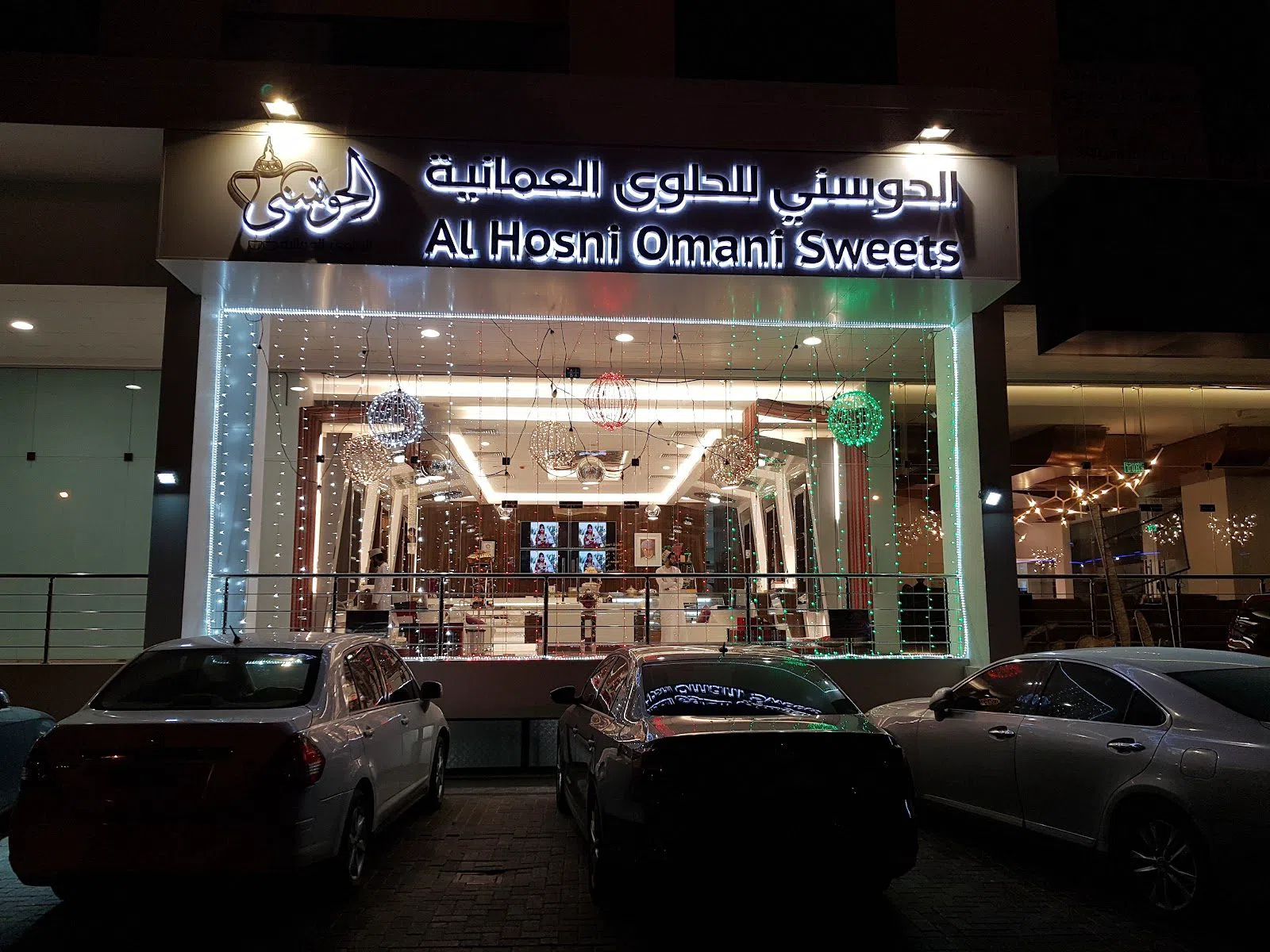
Al Hosni Omani Sweets (three branches, Azaiba, Seeb and Al Amerat, all with parking) is the best-presented halwa in the city and the easiest single stop if you are buying gifts. Ten varieties, a proper tasting bar with hot coffee poured while you work through them, plus tahini-style halwa and chocolate-coated pieces that behave more like confectionery than the traditional block. Around OMR 5 per kilo for the saffron and red-sugar grades, call it USD 13, and presentation boxes from OMR 10. Staff are happy to run a tasting for a group without a booking, which makes this the one address on the list that absorbs a coach. Ignore the old omanisweets.com address; it now redirects to an unrelated parked site.
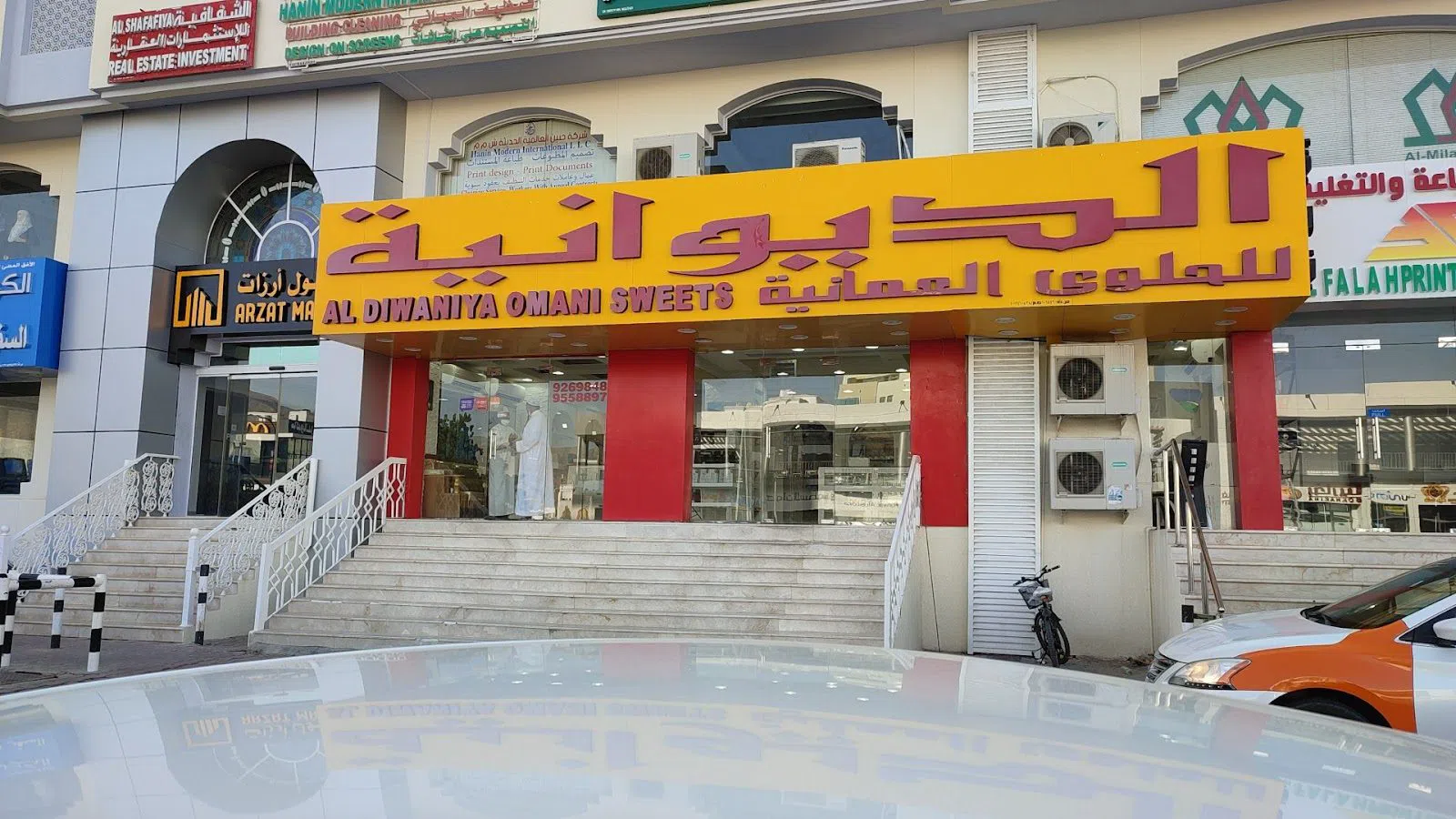
Al Diwaniya for Omani Sweets (walk-in, with a majlis corner built for sitting people down) is where I would send a first-timer. No sales pressure, a clean spoon for every taste, free kahwa while you decide, and the majlis corner comfortably seats a group rather than leaving them standing in a doorway. Open 6.30am to 11pm daily, the most forgiving opening hours in this piece. Around OMR 3 to 6 per kilo, with 3kg, 4kg and 8kg gift packages orderable online, and gift sets that come with ceramic khanjars and miniature Omani doors if you want the full souvenir treatment rather than just the sweet.
Al Hadidi Omani Halwa (branches in Al Ghubra North and Al Khoudh) is worth a detour precisely because the house style is different. Unrefined brown sugar and Omani honey instead of white sugar, and date-pulp versions for anyone who finds the classic punishingly sweet, which on honest inspection is most first-time visitors. Around OMR 3 to 6 per kilo, and they deliver across Muscat. The counters are small: this is a stop for pairs and families, not for a party of twenty.
Royal Omani Halwa (small city counter, closed Sundays) is the value option and the best tasting room on the list, for the simple reason that staff will open every type for you without expecting a kilo in return. From OMR 1 per half-kilo, with rosewater and fig around OMR 3. It is tiny, fine for a few people and hopeless for a group, and it fills up at weekends, so come on a weekday and go slowly. If you want to learn what you actually like before spending properly at Al Harrasi or Al Hosni, start here.
Two factories and whether the drive earns itself
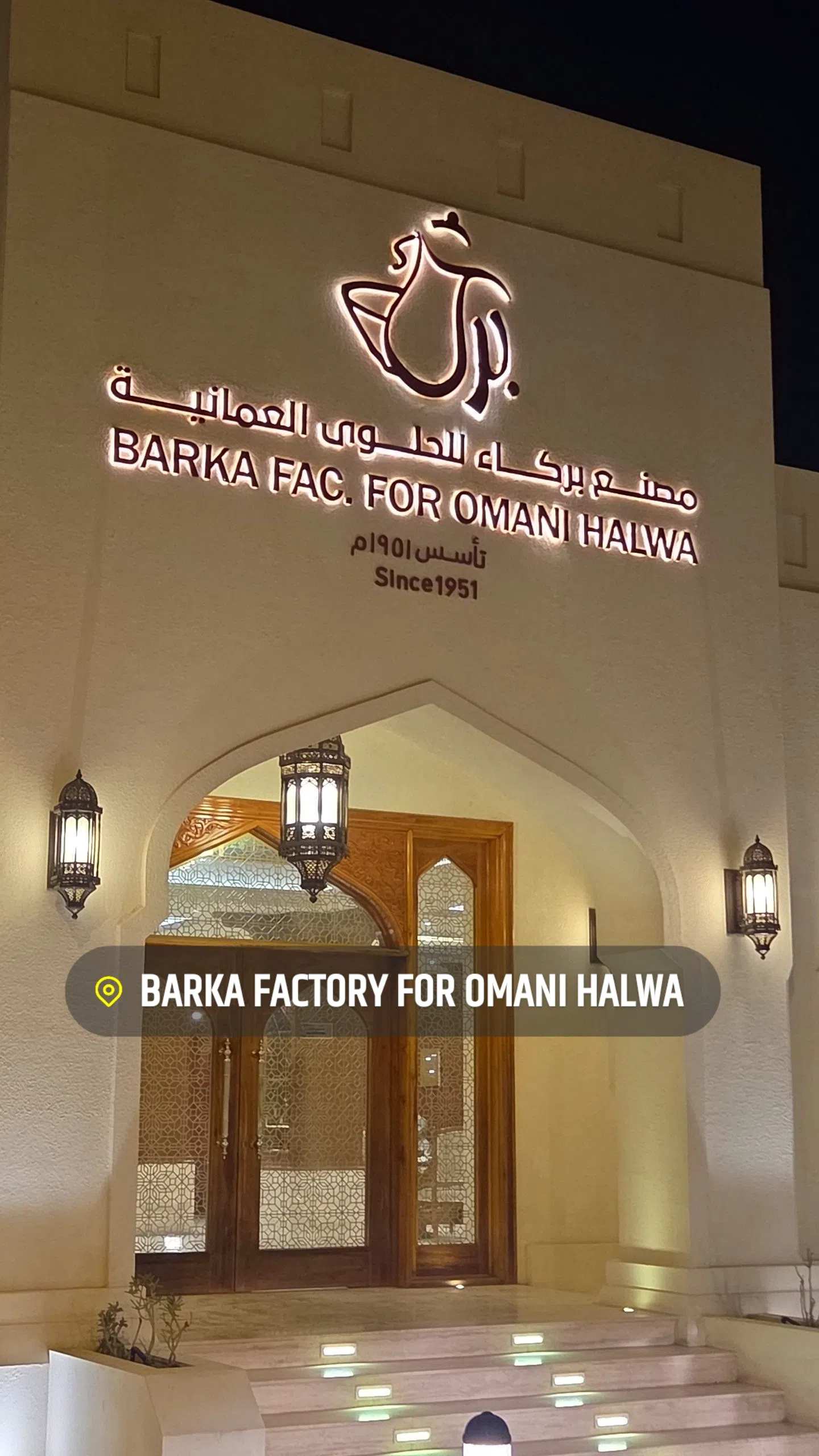
Barka Factory for Omani Halwa (roadside stop with parking, 45 to 60 minutes from central Muscat) carries the most famous halwa name in the country: founded in 1951 by Abdulrahim Abdulrahman al-Balushi, still family-run, exporting to Gulf royal households. Prices run roughly OMR 2 to 10 per kilo depending on the nuts and the grade, no booking needed, and the parking takes a coach without drama. One correction to the guidebooks, though: recent visitors report a notice barring entry to the production floor, and staff can be brisk. Treat it as a shop stop with a good story attached rather than a factory tour.
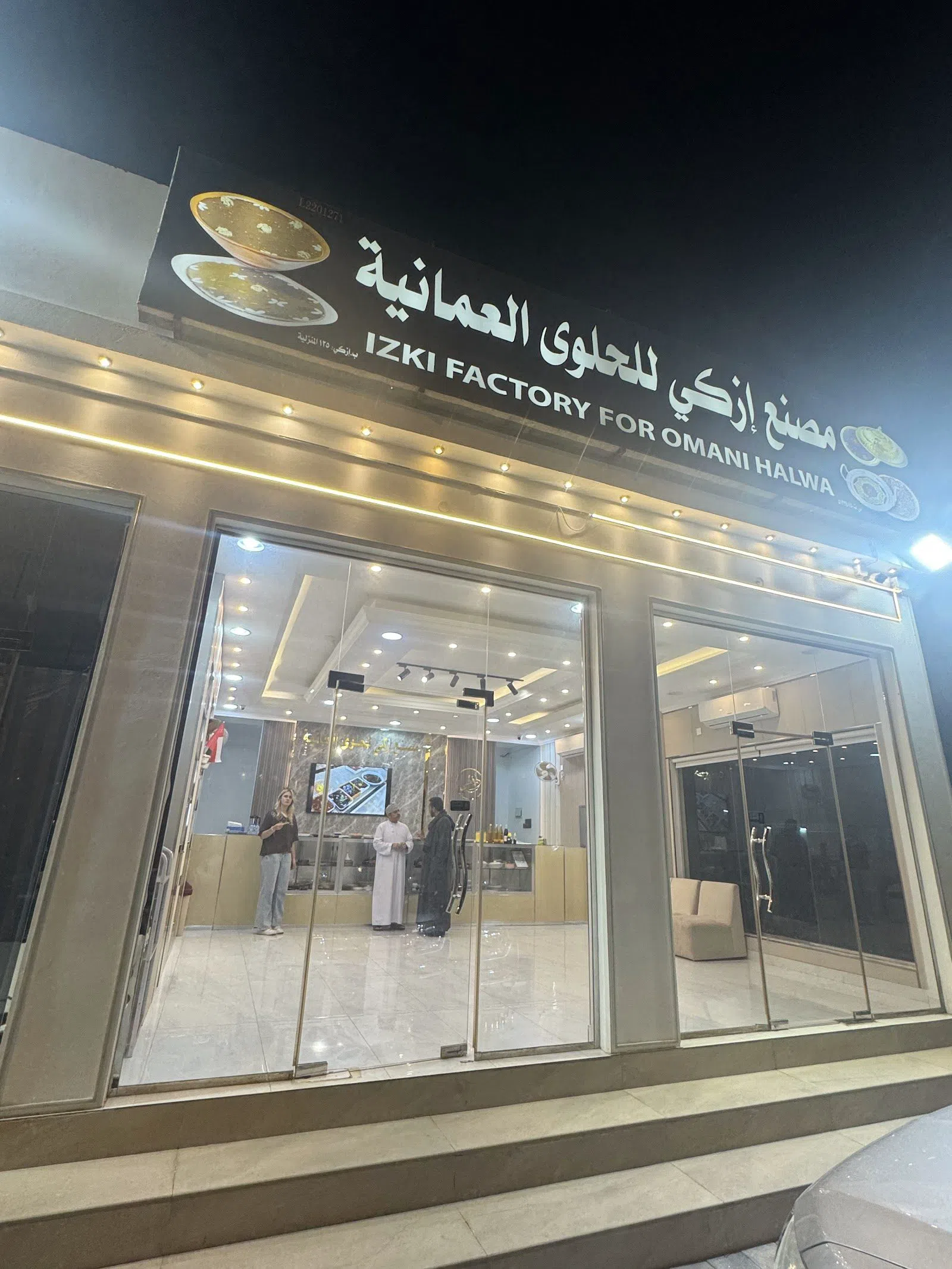
Izki Factory for Omani Halwa (small factory shop, inland on the interior road) is the one place on this list where you can reliably watch the stirring itself, because production runs in the morning and the shop does not hide it. Open 7am to 1pm and again 4pm to 11pm, roughly OMR 3 to 7 per kilo, with dates and Omani coffee sold alongside. Groups should come by minibus and come early. The honest caveat is the distance: it sits about two hours from Muscat, so this is a half-day detour rather than a city stop.
If the stirring is what you came for, go to Izki and go before noon. If you want the famous name and a serious tin, Barka is an easy roadside stop on a west-bound drive. If you want neither, skip both without guilt, because the city makers sell the same craft with a shorter taxi ride.
Halwa with a knife and fork
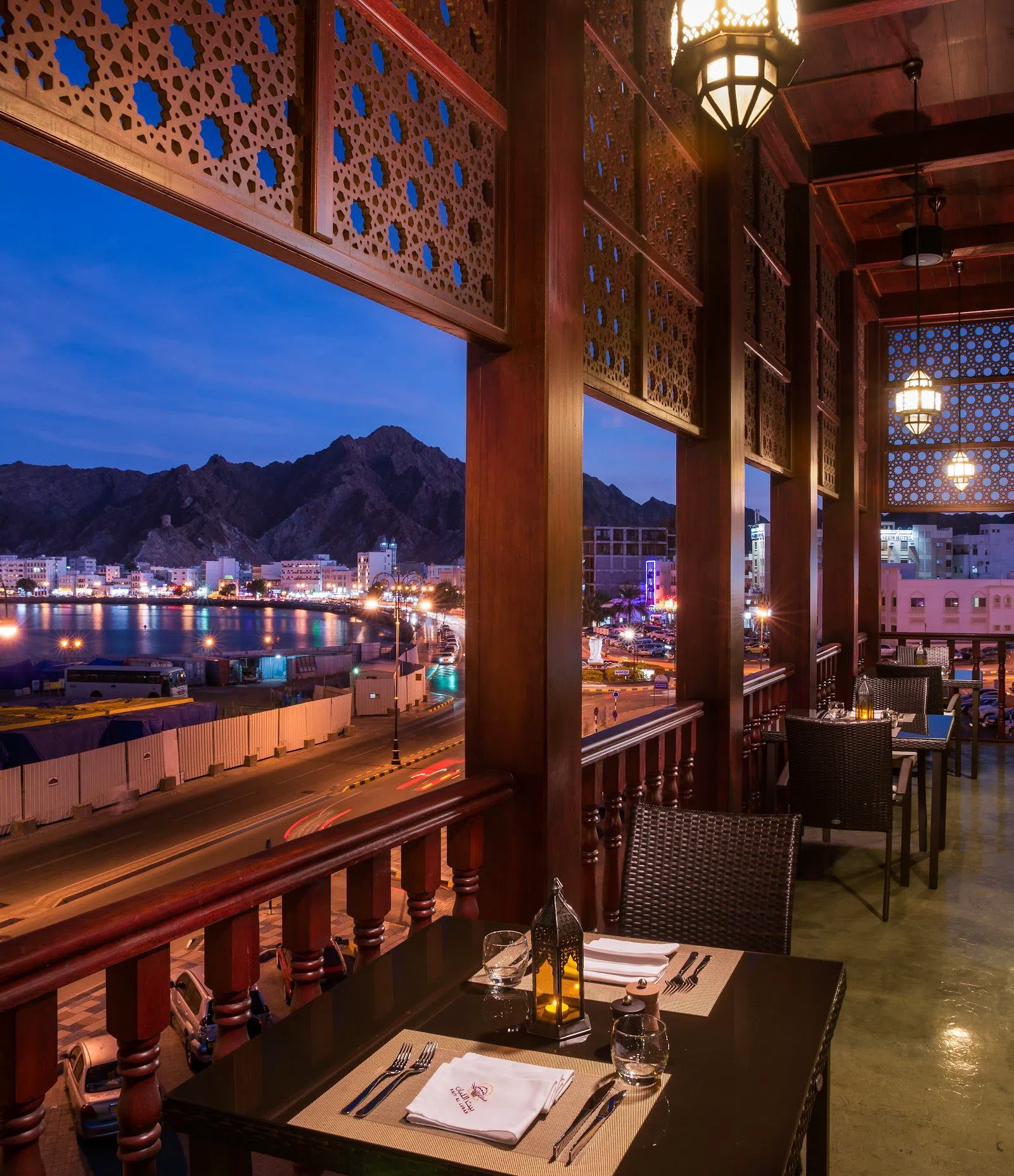
Bait Al Luban Omani Restaurant (Mutrah, on the harbour front) is the best-sited Omani kitchen in the city, a heritage building whose name means House of Frankincense, and its halwa-and-ice-cream dessert is the gentlest possible introduction, the sweet cut with cold cream so the sugar does not ambush you. Open daily noon to 11pm, around OMR 10 to 20 a head, and worth booking ahead. Know the seating: the waterfront balcony is built for couples, and large parties get placed inside. Families and groups are welcomed and handled well, they simply do not get the view. A second branch exists on Al Muntazah Street; the Mutrah original is the one to book.
Ubhar (modern Omani, central Muscat) has been open since 2008 and gives the sharpest contemporary read on Omani sweets: halwa reworked into pastry and served with frankincense ice cream, which converts people who find the traditional block too dense to finish. Lunch noon to 3.30pm, dinner 6.30pm to 11pm, roughly OMR 15 to 25 a head, 4.5 out of 5 across more than 800 reviews. Group bookings are taken by phone or email, and taking that trouble is sensible at dinner.
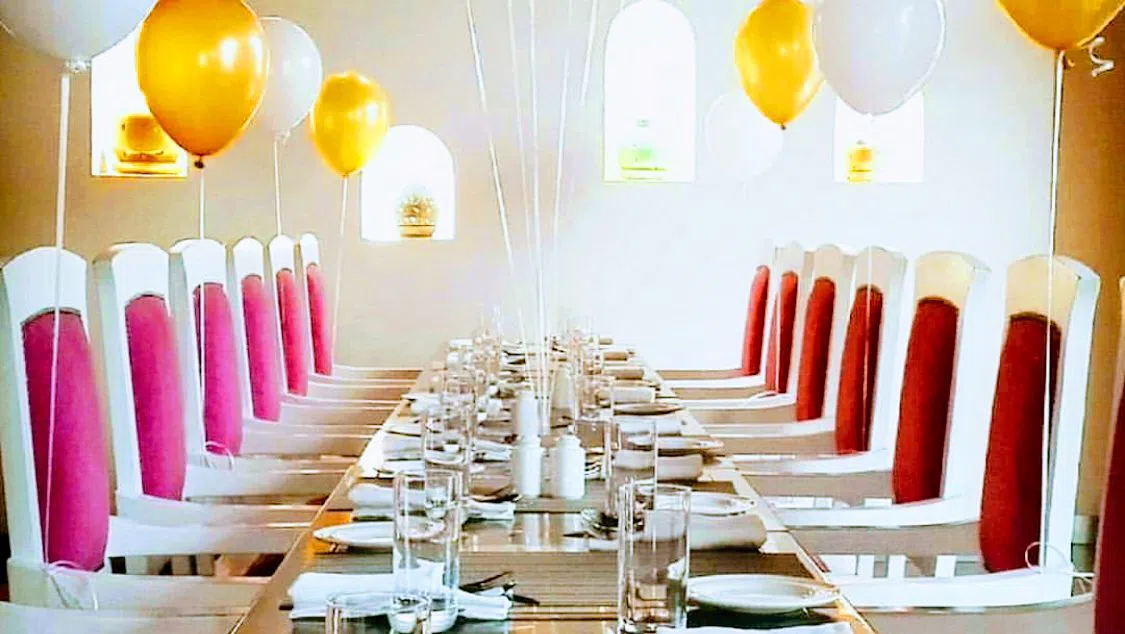
Al Angham (Shatti Al Qurum, beside the opera house) is the most formal setting in the country for the national dessert and the only one where halwa arrives as part of a proper Omani dessert flight rather than as a courtesy plate. Three private dining halls (one seating ten, one seating eight, and a larger floor-seating majlis), so it handles a structured group better than most fine dining rooms do. Around OMR 25 to 45 a head, smart dress, and book well ahead. Pair it with an opera performance; the room on its own justifies the reservation.
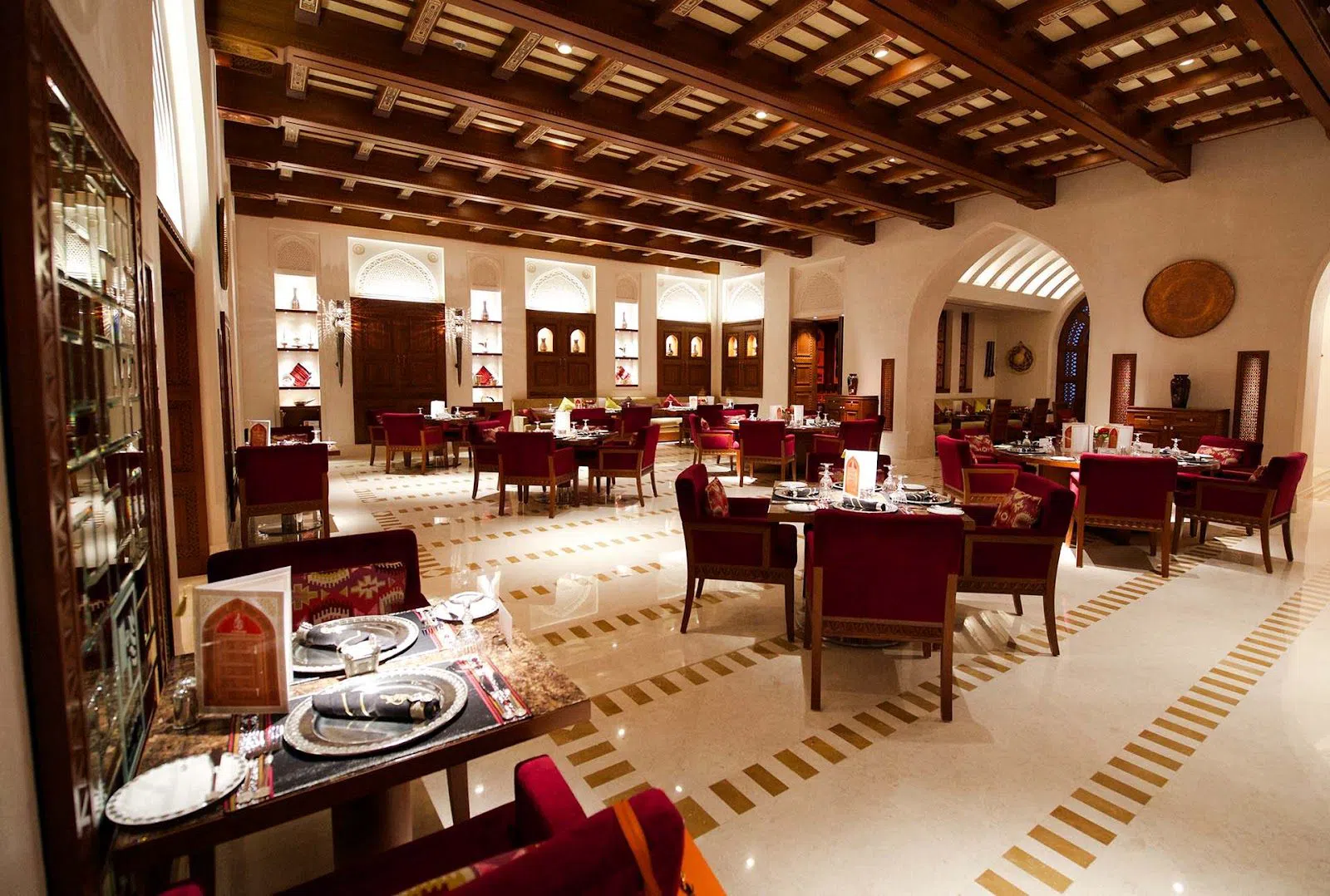
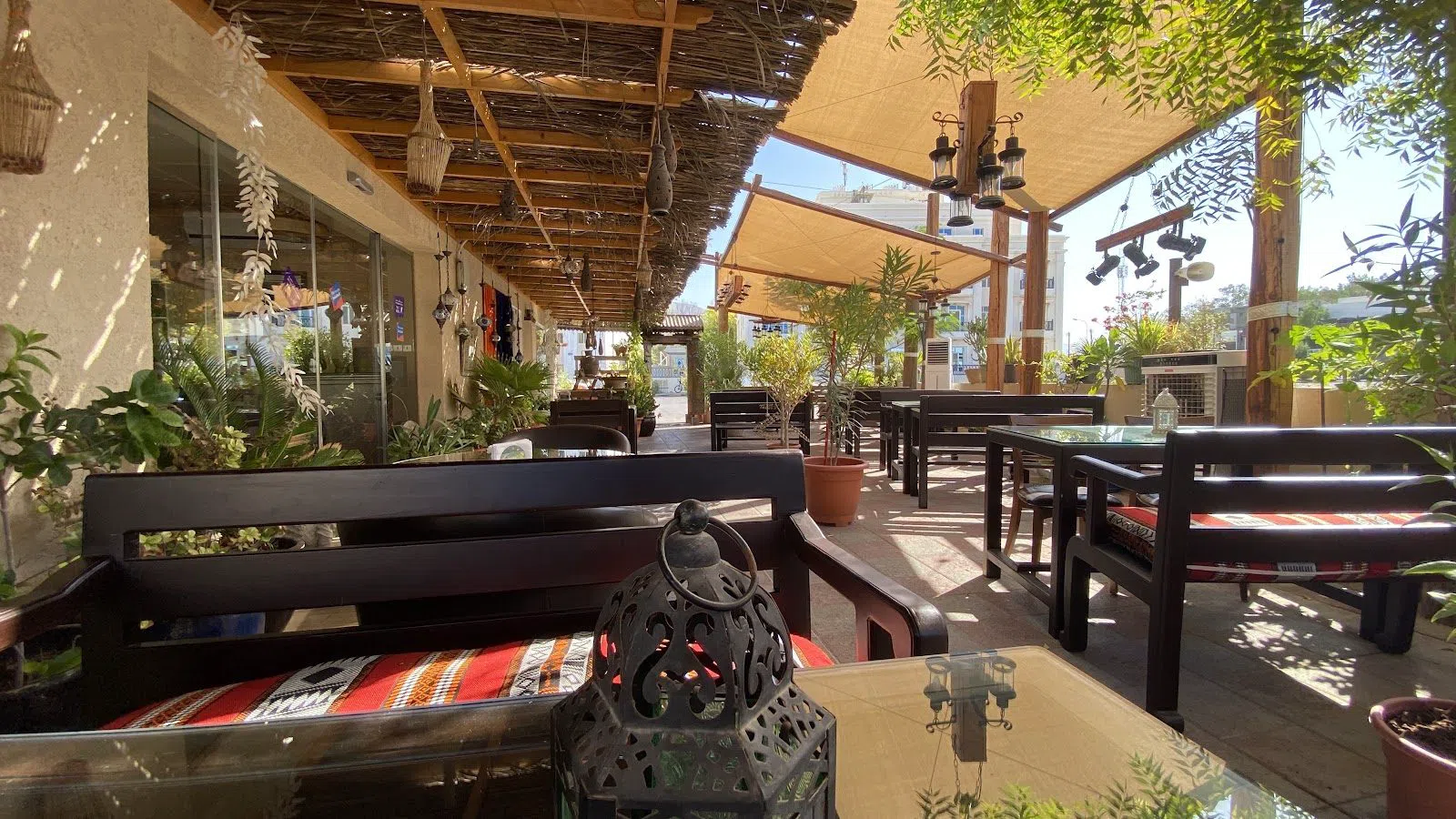
Kargeen Caffe (garden restaurant, central Muscat) has been running since 1997 and remains the most atmospheric dinner in the city: a garden rather than a dining room, lanterns in the trees, Omani classics and halwa to finish. Open roughly 7am to 1am, around OMR 8 to 15 a head. It is the default Muscat answer to a table of twelve, and it books out at weekends. Its old kargeencaffe.com domain no longer resolves, so reserve by phone rather than wasting an afternoon hunting for a booking form.
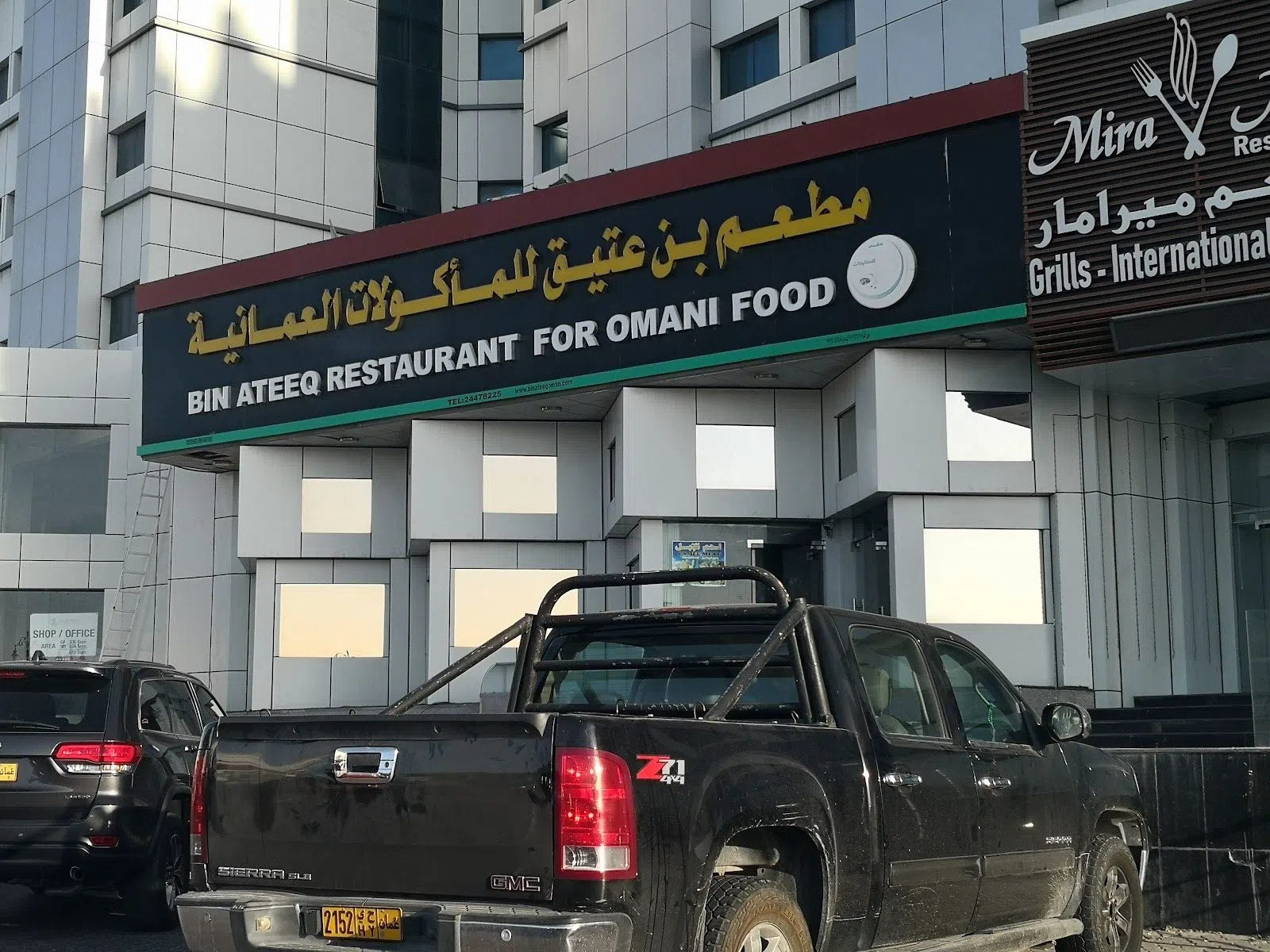
Bin Ateeq (Al Khuwair, traditional) is one of the oldest traditional Omani restaurants here and the fullest version of the ritual: private majlis rooms, floor seating around a shared mat, eating with your hands, halwa ending the meal. Walk-in, very long hours, around OMR 5 to 12 a head. I am not going to oversell it. Ratings are middling at 3.5 on Google and 3.0 on Tripadvisor, and the decor is visibly worn. Come for the room and the manner of eating, not for polish, and bring people who will find that funny rather than trying.
Groups, couples and who fits where
The practical sorting is simple. A coach or a party of fifteen goes to Al Hosni, Al Diwaniya, Barka, Kargeen or the majlis rooms at Bin Ateeq, all of which have the floor space, the parking or the seating to absorb you. A group of six to ten can add Ubhar and Al Angham with a phone call in advance, and Al Angham's ten-seat and eight-seat halls are the cleanest private-room solution in the city. Two people go anywhere, and get the best of Royal Omani Halwa, Al Hadidi and the Bait Al Luban balcony, none of which work at scale.
Nobody on this list runs a dress code worth worrying about except Al Angham, where smart dress is expected and jeans-and-sandals will feel wrong before the first course. General Omani modesty applies everywhere else: covered shoulders and knees, more strictly in the souq and at the museum than in a hotel-adjacent dining room. There is no door policy to negotiate at any shop. The only real gate is space, and space is the reason to send ten people in through Al Harrasi's door in two waves rather than one.
Taking it home
Halwa travels better than it looks. Ask for a sealed tin rather than a tray, buy it on the last day rather than the first, and put it in checked luggage, because at a security scanner it reads as a paste, not a solid. Al Hosni's presentation boxes from OMR 10 and Al Diwaniya's 3kg, 4kg and 8kg gift packages are the two easiest formats to hand over at the other end, and Al Diwaniya's ceramic khanjar and miniature-door sets solve the souvenir problem in the same transaction.
On price sanity: OMR 3 to 7 per kilo is the normal band for good halwa from a named maker, OMR 5 is fair for saffron grades, and anything under OMR 2 per kilo is either a half-kilo price being quoted at you or a batch you should ask questions about. Saffron and nut grades cost more because the ingredients cost more, not because they are better. The plain classic is the honest benchmark, which is exactly why Al Harrasi's staff steer you to it first.
Practical notes for a Muscat halwa run
Muscat is long and thin, and nothing here is walkable from anything else except the Mutrah pairing of the souq and Bait Al Luban. Taxis and ride-hailing cover the city shops fine; agree the fare before you get in if the meter is not running. For Barka you want a car or a driver for half a day, and for Izki you want a full morning and an early start. Both are motorway drives, straightforward in a hire car.
The currency is the Omani rial, divided into 1,000 baisa, and it is a high-value note. Breaking a 20 in a souq stall is nobody's favourite moment, so carry small notes. The souq lanes and the smaller counters are cash-first; the restaurants and the larger shops are easier, but do not plan a day on the assumption that a card will work everywhere.
Mornings are the whole trick: fresh batches, open factory floors at Izki, an empty Mutrah Souq and staff with time to let you taste properly. Bait Al Zubair closes on Fridays, Royal Omani Halwa closes on Sundays, and Friday lunchtime is quiet across the city before everything reopens in the afternoon. Weekend evenings are when Kargeen and Bait Al Luban fill, so book those two.
A serious shopping morning (a kilo of good classic, a tasting stop and a gift tin) lands somewhere around OMR 20. Add a dinner and you are looking at OMR 8 to 15 a head at Kargeen, OMR 10 to 20 at Bait Al Luban, OMR 15 to 25 at Ubhar and OMR 25 to 45 at Al Angham. A two-day version that takes in the souq, three makers, one museum and two dinners is comfortably done for under OMR 100 a head, excluding the room.
Mutrah puts you inside the souq-and-harbour half of this list and within a short drive of the rest; the Qurum and Shatti strip is closer to Ubhar, Al Angham and Kargeen. Compare both areas on Muscat hotel search, and read the wider Muscat guide for how the city's districts connect before you pick a base.
The mistake visitors make is eating halwa as a course. Eat it the way it is offered: two spoonfuls, a mouthful of bitter cardamom coffee to cut it, then stop. Done that way it is one of the best sweets in the Gulf. Done as a pudding it will defeat you, and you will go home thinking Oman's national dish is too rich, when you were handed a greeting and treated it like a meal.
Before you go
What is Omani halwa actually made of?
Sugar or date syrup, starch, ghee, rosewater, cardamom and saffron, usually with cashews or almonds worked through it, cooked in a wide copper pot over a wood fire and stirred continuously for two to four hours. Al Hadidi does a version with unrefined brown sugar and Omani honey instead of white sugar, plus date-pulp grades for anyone who finds the classic too sweet.
Where should I buy halwa in Muscat if I only have one stop?
Al Hosni Omani Sweets, which has three branches with parking, ten varieties, a tasting bar with hot coffee and presentation boxes from OMR 10. If you care more about the halwa itself than the packaging, go to Al Harrasi instead and ask for the plain classic with no additives before trying the saffron.
Can I watch halwa being made in Muscat?
Not reliably in the city. Izki Factory is the one place on this list where you can dependably see the stirring, because production runs in the morning: it opens at 7am and it is about two hours from Muscat, so plan a half day. Barka Factory is far closer, but recent visitors report a notice barring entry to the production floor, so treat that one as a shop stop.
How much should a kilo of good halwa cost?
Roughly OMR 3 to 7 per kilo from a named maker, around OMR 5 for saffron or red-sugar grades, and from OMR 1 per half-kilo at Royal Omani Halwa for the value end. Gift tins and presentation boxes start around OMR 10. In Mutrah Souq you will see about OMR 1.50 per half-kilo, and haggling is expected.
Which places work for a large group?
Al Hosni, Al Diwaniya, Barka Factory, Kargeen Caffe and the private majlis rooms at Bin Ateeq all handle big numbers, and Al Angham has private halls seating ten and eight plus a floor-seating majlis if you book well ahead. Al Harrasi, Al Hadidi and Royal Omani Halwa are small counters, so go in waves or go as a couple.