The Muscat issue
Getting Around Muscat Without Renting a Car All Week
Most visitors book a car for the whole trip and then leave it in the hotel car park. Here is what Muscat's apps, buses, boats and drivers actually cost, and the two days a rental genuinely earns its keep.

By Bram VisserForts, wadis and the long way round

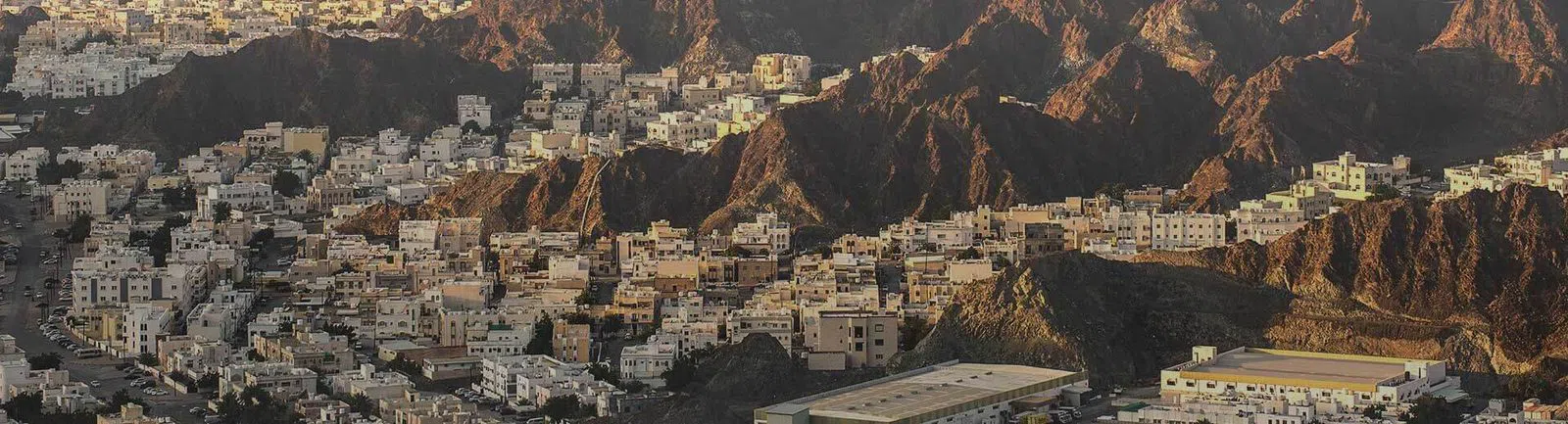
Muscat runs for forty-odd kilometres along the coast, low and white, pinned between the Hajar foothills and the sea, with the airport at one end and the old harbour at the other. Almost everyone books a rental car before they arrive, and a fair number of them then leave it in the hotel car park for four days straight. The distances that look punishing on the map cost about OMR 3 to cross in an app car, and the parts of the city worth your morning are all places you walk once somebody has dropped you off.
Muscat works better as a city you get dropped off in than one you drive around. That saves money and the hour a day you would otherwise spend hunting parking and re-fuelling, and it changes what a rental car is for: a tool you hire for the two days you leave town.
Two apps do most of the work

Yango Ride (city-wide, and the app formerly branded Otaxi) is how residents move, and the single reason most visitors' rental cars sit idle. It is Ministry-licensed, the fare is fixed and shown before you accept rather than ticking upward on a meter, and most trips inside Muscat land between OMR 2 and OMR 5. Cash or card both work. The Van class seats up to six with luggage, which covers a family coming in from the airport, and there is no door policy of any kind, so a larger party simply books two cars and drivers will wait a few free minutes while you round everyone up. Otaxi and Yango have been the same operation since the 2025 takeover, so download Yango and you get the full feature set. Ignore any guide that points you at Uber, which does not operate in Oman, or Careem, which pulled out in February 2020.
Marhaba Taxi (city-wide) is the second app to keep on your phone, not a substitute for the first. It is another of the Ministry of Transport's licensed on-demand fleets, roughly OMR 2 to 6 per city trip with airport and port runs quoted upfront, and it holds drivers at the off-peak hours when Yango thins out. The pre-order function is the useful part. It was built for hotel and cruise-port pickups, so several cars can be booked into the same time slot, and it is the sane way to arrange a 5am airport run instead of standing on a hotel forecourt at dawn hoping something turns up.

Plan your Muscat trip
Live prices from our booking partners.
Free cancellation on many rooms. We may earn a commission when you book.
What the bus is good for
Mwasalat (city routes hubbed at Ruwi, plus intercity coaches) is better than its reputation, within limits. On city routes you turn up and board, no reservation and no app. Fares run from 200 baisa for one zone to 500 baisa across three, and the A1 from the airport into Ruwi is 500 baisa. The route visitors actually want is Route 4, Ruwi to Al Alam Palace, which strings together Muttrah Souq, the Corniche, the National Museum and the palace for small change: a full afternoon of sightseeing for less than the price of a coffee.
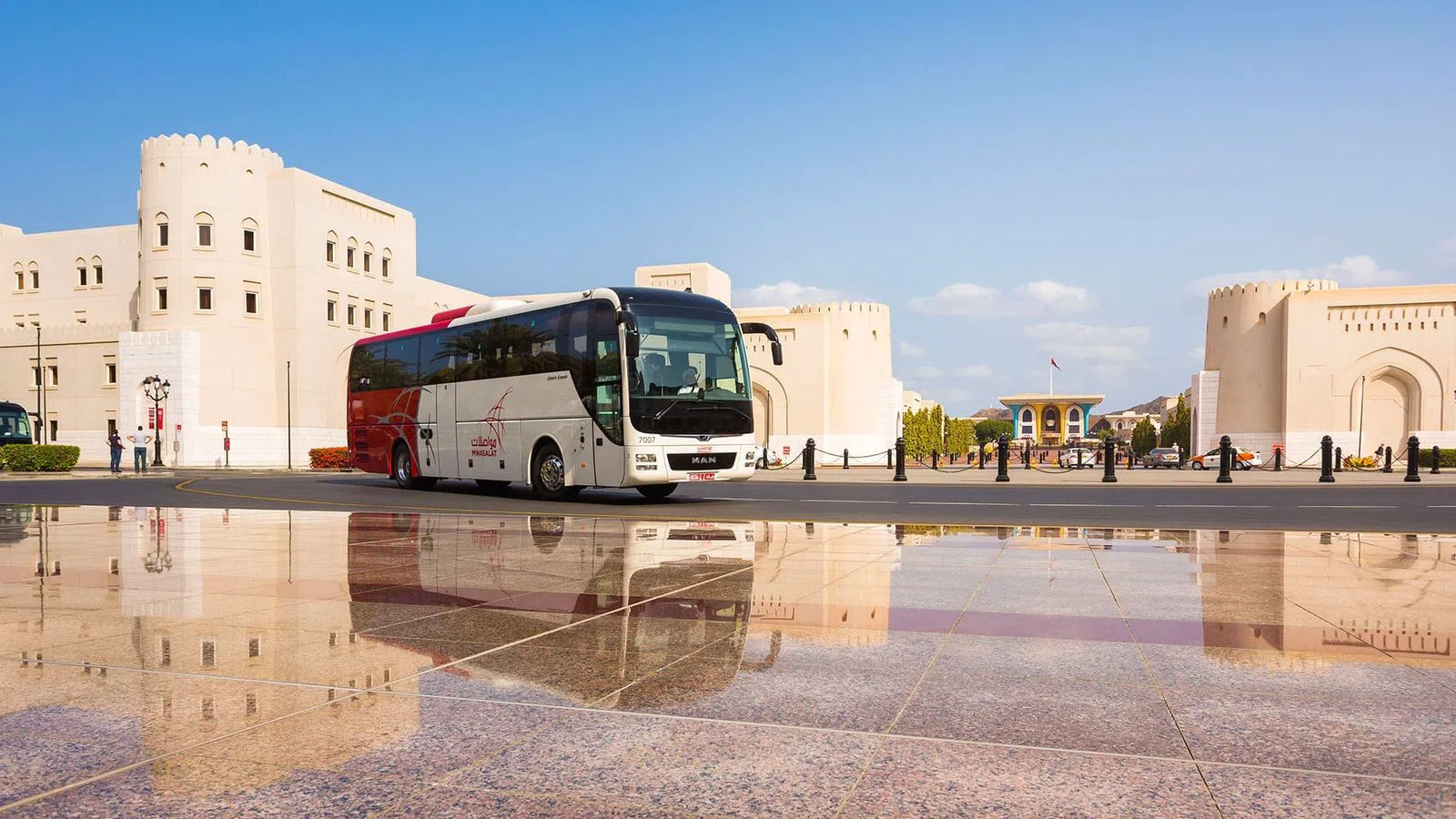
Since 1 August 2026 city buses take no cash at all, so you need a contactless card, Apple Pay or Samsung Pay in hand before you board. Intercity coaches are a different proposition and must be booked ahead if there are more than two of you, because seats are limited and departures are few. The long-haul run down to the Dhofar coast is OMR 8 one way and OMR 12.5 return, which is remarkable value for a journey nobody should be attempting behind the wheel.
Be realistic about the trade. Buses are slow, stops can be a hot and unshaded walk from your hotel, and luggage space is thin. For a couple on a budget with time to spend, excellent. For four people with a suitcase each in high summer, open the app.
Getting out of the airport
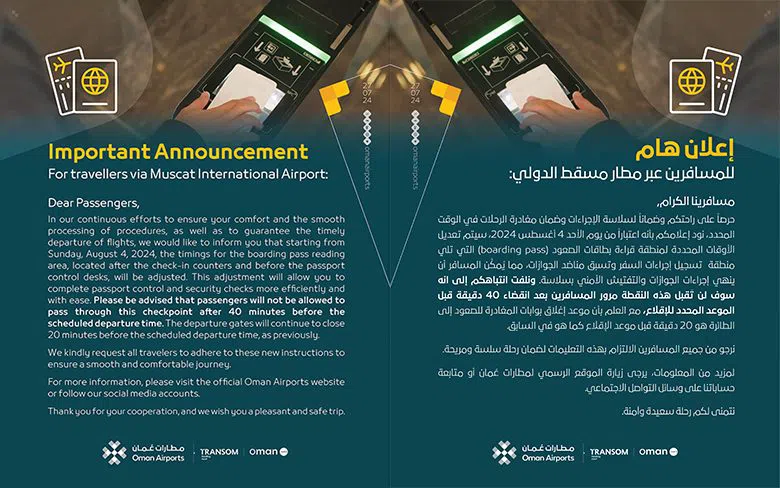
Muscat International Airport (MCT) sits at the Seeb end of the city, which is to say the opposite end from the old harbour, so the first ride of your trip is also one of the longer ones. There is a licensed taxi counter in arrivals that handles vans, and the car-hire desks are in the arrivals hall itself, so a group can split into two vehicles on the spot. A metered taxi starts at OMR 1.5 plus 250 baisa per kilometre and works out around OMR 9 to 11 into town. The A1 and 1B buses do the same job for roughly OMR 0.5 to 1.
The rank can back up past half an hour when three widebodies land together, which is most evenings when the Gulf banks arrive. Booking through a licensed app rather than joining the queue cuts the fare by up to 45 percent, according to the transport ministry's own figures. Walk past the rank, open the app, and meet the car at the pickup lane.
The days a car actually earns its keep
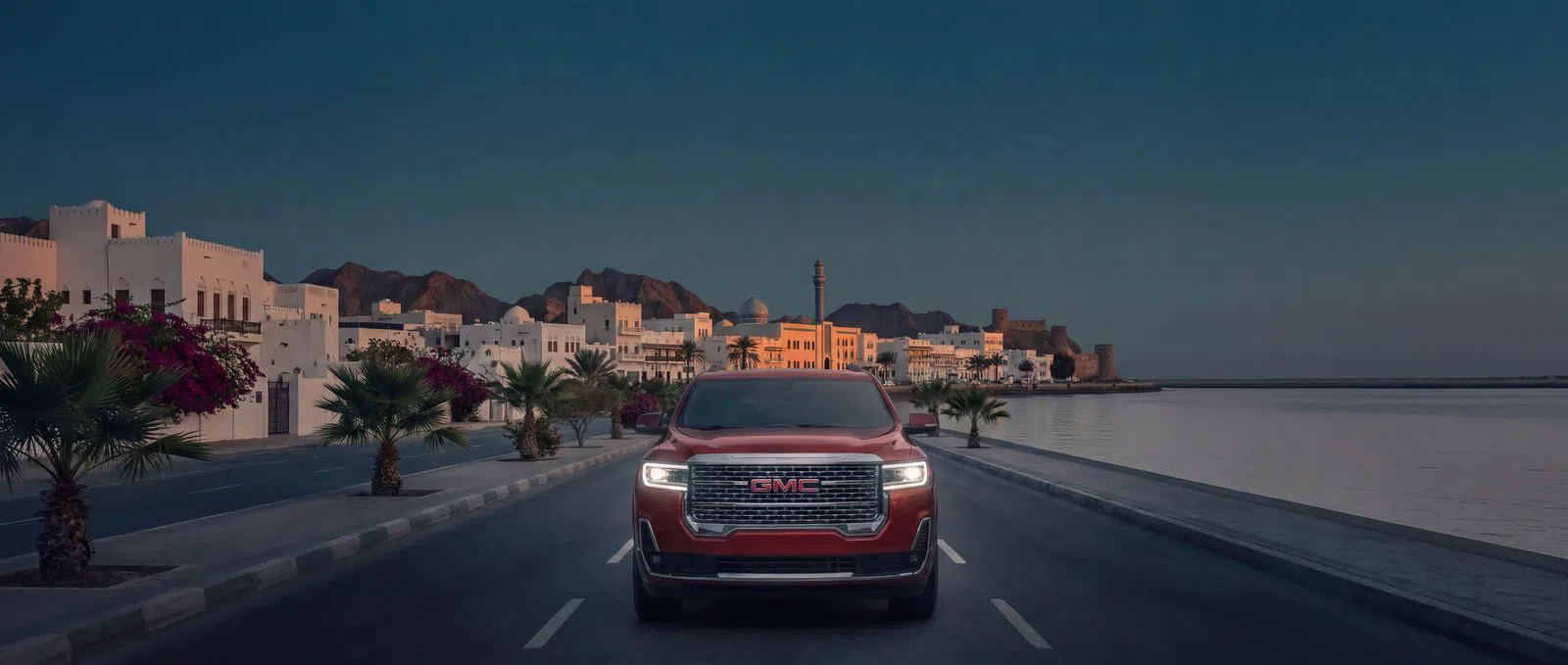
Sixt Muscat International Airport has a desk in the arrivals hall between exit gates B and C, open around the clock, with cars collected from Level 0 in parking area P2. Economy cars start at roughly US$14 to 30 a day; SUVs and people carriers suit families, and 4x4s and Land Cruisers cost considerably more. It is the straightforward option if you want a car waiting the moment you land. Just be honest about what it buys you for your city days, which is mostly parking problems.

CRUZA Car Rental (Bosher) is the local alternative worth knowing, and it fits the two-day model better. It delivers to the airport or your hotel, so a group can take two cars without anyone queuing at a desk, and some cars go out with zero deposit. Rates start from about OMR 13 a day for a saloon, OMR 25 for an SUV and OMR 70 for a Land Cruiser. Child seats, GPS, camping gear and desert recovery kit are add-ons rather than an upsell fight, which is not always the case at an airport counter.
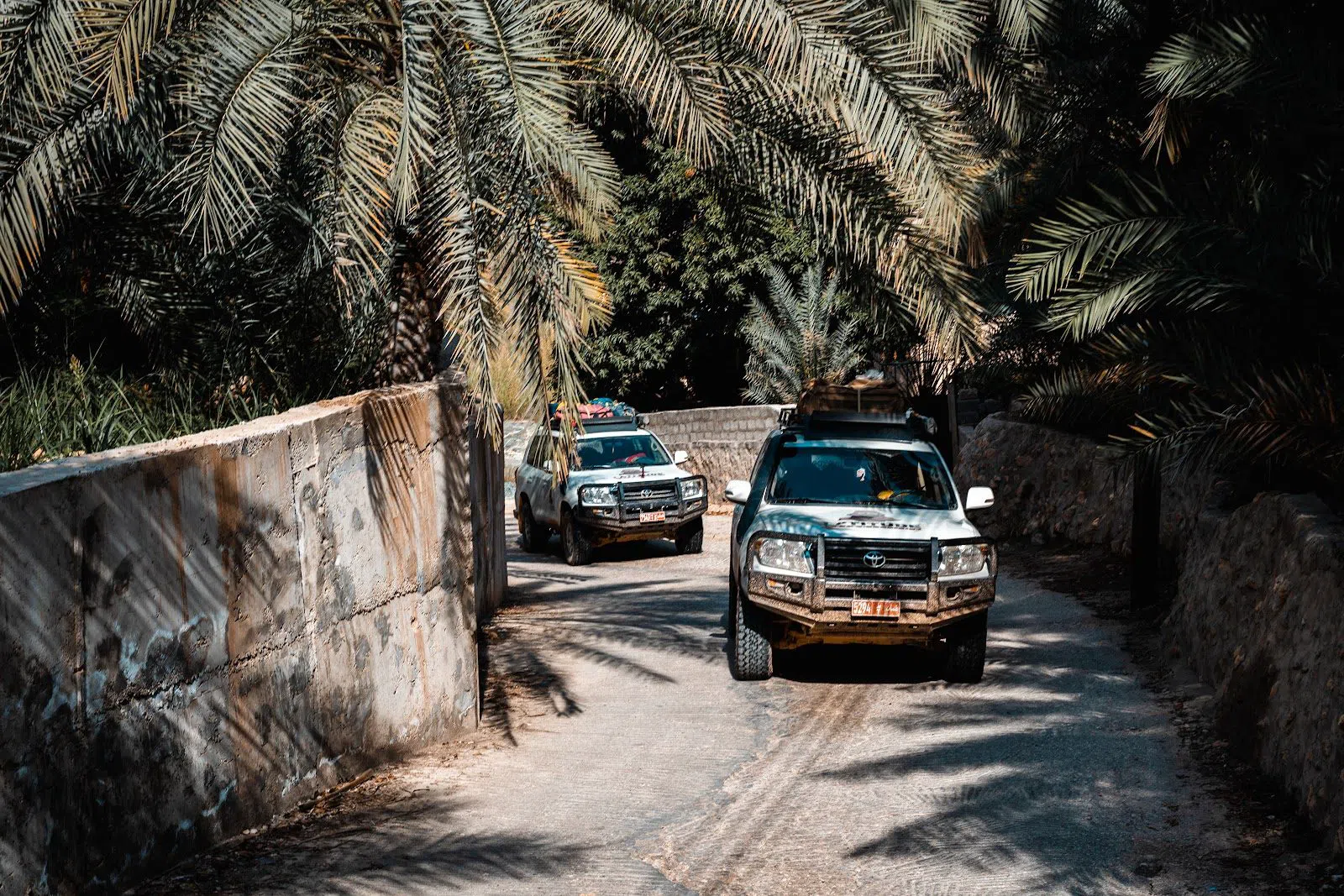
Latitude Expeditions (Muscat pickup and drop-off on request) is the one for the trip where a car genuinely pays for itself. You get a properly outfitted Land Cruiser with a roof tent and no mileage cap, quoted per trip, with tents, stoves, mats and sleeping bags priced separately. It sits in the premium band, and it is the sister operation to Husaak, so guided support can be arranged if the route looks harder than you expected. They talk you through the tracks and help load offline maps before you leave, which most rental desks skip and which matters once the tarmac ends.
When it is cheaper to hand over the keys
Zahara Tours (chauffeur-driven transfers and excursions, pickups across the city) has been trading in Oman since 1971, making it the country's oldest ground operator, and it was named the country's leading tour operator at the World Travel Awards. Excursions start at about OMR 20 for a dolphin trip and reach OMR 128 to 152 for a full day up Jebel Akhdar or out to the Wahiba sands. It handles two-person transfers and conference-scale movements alike, so group size is not a problem. Do the arithmetic before you dismiss it: an SUV at OMR 25 a day plus fuel plus eight hours of your own concentration on unfamiliar mountain road is not obviously better value than a trained, English-speaking driver-guide.
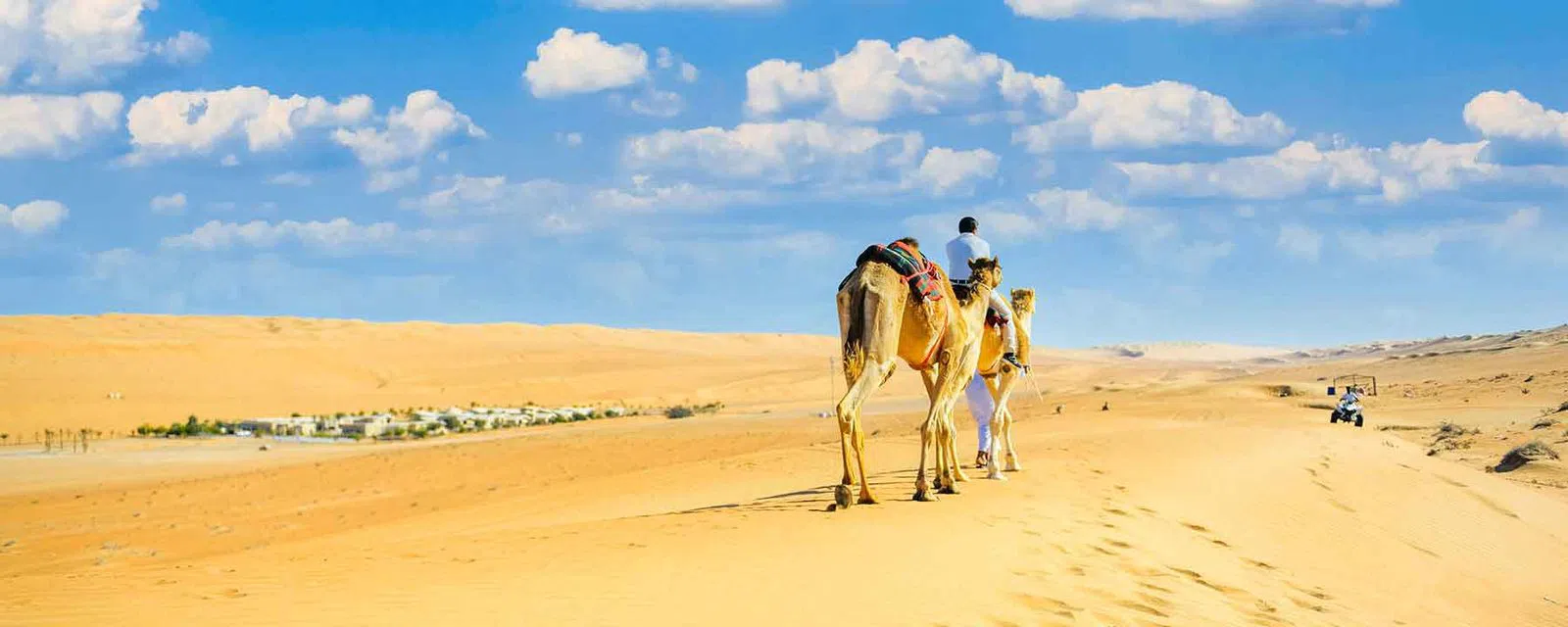

Husaak Adventures (early-morning pickups from city hotels) is the strongest adventure operator in the Gulf and the best reason of all to leave the driving to somebody else. They run scheduled shared departures from Muscat as well as private trips, priced in the mid-to-upper band with day trips quoted on booking and multi-day weekends priced separately. They drive you to Jebel Shams, Wadi Tiwi or Wadi Bani Khalid, do the hiking and canyoning with you, and get you back the same day. Shared departures suit couples and solo travellers who want the cost split; a private trip makes more sense for four or more. Their half-day Muscat option covers the souq and the Grand Mosque with no driving at all.
The coast that no road reaches
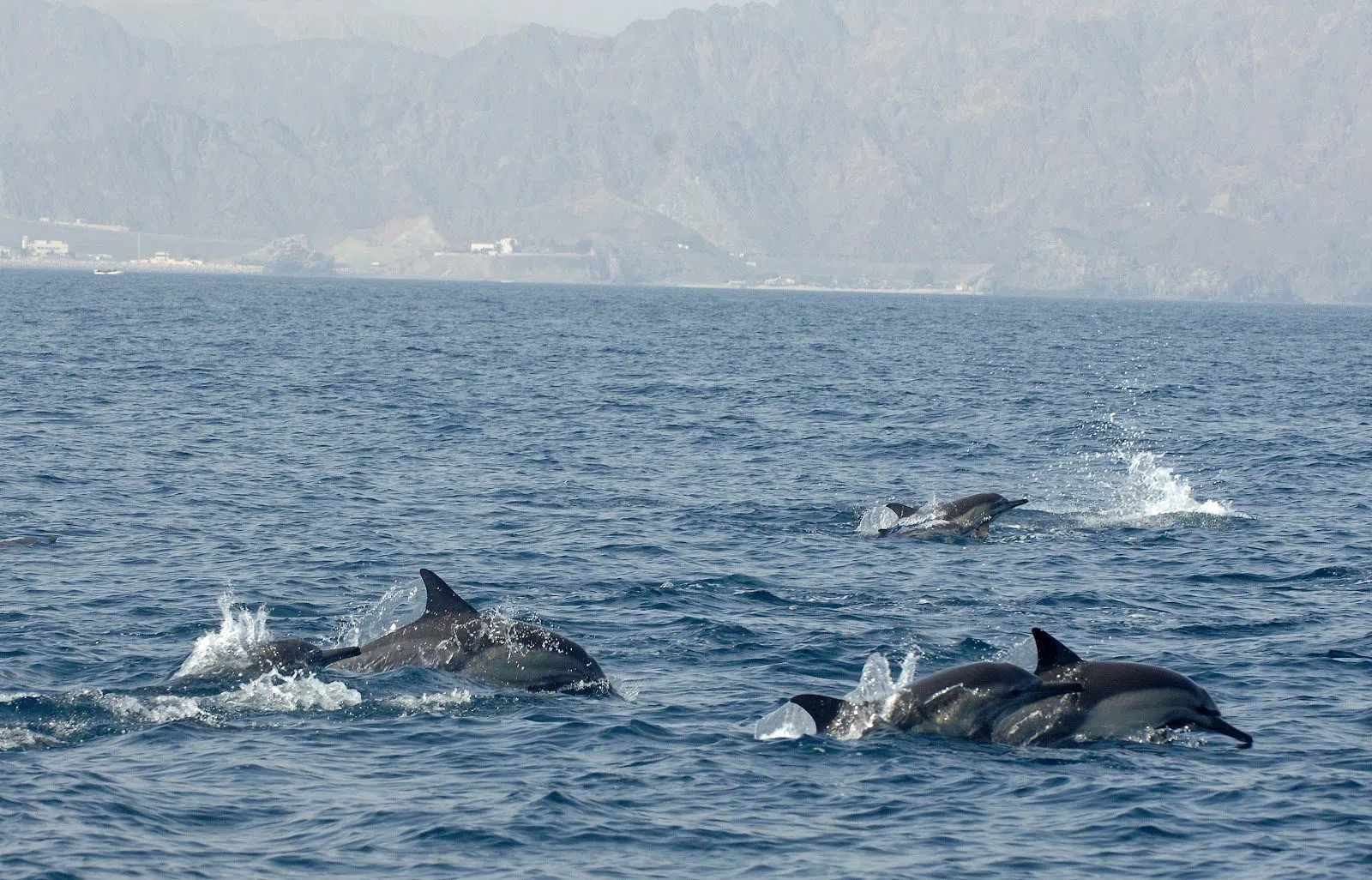
Sidab Sea Tours (Marina Bandar Al Rowdha, just around the headland from the old harbour) has been operating since 1998 and is the fastest way to the fjords at Bandar Khayran, which no road serves properly. Shared departures leave at 8am and 10am at around OMR 12 to 15 per person for a two-hour dolphin trip, with private boats and dhows chartered by the boat for a whole party. Life jackets are standard and the captains are used to nervous swimmers. Book a day ahead in high season. Take the 8am if you want flat water and better light; take the 10am if you want the version that can add snorkelling.
Where you should be walking instead
Muttrah Corniche (Muttrah, the old port) is the strongest single argument against hiring a car for your city days. Recently renovated, open around the clock and free, it puts the souq, the fish market, the cafés, the museum and the palace within an easy walk of one another. The souq opens around 4pm, so aim your walk at late afternoon and let the light do the work. Staying within striking distance of this stretch removes most of your transport problem before it starts, which is worth weighing when you run a Muscat hotel search.
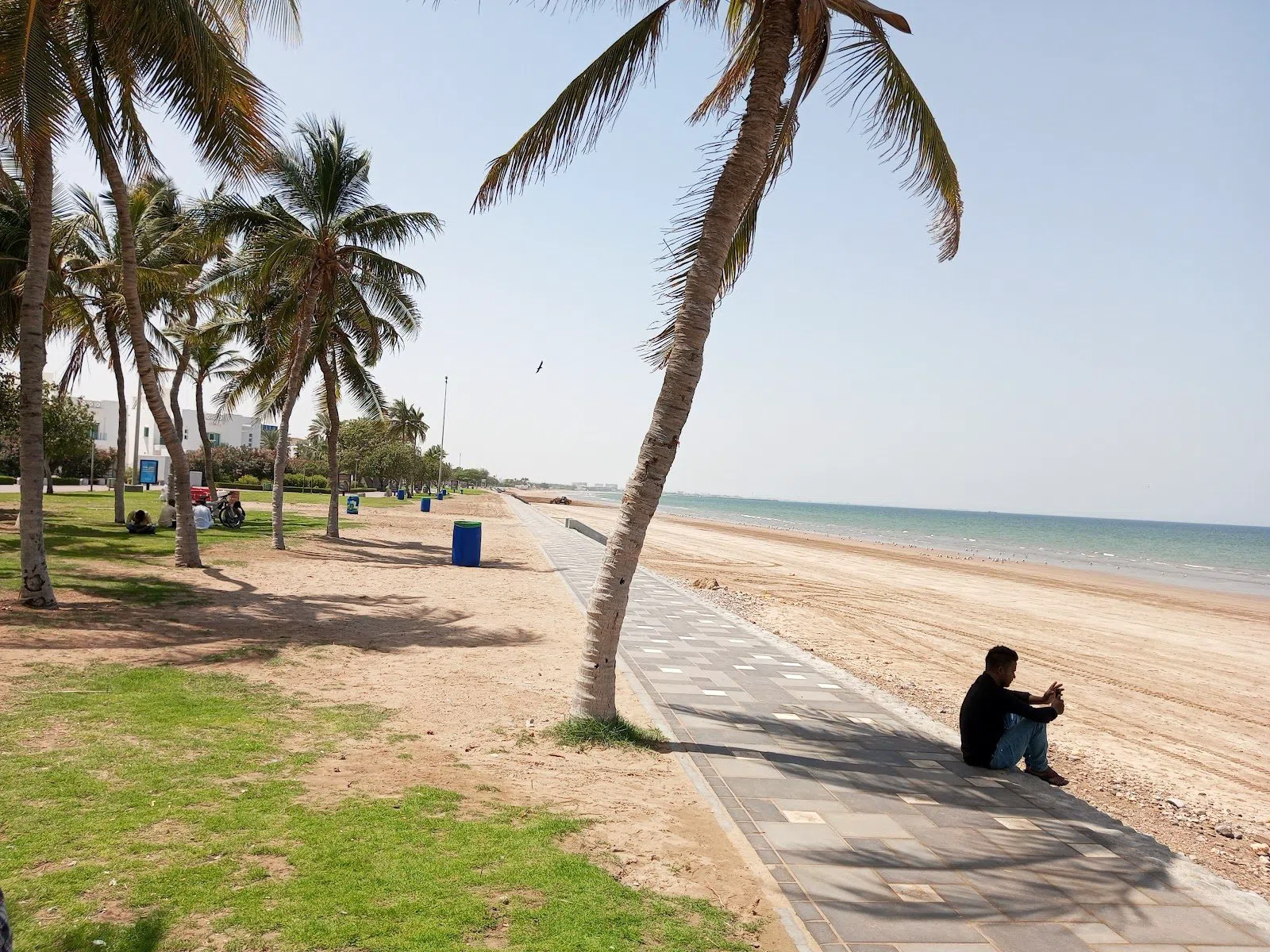

Al Mouj Muscat (the marina district at the western end, near the airport) is the same idea at the opposite end of the city. Thirty kilometres of pedestrian path, a 1.5km cycling trail, six kilometres of water frontage, a community beach and more than ninety restaurants and cafés, all free to walk. Bus routes reach the marina, so there is no need to drive out and no need to think about parking on a Thursday evening.
Muscat Bikes (Time 4 Bike) (Al Maardih Street) hires road, mountain and hybrid bikes, bookable online for several riders at once, with helmets and accessories on request and daily rates quoted on enquiry. There are no formal group rates advertised, but a fleet booking is straightforward. Muscat is not a cycling city on the highways and you should not be riding the dual carriageways, but a hybrid on the flat coastal stretches makes real sense. Book online rather than turning up, and you save yourself a wasted trip across town.

Who the sightseeing bus suits
Big Bus Muscat (city circuit) starts from about US$84 for a 24-hour ticket, with 48-hour tickets costing more, and the season runs November to March. Group and family tickets are sold, the open-top upper deck seats large parties together, and nothing needs booking on the day. What you get depends on the day: when a cruise ship is in port it runs proper hop-on hop-off circuits from 9am to 5pm every 30 minutes, and otherwise it becomes a fixed 1hr45 panoramic tour departing at 10.30am and 2.30pm. Against OMR 2 to 5 app rides it is expensive, and it earns its price mainly for first-time visitors who want a single orienting loop, or for anyone whose walking range is limited.
When the distance beats the drive
SalamAir (domestic flights from MCT) removes the longest drive in the country. The run down to the Dhofar coast is roughly 13 hours each way; the flight is about 1hr35 on low-cost one-way fares. Hold baggage is extra, so budget for it if your party is carrying camping kit. The airline also links Muscat with the Musandam peninsula in the far north, though that service runs seasonally, so check the dates before you build a trip around it.

Sorting the practical end
The rial splits into 1000 baisa. Both apps take cash or card. City buses have taken no cash since 1 August 2026, so carry a contactless card or have Apple Pay or Samsung Pay set up before you board. Souq stalls still prefer cash.
Rough budget: city app rides OMR 2 to 5; the airport run OMR 9 to 11 on the meter and less through an app; city bus fares 200 to 500 baisa; a shared boat trip OMR 12 to 15 a head; a driver-guided day OMR 20 to 152 depending on distance; rental OMR 13 to 70 a day plus fuel.
On timing, the souq comes alive from 4pm, boat trips are better on the 8am, and the sightseeing bus only runs November to March. Anything involving walking or bikes belongs to early morning or the hour before sunset for most of the year.
The shape that works: three or four city days with no car at all, moving on the two apps and Route 4, then either two days of hired car through CRUZA or Latitude, or a driver-guided day with Zahara or Husaak. That is the version where the car costs you OMR 26 instead of OMR 91 and you spend the difference on the days it was hired for. For where those city days should take you, the Muscat guide covers the rest.
Before you go
Do I need to rent a car to get around Muscat?
No, not for the city itself. Ride-hailing through Yango Ride or Marhaba Taxi covers most trips inside Muscat for OMR 2 to 5 with the fare fixed before you accept, and Mwasalat's Route 4 links Muttrah Souq, the Corniche, the National Museum and Al Alam Palace for a few hundred baisa. A car only earns its cost on the days you leave the city, so hire one for two days from CRUZA or Latitude Expeditions rather than for the whole week.
Does Uber work in Oman?
No. Uber does not operate in Oman and Careem pulled out in February 2020, so any guide telling you to use them is out of date. The Ministry-licensed apps are Yango Ride, which absorbed Otaxi in the 2025 takeover, and Marhaba Taxi. Install both, since Marhaba holds drivers at off-peak hours when Yango thins out.
How much is a taxi from Muscat International Airport into the city?
A metered licensed taxi starts at OMR 1.5 plus 250 baisa per kilometre and works out at roughly OMR 9 to 11 into town. Booking through a licensed app instead of joining the rank cuts that by up to 45 percent according to the transport ministry's own figures, and it avoids a queue that can run past half an hour when several widebodies land together. The A1 and 1B buses do the same trip for about OMR 0.5 to 1 but run every 30 minutes with little luggage space.
Can I pay cash on Muscat city buses?
No. Since 1 August 2026 Mwasalat city buses take no cash at all, so you need a contactless card, Apple Pay or Samsung Pay to board. Fares run from 200 baisa for one zone to 500 baisa across three, and the A1 airport route into Ruwi is 500 baisa. You book intercity coaches separately, and groups should reserve ahead, because seats are limited and departures are few.
Can I use Muscat as a base for day trips without driving myself?
Yes, and it is usually the better call. Husaak Adventures runs shared and private departures with early hotel pickups to Jebel Shams, Wadi Tiwi and Wadi Bani Khalid, doing the hiking and canyoning with you. Zahara Tours, trading here since 1971, quotes chauffeur-driven days from about OMR 20 for a dolphin trip up to OMR 128 to 152 for Jebel Akhdar or the Wahiba sands. For the far south, SalamAir turns a 13-hour drive into a 1hr35 flight.