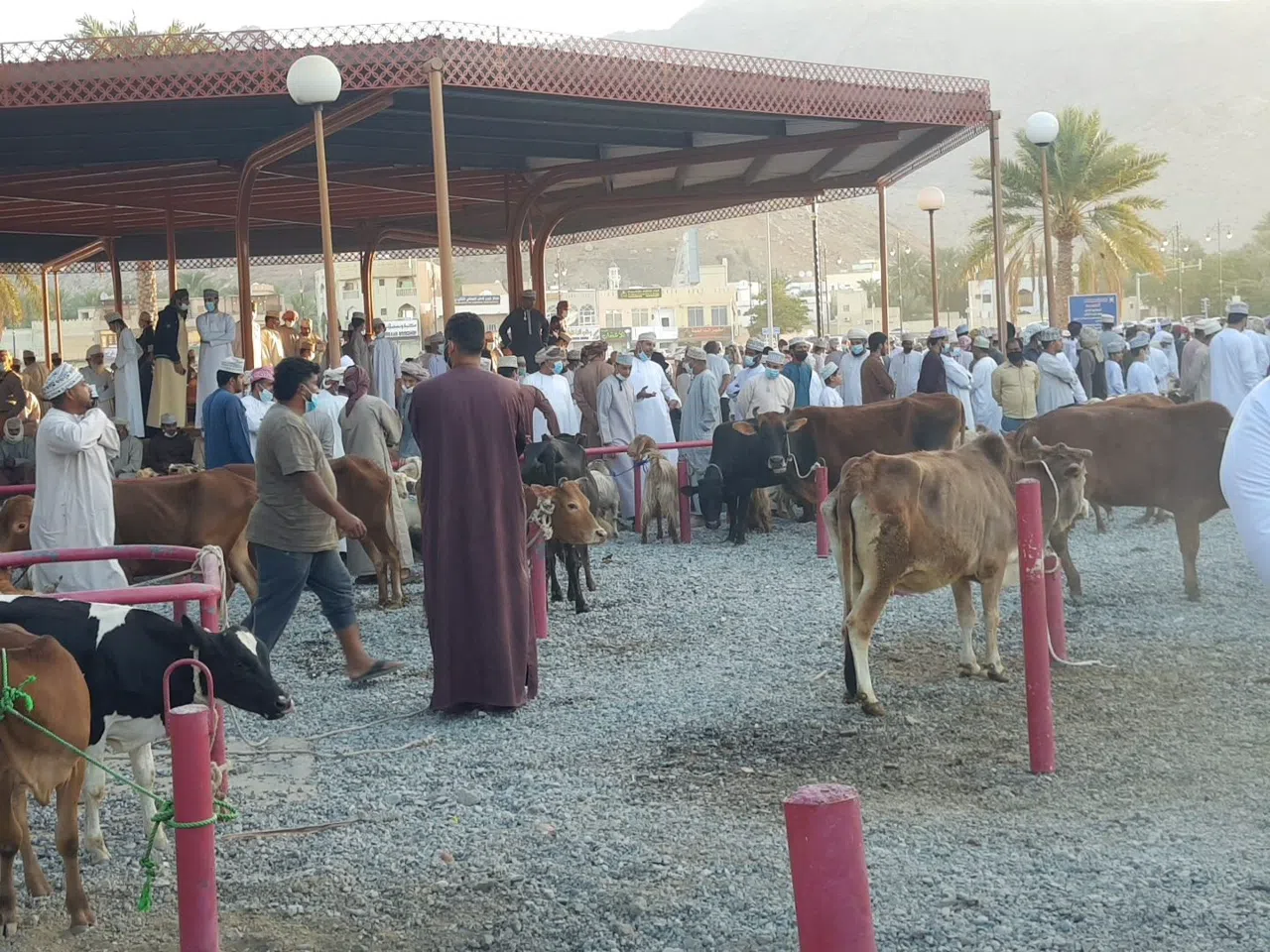
By 6am the dust hasn't settled from the overnight cattle trucks, and men in dishdashas are already leading goats in tight circles around a mud-walled ring, haggling in flurries of Arabic that speed up the moment a hand slaps a flank in agreement. It is the oldest trade in the Omani interior, and it still runs exactly like this every Friday morning — it just doesn't run inside Muscat. The real version of that scene sits ninety minutes down the highway, and knowing exactly where to point the car is the difference between a wasted dawn and the best morning of a Muscat trip.
The Real Friday Livestock Auction Is in Nizwa, Not the Capital
A fair number of round-ups place this scene near Al Ansab, a residential suburb of Muscat in Bawshar — new villas, a hypermarket, an easy run to the airport. There is no cattle market there, and never has been; it's worth saying plainly so nobody drives out at dawn to a housing estate. What those round-ups are actually describing, second-hand, is the Nizwa Souq Friday Livestock Market (Nizwa, roughly 165km / 90 minutes from Muscat by road), Oman's largest and most famous livestock souq, and the only one left that runs entirely unstaged — no ticket booth, no script, no concession to photographers. Nizwa has sat at the crossroads of the interior's trade routes for centuries, the old caravan link between the coast and the Jebel Akhdar highlands, and the Friday auction is a direct descendant of that traffic rather than a re-enactment of it.
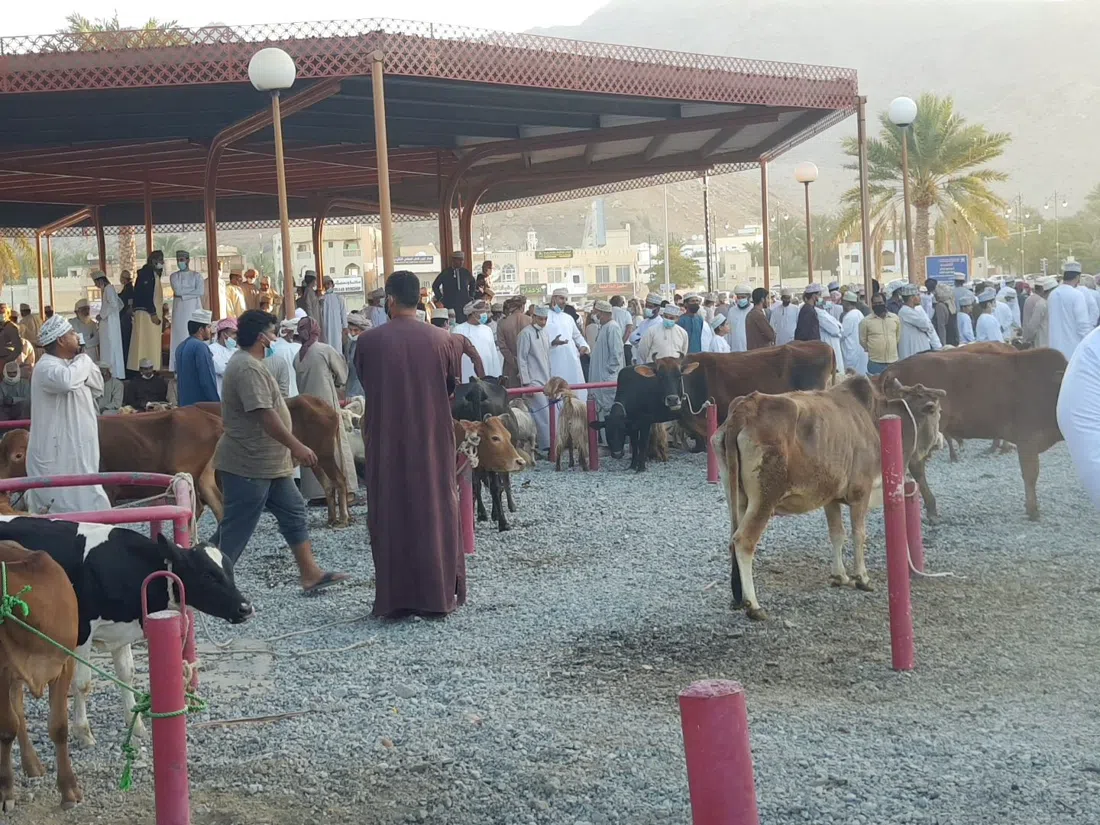
Goats, sheep and the occasional bull change hands in a packed ring from around 6:30am, and the whole thing is largely over by 10:30am — Friday only, and only that window; turn up on a Tuesday and you'll find an empty shed. Entry is free, but the ring rail gets a genuine crush of buyers and onlookers in the first hour, so groups should hold back a row rather than push in. Deals close on a handshake and a raised price called out over the crowd, and the traders are there to move animals, not to be watched — keep cameras low and ask before pointing one at a face. This suits a couple or a small, quiet group far better than a big tour bus; nothing about the ring rewards a crowd standing at its edge.
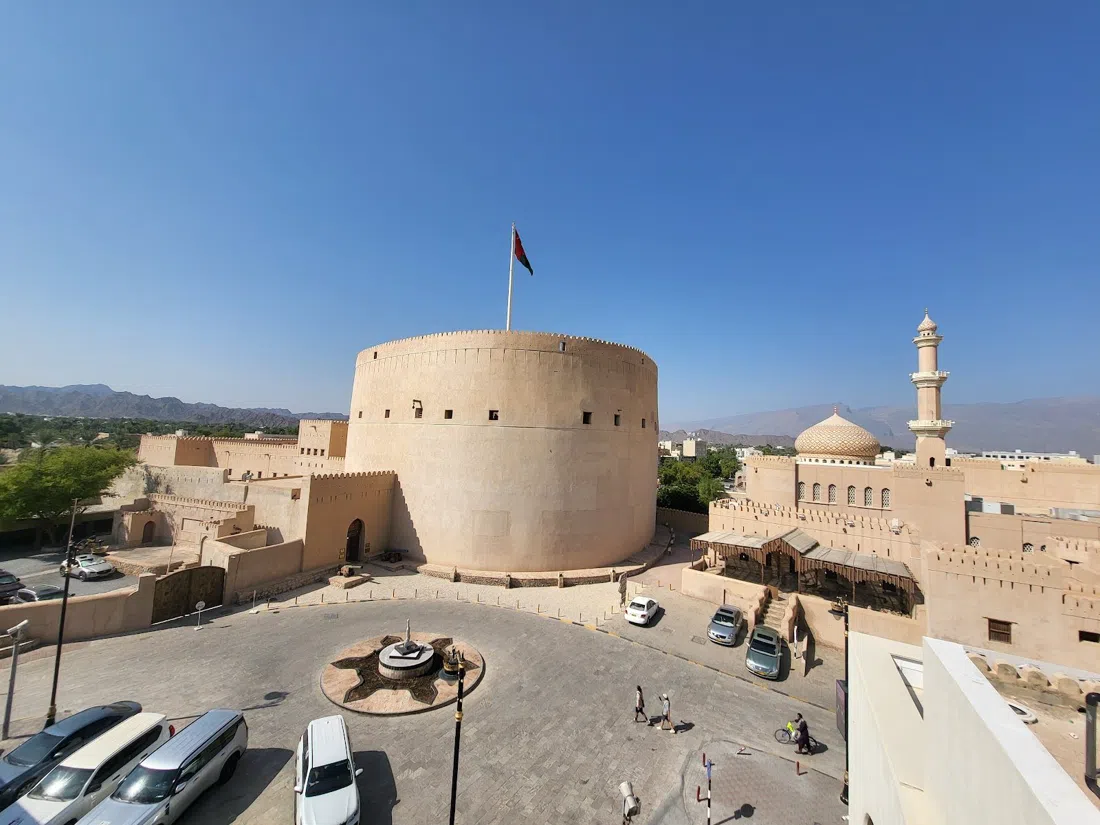
The pairing every serious visitor and every operator makes is with Nizwa Fort (also Nizwa), a five-minute drive — walkable in about fifteen — from the souq. It's ticketed at OMR 5 for adults, OMR 3 for children aged 6–12, and free under six, open 8am–8pm most days, with Friday hours split into 8–11:30am and 1:30–8pm, which lines up neatly with a market morning that finishes around 10:30. Walk the ring first while the trade is live and the light is still soft, then the fort once the crowd and the sun both thin out.
Booking It as a Private Half-Day from Muscat
The distance and the odd hours make this a trip worth booking rather than winging, and two Muscat-based operators run it as a dedicated private product.
Oman Landscape Tours ([email protected], +968 99488366) sells the Friday cattle market as a stand-alone private-vehicle trip from roughly OMR 55 per vehicle, rising to around OMR 180-plus per vehicle if you extend into a full-day Jebel Akhdar combination. Vehicles are capped at about four people, so this suits a couple or a small family, not a group of eight. Their listings carry live 2025/2026 reviews, but confirm your exact pickup time at booking — some of their published itineraries start later than the market's real 6:30–7:30am peak, and arriving after 8am means catching the tail of the trade rather than the thick of it.
Saaf Travel ([email protected], +968-9915-1585) bundles Nizwa Fort, the goat market and Jebel Akhdar into one private-vehicle day at OMR 180 for up to four people — a live, bookable listing, not a stale one. Worth flagging before you pay: Saaf's own published itinerary shows an 8am pickup, well after the auction's real 5–7am window has largely wound down. Book it if the fort and Jebel Akhdar are the priority and the market is a bonus stop; if the auction itself is the point of the morning, push them for an earlier start or book Oman Landscape Tours instead.
Either way, a rental car and a 5am alarm gets you there under your own steam for the price of fuel and a parking spot — there's no ticket, no booking desk, and no real need for a guide if all you want to do is watch.
Deeper Into the Interior: Sinaw and Ibri, for the Committed
Two other markets deliver a rawer, less-touristed version of the same trade, but both cost most of a day and neither runs on a Friday, so treat them as separate trips rather than alternates to Nizwa.
Sinaw Souq (Sinaw, roughly a 2 to 2.5-hour drive from Muscat) is widely regarded as Oman's biggest traditional souq and the deepest surviving Bedouin-trading atmosphere in the country — camels, goats and cattle change hands on Thursday mornings, a day before Nizwa's Friday auction. It's free to enter but needs a private driver or guide, both for the drive and because a guide who can translate the haggling turns the visit from spectacle into something you actually follow. Expect around OMR 60–90 for a private return transfer from Muscat.
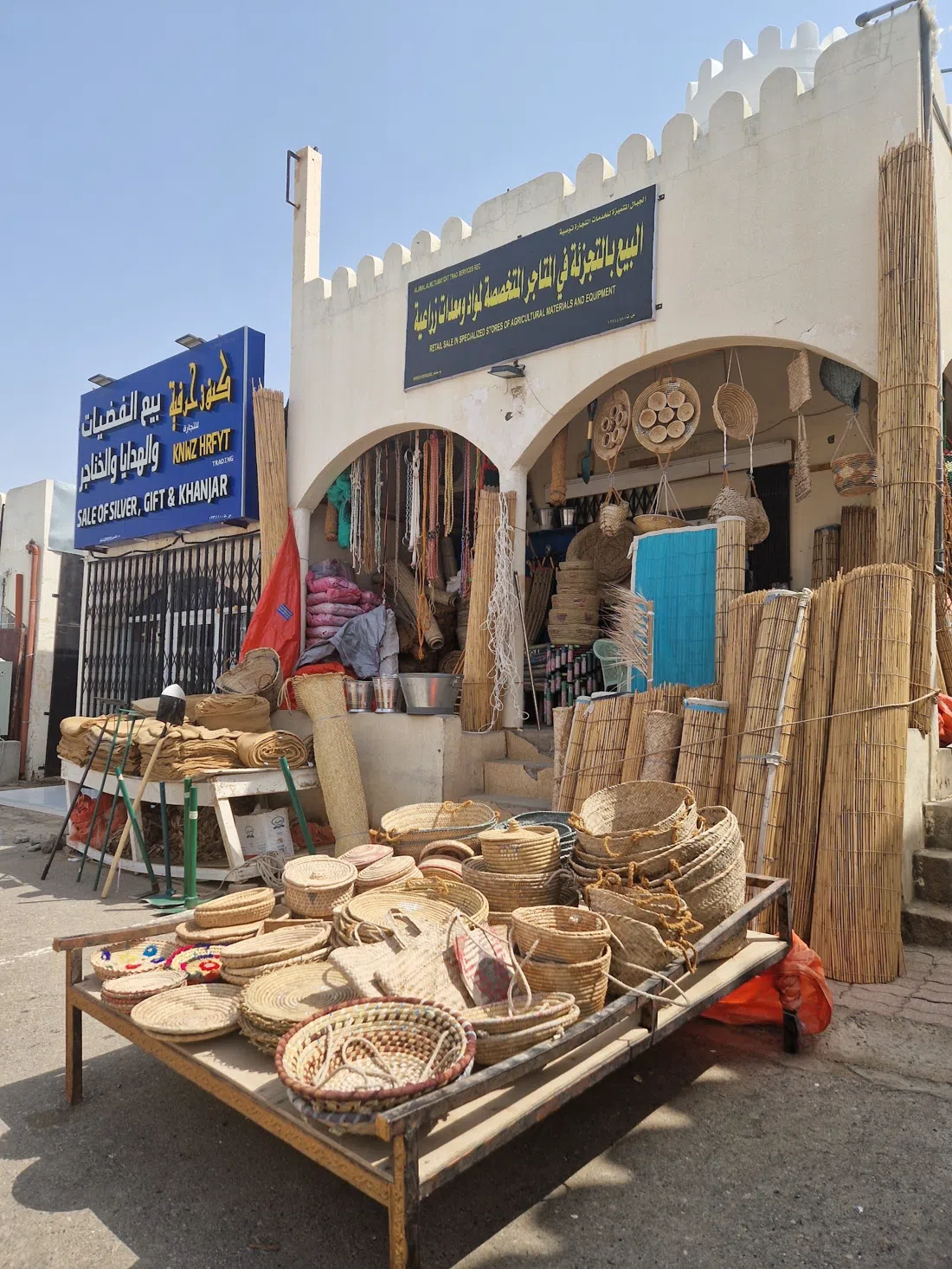
Ibri Livestock Market (Ibri, roughly 2.5 to 3 hours from Muscat each way) is the least visited of the three: informal, free, with no group infrastructure and few amenities beyond the trading itself. It's genuinely quieter and rawer than Nizwa, but the long drive and thin logistics make it a for-the-committed second trip rather than a first choice — go here once Nizwa has whetted the appetite, not instead of it.
Barter Culture, With a Real Caveat: Ibra's Women's Souq
If the angle here is the barter culture of the interior rather than strictly livestock, the Ibra Women's Wednesday Souq (Ibra) belongs in the conversation — a women-run market trading produce, fabric and household goods under the same ancient barter economy this whole trip is chasing. It runs Wednesdays, so it's a separate excursion rather than a Friday add-on. The caveat is not optional: men are not admitted to the main trading area, full stop. Women travelling in a mixed group can go in freely; the men will be waiting outside. Entry is free.
Closer to the Capital: Seeb, Muttrah and Barka
For readers who can't spare a Friday morning for the 90-minute run to Nizwa, three places inside or near Greater Muscat carry a flavour of the same unstaged trading energy, with honest caveats attached to each.
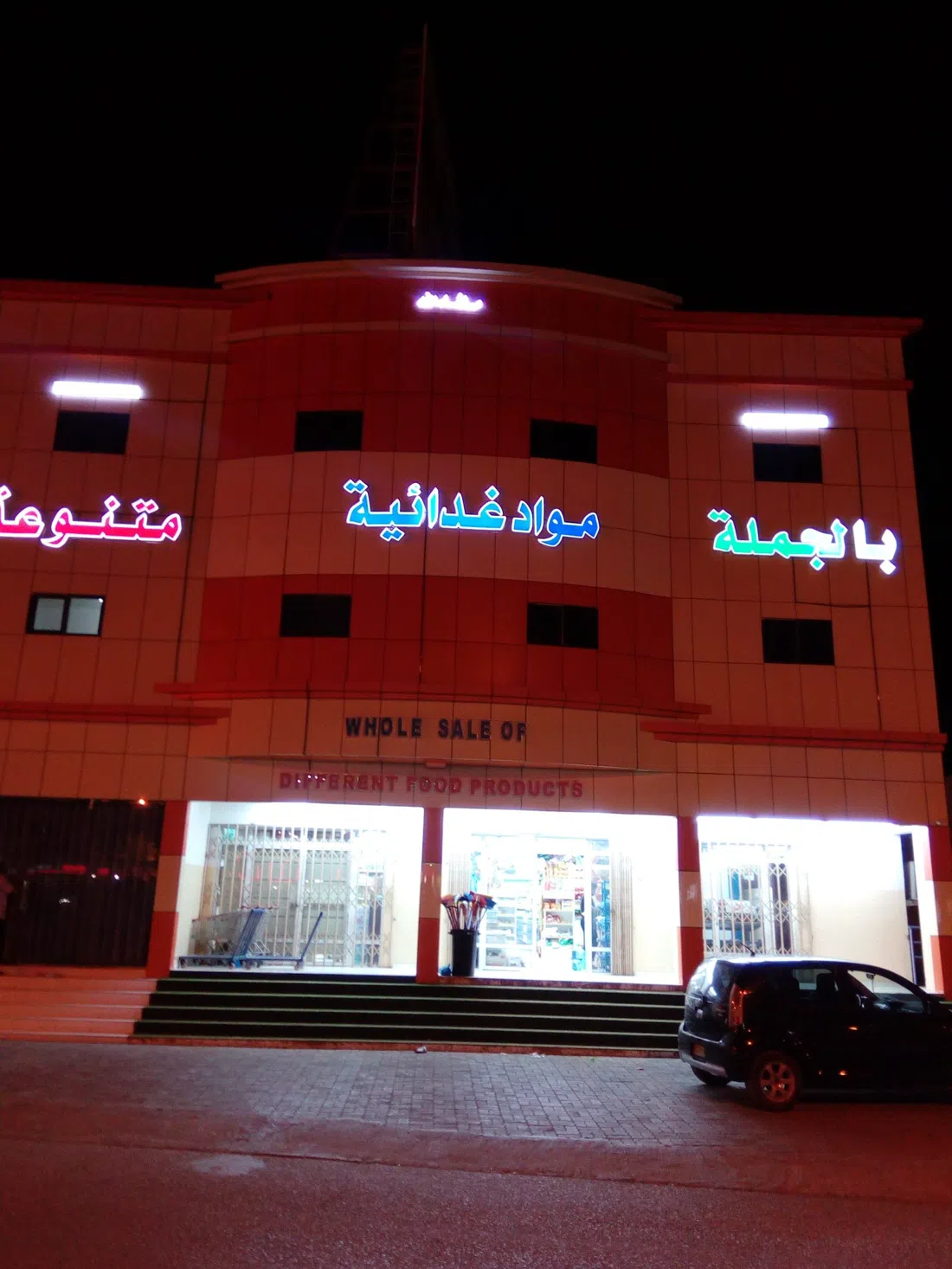
Seeb Souq (Seeb, Greater Muscat) is the closest thing to a genuine mixed livestock-and-produce souq actually inside the capital — informal, free to browse, and best visited with a local guide or driver since there's no group infrastructure to speak of. It's smaller and far less dramatic than Nizwa; go in expecting a local neighbourhood market, not an auction.
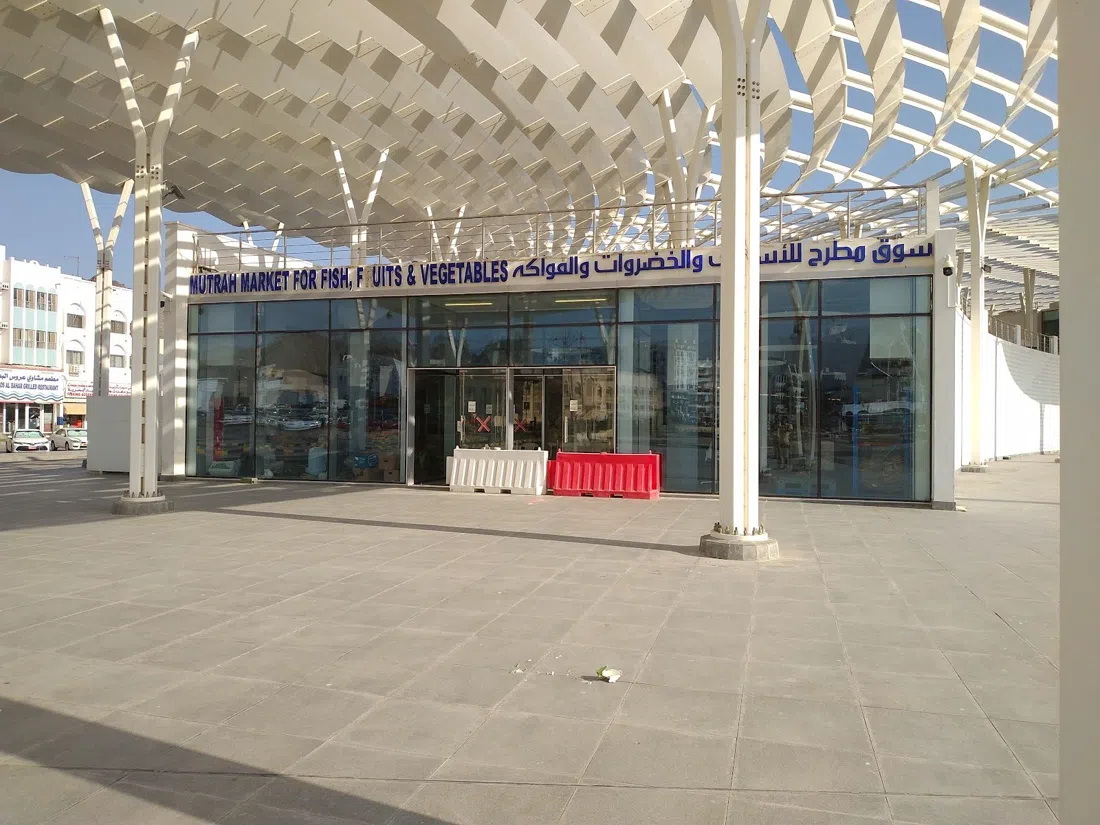
Muttrah Souq & Fish Market (Muttrah, Muscat's old harbour district) is the easiest and most reliable raw-trade scene inside the city itself. Muttrah grew up around Muscat's natural harbour as its trading gateway long before the modern city existed, and the fish market still opens onto that same waterfront. It runs daily including Friday, split 8–11am and 4–10pm, free to browse, no booking needed, and it's a short walk along the Corniche from the old souq's main gate — cruise-ship shore excursions run through most mornings and it handles large groups routinely. This is craft goods and fish, not livestock, but it's the honest fallback for anyone chasing the sensory chaos of a real Omani market without leaving Muscat.
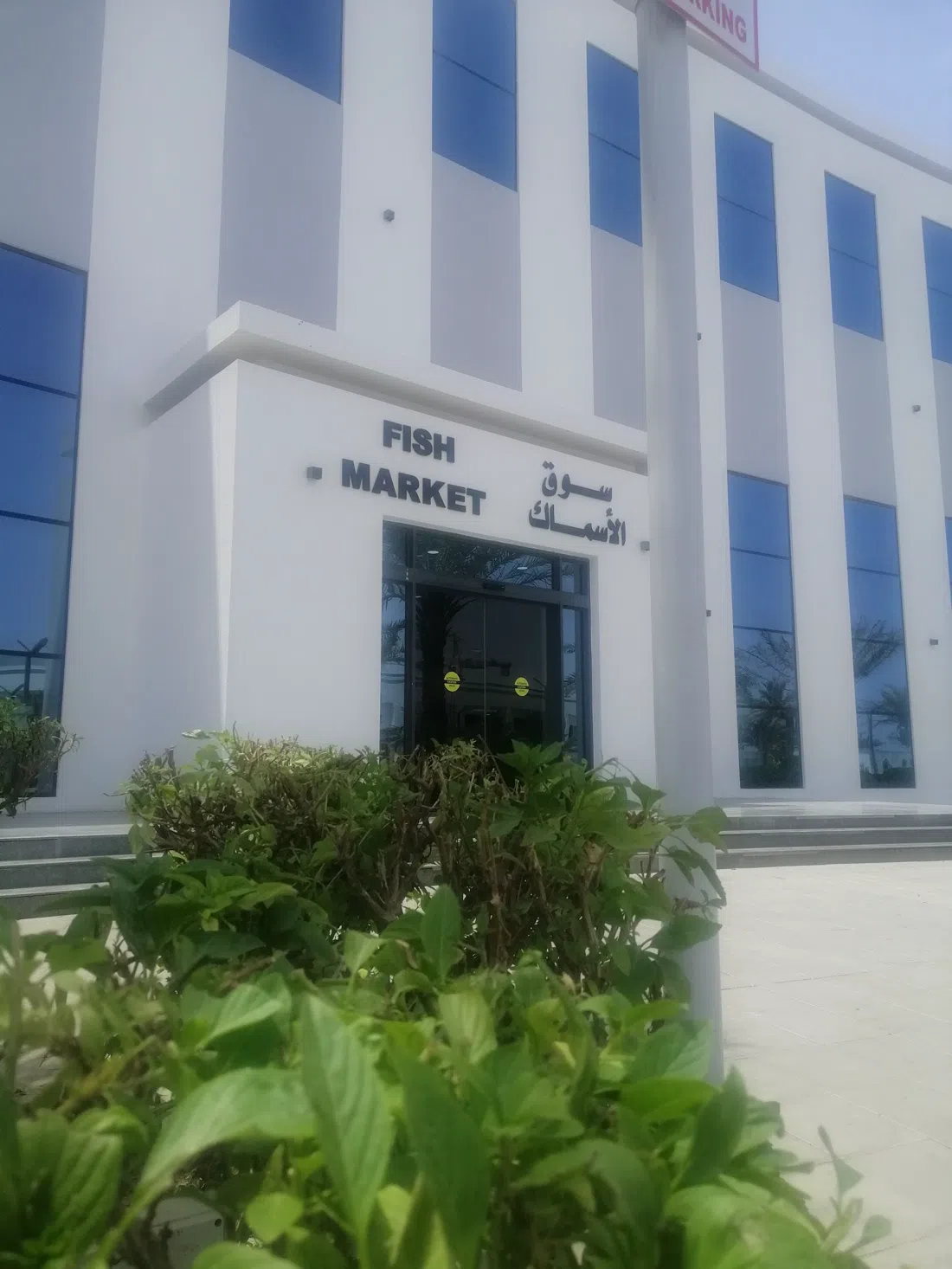
Barka Fish, Meat & Produce Market (Barka Marina, about 45 minutes from Muscat) isn't a livestock auction either, but the same raw, unstaged trading energy applies to its fish and produce stalls, and it works well as a half-day add-on for groups short on time. Open access, no booking, free to browse — be clear with anyone you're planning this for that it's fish and produce, not animals on a ring rail.
Getting There, Cash, Timing and Budget
Transport. Self-drive is straightforward if you're comfortable on Omani highways — the road to Nizwa is a fast, well-signed dual carriageway most of the way. If you'd rather not drive at dawn, book a private vehicle through Oman Landscape Tours or Saaf Travel, or arrange a driver through your hotel. Sinaw and Ibri genuinely need a driver or guide; there's no self-drive shortcut that makes those two easier.
Cash. Bring Omani rial in cash. Nothing out here runs on cards — not the markets, not most private drivers, and not always the fort's ticket window. Small denominations cover the fort entry and any fuel or snack stops along the way.
Dress and manners. This is a working agricultural market, not a tourist attraction — modest, practical clothing reads better than resort wear, and closed shoes are worth it around the ring. Dawn in the interior is genuinely cool; the heat builds fast once the sun clears the hills, which is itself part of why the trade wraps up by mid-morning.
Timing. For Nizwa, leave Muscat by 5am to catch the auction's 6:30–7:30am peak; anything later and you're watching the trade wind down rather than build. Pair it with Nizwa Fort once the market thins after 9–10am, and you're back in Muscat by early afternoon. Sinaw and Ibri are Thursday-morning trips and need a full day each way; Ibra's souq is a Wednesday trip; Seeb, Muttrah and Barka can be done at almost any hour and slot around a normal Muscat itinerary.
Budget. A self-driven Nizwa morning costs little beyond fuel and the fort's OMR 5 ticket. A private half-day through Oman Landscape Tours runs from about OMR 55 per vehicle for the market alone; a full-day combination with Jebel Akhdar through either operator runs OMR 180-plus per vehicle, split up to four ways. Sinaw and Ibri add OMR 60–90 for a private return transfer. Seeb, Muttrah and Barka cost nothing beyond getting there.
If you need somewhere to base yourself before a 5am start, our Muscat hotel search covers the city, and the full Muscat guide has the rest of what's worth doing once you're back from the interior.