Especial Muscat
Al Mirani Fort and the Ramparts Above Muscat Harbour
The fort above Al Alam Palace was shut for four centuries and opened again in April 2024. It carries the highest entry price in Old Muscat, and what you pay for is the ramparts and the harbour view.

Por Bram VisserForts, wadis and the long way round

Al Mirani Fort was shut to the public for four centuries. It reopened on 3 April 2024 under Hajar Mountains Resorts and Hotels Company, with a weapons museum, an open-air theatre, telescopes and a lift to the upper floors. Al Alam Palace and Palace Beach lie directly below its gun ports.
Inside Al Mirani Fort
Al Mirani Fort (Old Muscat) is a squat 16th-century Portuguese fort built onto a black volcanic crag above Muscat harbour. The walls are pale ochre and crenellated, pierced with gun ports, and rusted cannons sit out on the terrace.

You walk the ramparts and look down. The palace plaza is below you, the sister fort stands on the crag across the water, and the telescopes on the terrace point at the harbour mouth. The lift reaches the upper floors if you would rather not take the stairs.
The restoration added the museum rooms, the theatre and a café. Reception arranges guided tours on request, and walk-ups do not need to book. The fort takes coach and shore-excursion parties, and a guide from the desk is what explains the weapons rooms.
Planifica tu viaje a Muscat
Precios en directo de nuestros socios de reservas.
Cancelación gratuita en muchas habitaciones. Podemos recibir una comisión cuando reservas.
What the door costs
Entry is ر.ع. 10 for a non-Omani adult and ر.ع. 5 for a child. Omanis pay ر.ع. 3. That adult figure is the highest of any site in Old Muscat.
You are paying for the view from the walls. Car tours of the city that take in the fort run six days a week, Monday to Thursday plus Saturday and Sunday, never on Friday. Book one before you arrive if you want the fort, the palace and the Muttrah waterfront inside one morning.
Al Jalali Fort across the water
Al Jalali Fort (Old Muscat) stands on the opposite crag of the harbour mouth, a stone staircase zig-zagging up bare rock to an arched gate. It is the best thing you photograph from Al Mirani's gun ports, and after dark it is floodlit amber.

Viewing it from outside is free and unlimited. The interior is closed to everyone. The Ministry of Heritage and Tourism contracted Jibal Al Hajar Company in March 2026 to operate it, so an opening is coming, but it has not happened. Do not promise anyone a way in.
Al Alam Palace below the walls
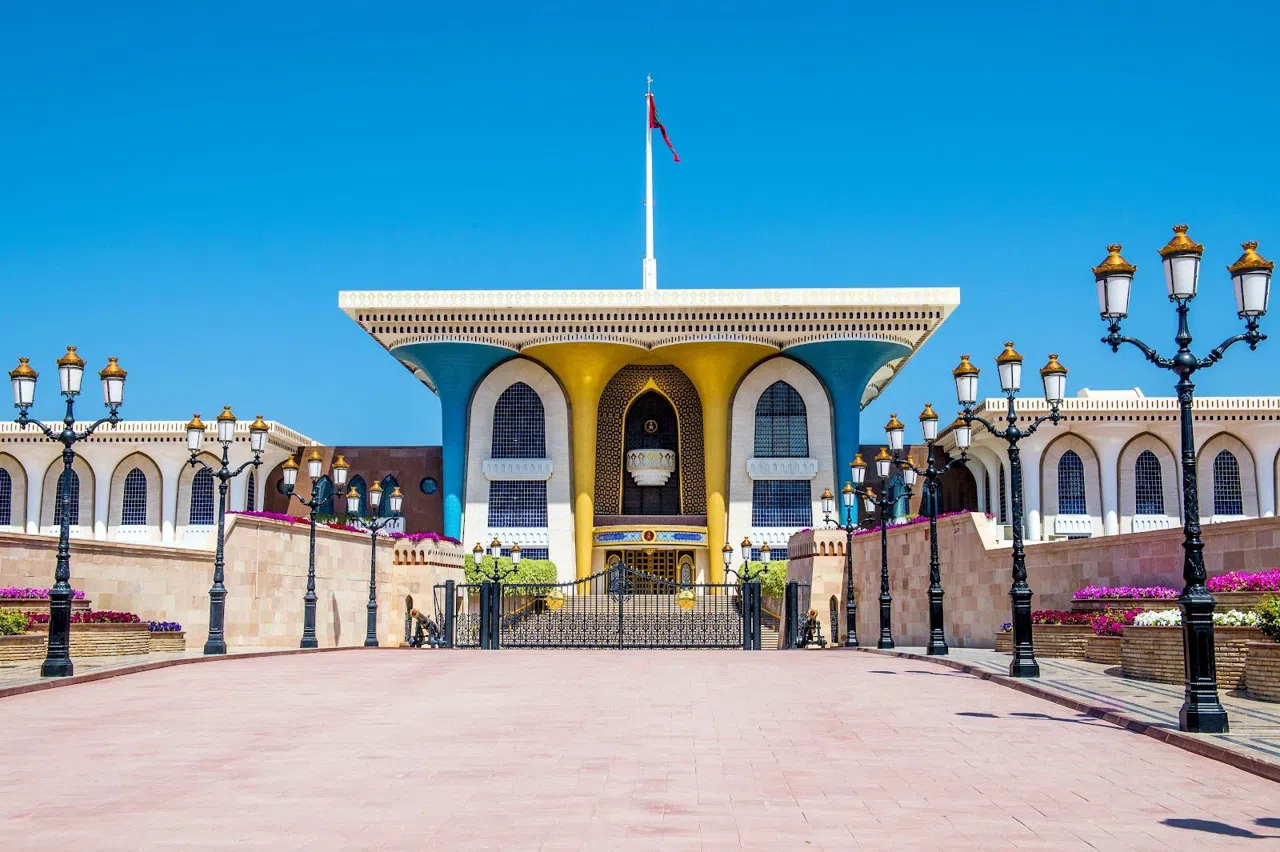
Al Alam Palace (Qasr Al Alam, Old Muscat) is two minutes' walk below Al Mirani and the single most photographed frame in Old Muscat. Flared blue-and-gold mushroom-capital columns run across a white marble ceremonial plaza, wrought-iron gates close the end of it, and the forts sit on the ridges behind. The plaza is open and free, and you walk right up to the gates.

Past the gates, no photographs. Never photograph the guards. The interior is not public, and the plaza can be closed off at short notice during state functions.
Old Muscat museums within walking reach
National Museum of Oman (Old Muscat) faces the palace plaza in limestone-clad galleries screened by pierced geometric panels. Inside are a full-size reconstructed dhow and an open-storage conservation lab visible behind glass. Entry is ر.ع. 5 for foreigners and ر.ع. 2 for residents; Omani and GCC visitors pay ر.ع. 1. It opens Saturday to Thursday, 10:00 to 17:00, and Friday 14:00 to 18:00, so it will not fit an early fort morning. Book guided tours ahead. Certified guides and students go in free.


Bait Al Zubair Museum (Old Muscat) is a five-minute walk from the palace gates, a whitewashed merchant family house spread across five buildings round a falaj water channel and a date-palm garden. The cases hold silver khanjar daggers and heavy Bedouin jewellery, the finest privately owned Omani collection. Entry is ر.ع. 3 for foreigners and ر.ع. 1 for Omani and GCC visitors, and under-12s go free. Zafran Café and the gift shop on site handle parties, and there are student and senior discounts.
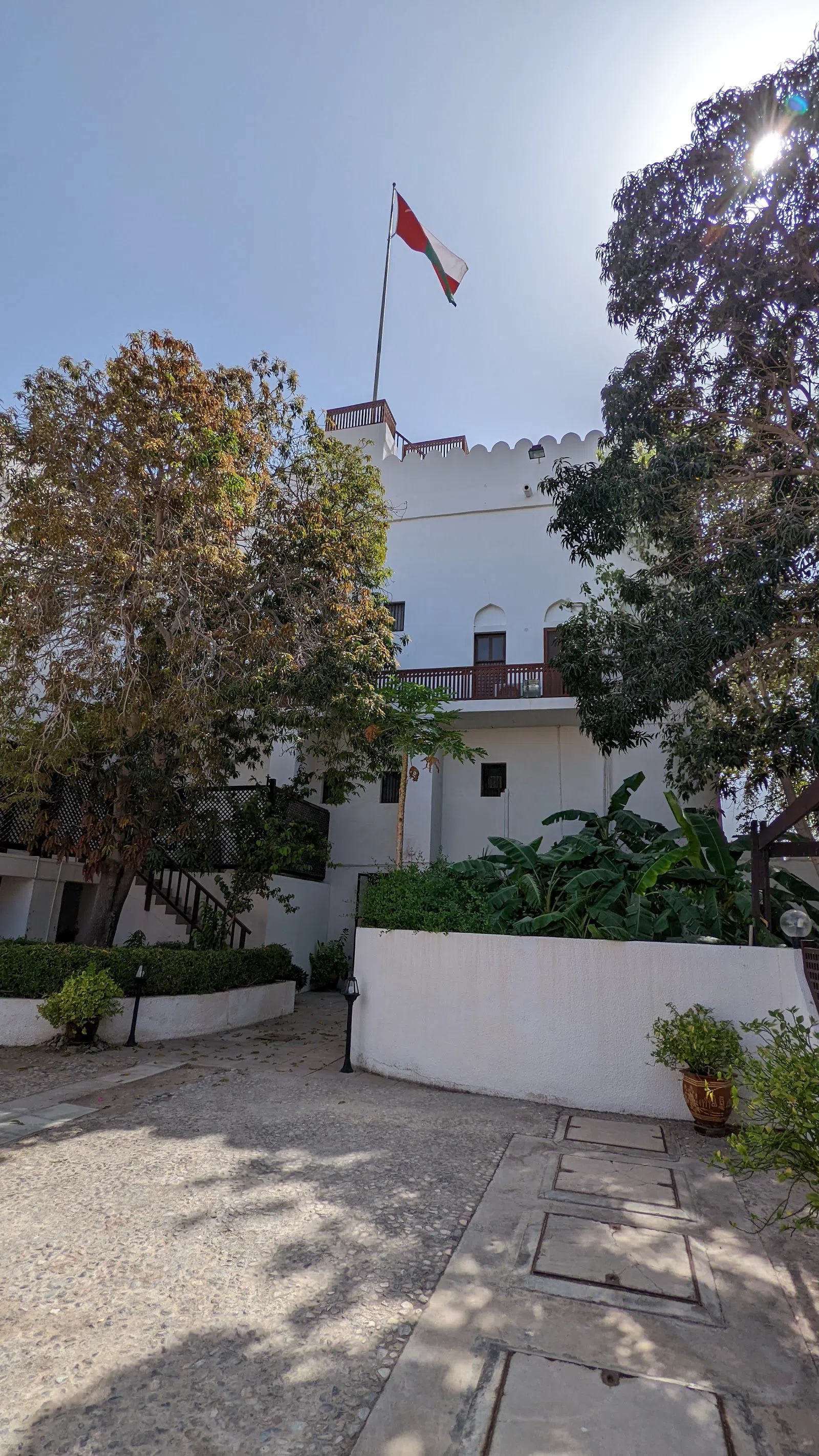
Omani French Museum (Bait Fransa, Old Muscat) is a two-storey white colonial house with green shuttered balconies on a narrow lane. Sultan Faisal bin Turki gave it to the French consul in 1896, and the consulate rooms keep period furniture and Omani-French diplomatic portraits. At 500 baisa for an adult and 200 baisa for a child it is the cheapest and quietest stop in Old Muscat. It opens Saturday to Thursday, 09:00 to 13:00, with an extra slot 16:00 to 18:00 from 1 October to 31 March. The rooms take a car-tour party of a dozen; a coachload will not fit.
Muscat Gate Museum (Old Muscat) is the triple-arched crenellated gateway straddling the road in, with rooms built into the gate body above the traffic and stretches of the old city wall running up the hillside. Everyone driving to Al Mirani passes under it. Entry is free with no ticketing, Sunday to Thursday, 08:00 to 14:00. The upper rooms are tight. It is being redeveloped as the orientation centre for the whole Old Muscat open-museum district, so the layout and hours will change.

Muttrah Fort and the harbour road
Muttrah Fort (Muttrah) is three Portuguese watchtowers stepped up a bare rock headland over the corniche, whitewashed battlements above moored dhows and the cruise berth. It costs a third of Al Mirani's price: ر.ع. 3 for a non-resident adult and ر.ع. 2 for a non-resident child, with residents at ر.ع. 1. Doors are open 08:00 to 23:00 and the Fort Café terrace looks straight down on the water. Muttrah Fort LLC runs it privately, and the official site's TLS certificate has expired, so phone +968 7700 0909 or email [email protected] instead.

Muttrah Corniche is a white-balustraded promenade curving round the bay past ochre merchant houses with carved balconies, dhows moored bow-on, the fort on one headland and the hilltop incense burner behind. It is free and unrestricted, and roadside coach drop-offs are routine. Driving it is the reason a car tour beats walking the city, and it is where the Al Mirani and Al Jalali headland reads best from a distance.
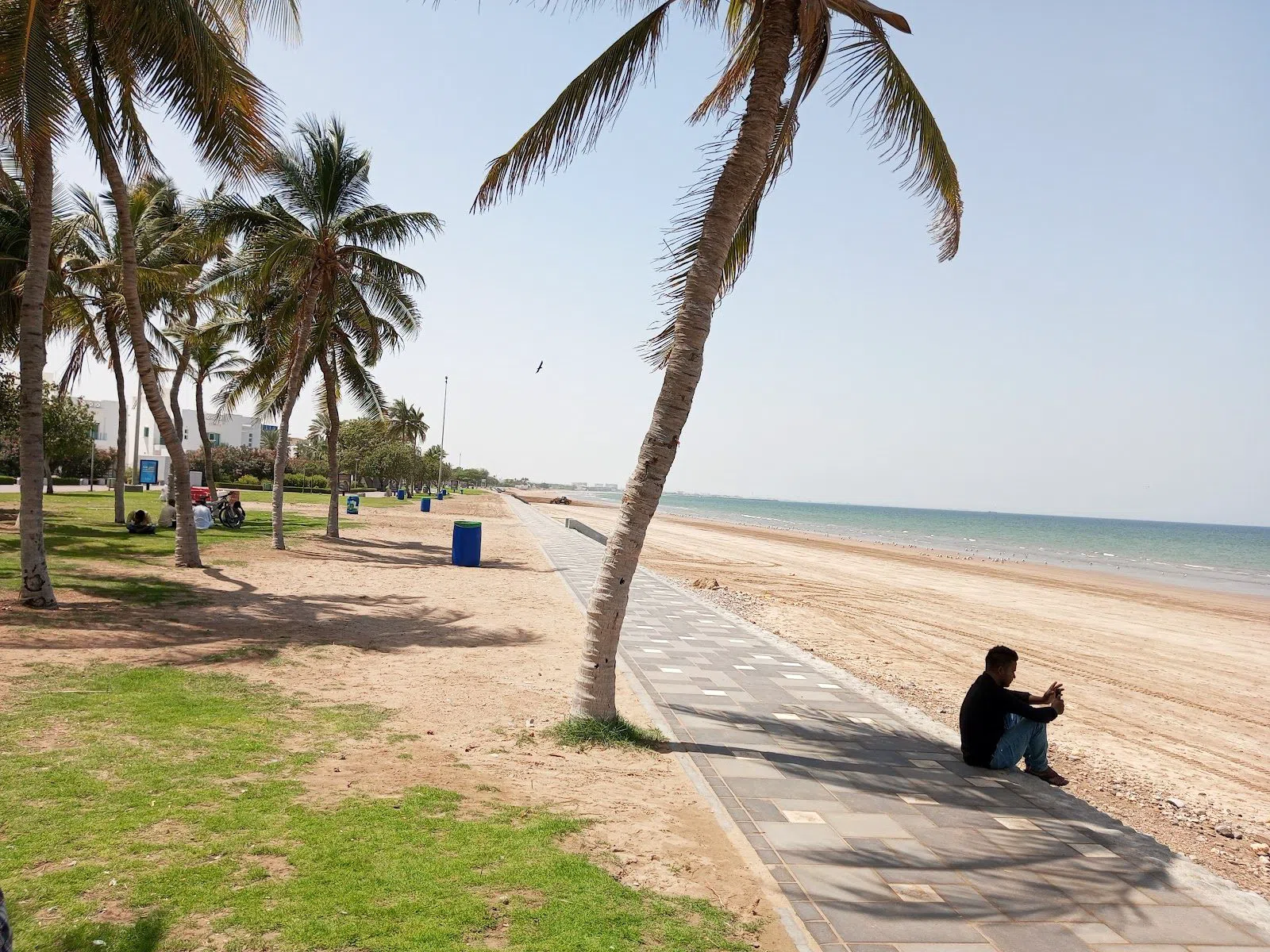

Riyam Park and the Incense Burner Monument (coast road) is the highest easy viewpoint between Muttrah and Old Muscat, a two-minute stop. A colossal concrete censer stands on a bare ridge with picnic lawns and paths below and the whole Muttrah harbour laid out beyond. The park is free. You cannot go inside the censer. The cable car's middle station is going in on the mountain behind.
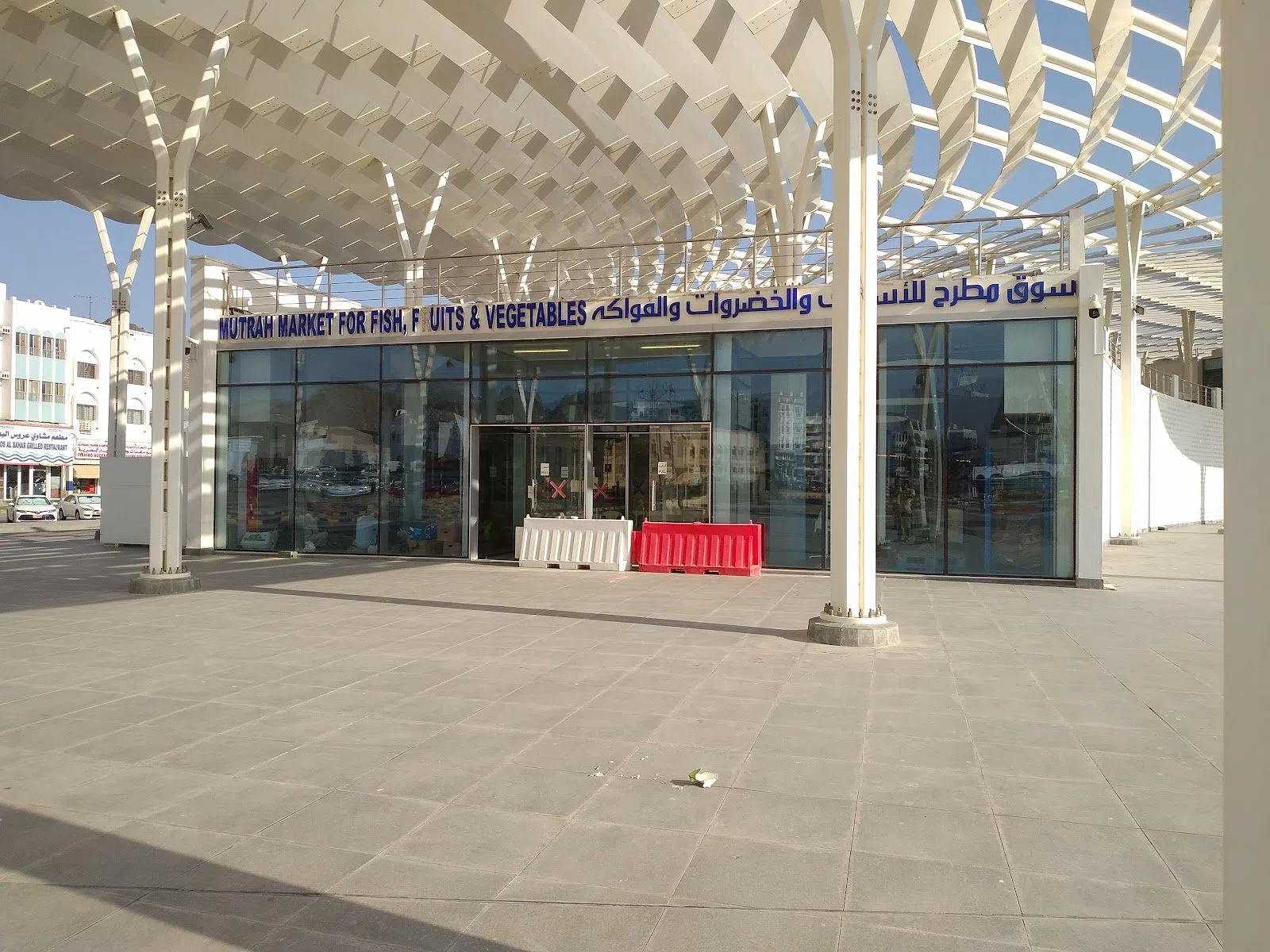
Muttrah Fish Market (Muttrah) is a working market of more than 100 sellers under Snøhetta's wave-form aluminium lattice canopy, which won awards after it opened in 2017. Stainless counters carry kingfish and tuna, cutters work at the back, and the mountains stand across the bay. Entry is free. Stay out of the sellers' aisles. The largest Muttrah cable car station is going up here, so the area is a construction site for now.
Ghalya's Museum of Modern Art (below Muttrah Fort) sits in old houses facing the harbour, with rooms furnished as 1950s to 70s family life and mannequins in regional dress. The subject is domestic life. One ticket at ر.ع. 1 to 2 per person covers the old house, the modern gallery and the clothes museum. Call +968 2471 1640 for parties.

Eating on the corniche and the souq
Bait Al Luban (Muttrah corniche) is a restored two-storey merchant house opposite the fish market, carved wooden doors downstairs and a rooftop majlis of low cushions over the dhows and the harbour lights. It opens 12:00 to 23:00 daily and prices at ر.ع.ر.ع. to ر.ع.ر.ع.ر.ع. Book on +968 24 711842; a walk-in at peak means a wait.

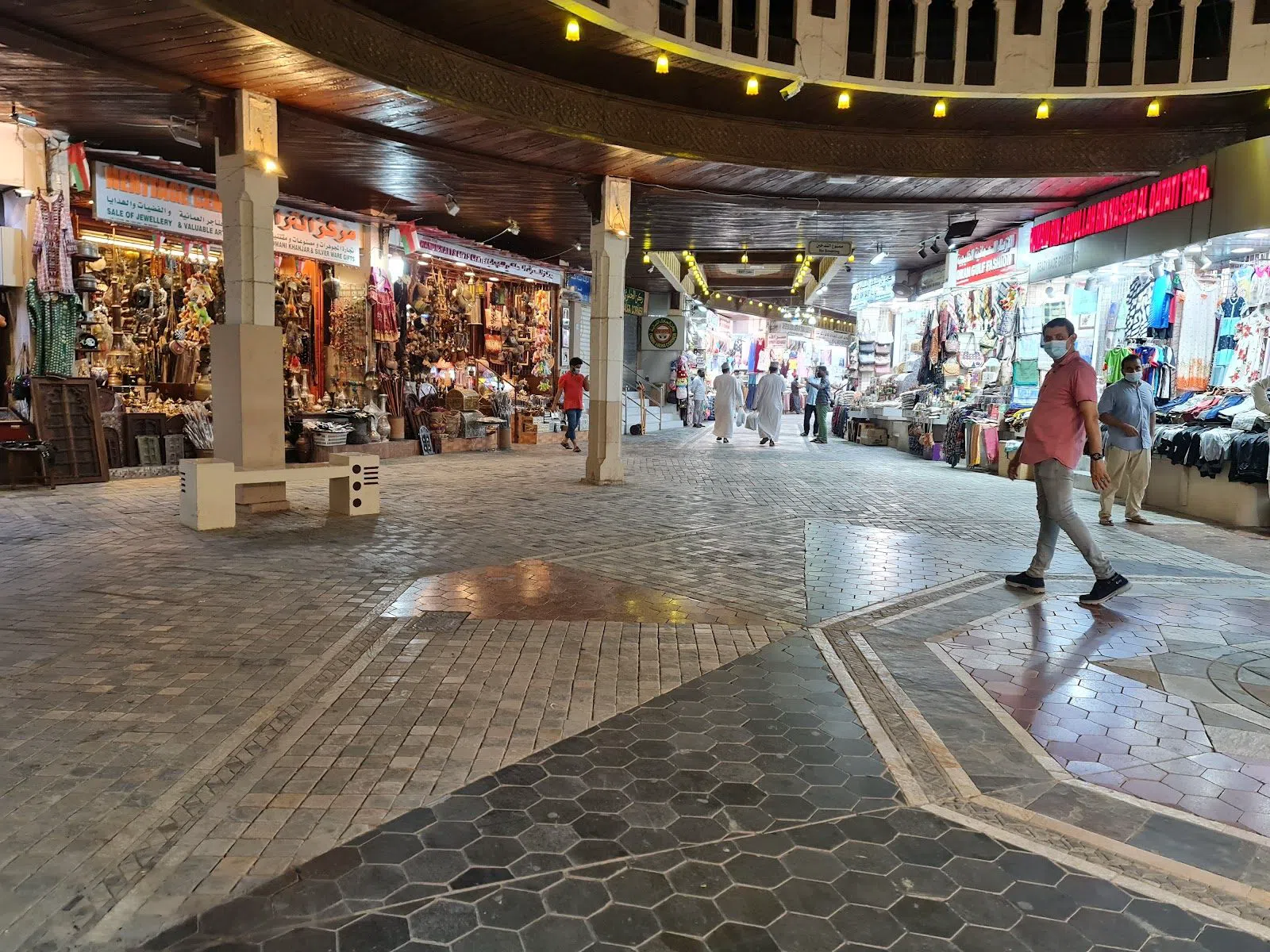
Mutrah Souq (Souq Al Dhalam, Muttrah) is one of the oldest markets in the Arab world: carved teak ceilings over narrow latticed lanes, frankincense smoke hanging in the shafts of light, walls of silver khanjars, pashminas and heaped resin. Entry is free and souvenirs run ر.ع. to ر.ع.ر.ع. Haggling is expected. The lanes trade 08:00 to 13:00, then reopen 16:00 to 22:00.
The mosque and the Armed Forces Museum
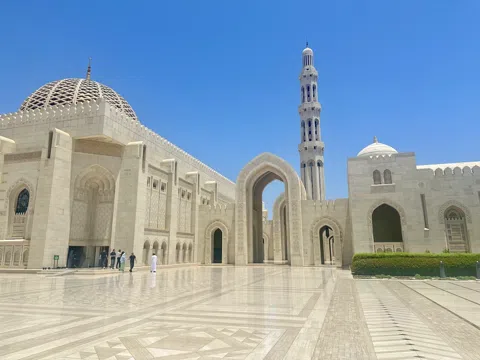
Sultan Qaboos Grand Mosque is the standard first stop on every Muscat car tour: sandstone arcades round a marble courtyard, a 90m minaret, and a prayer hall holding one enormous hand-knotted Persian carpet under a Swarovski crystal chandelier. Entry is free and you do not book. Non-Muslims are admitted Saturday to Thursday, 08:30 to 11:00 only. Women must cover hair, arms and legs, and men wear long trousers and sleeves. You can borrow abayas and scarves at the gate.

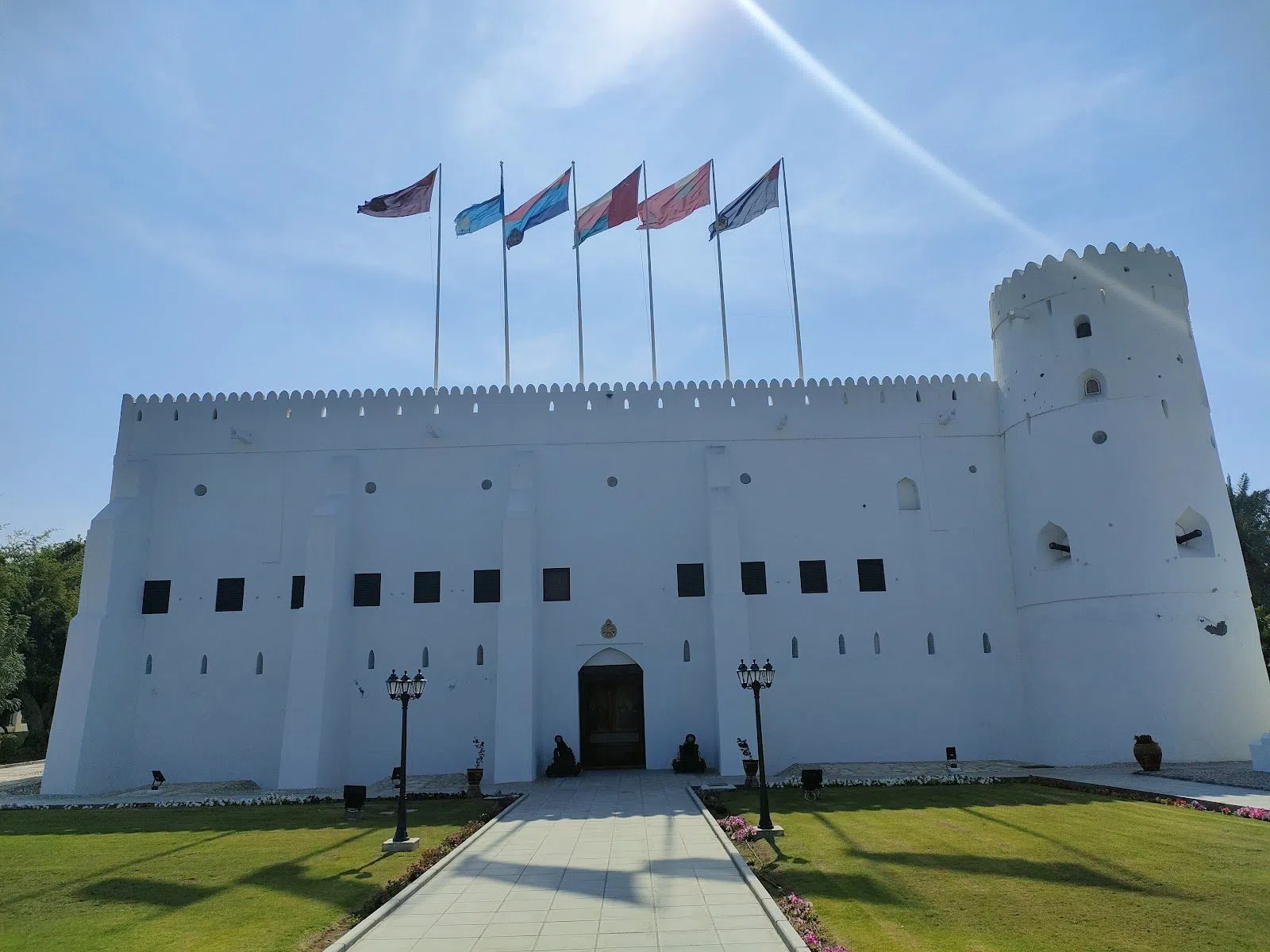
Sultan's Armed Forces Museum (Bait Al Falaj, Darsait) carries Al Mirani's weapons rooms forward to the modern army, inside a whitewashed 1845 fortified headquarters with two square towers. Artillery pieces and aircraft are parked on the gravel outside, and serving soldiers guide you through. Entry is ر.ع. 1 for an adult and 500 baisa for a child, Sunday to Thursday, 08:00 to 13:30. Dress modestly, and photography is restricted in places. It is a short drive inland from the coast road.
Best time to go
Start at the mosque. Its visitor window for non-Muslims is a morning slot, and it shuts entirely on Fridays, so put Al Mirani into the late morning after it and drive on to Old Muscat. Fit the fish market in before 09:00 if it is on your route.
Leave the Muttrah Corniche until after dark, when it is floodlit and far more comfortable than the midday heat. Al Jalali takes its amber floodlighting at the same hour.
Friday rearranges the day. Bait Al Zubair and Ghalya's Museum close, the souq trades in the afternoon only, and the car tours do not run. Saturday to Thursday gives you the full set.
Is it worth the ticket
It suits a visitor who wants Muscat harbour from above and the palace plaza two minutes below. You pay the steepest door price in Old Muscat, and it buys the ramparts, the gun-port view of Al Jalali, the weapons rooms and a café, in about an hour of walking.
Practical notes
Saturday to Thursday is the clean run for a fort day in Old Muscat and Muttrah, and Friday closures decide the rest. Reserve the table at Bait Al Luban and any guided museum tour before you set out, and ask at Al Mirani's reception on the day if you want a guide.
See the Muscat guide and the Muscat hotel search.
Antes de ir
How much does it cost to enter Al Mirani Fort?
ر.ع. 10 for a non-Omani adult, ر.ع. 5 for a child, ر.ع. 3 for Omanis. The adult price is the highest of any site in Old Muscat, and it buys the ramparts and the harbour view. There is not much of an exhibit beyond that.
Do you need to book Al Mirani Fort in advance?
No. You can turn up without booking, and reception arranges guided tours on request. Coach and shore-excursion parties are accepted too. City car tours that include the fort run six days a week, Monday to Thursday plus Saturday and Sunday, with nothing on Fridays, so book one ahead if you are coming at the weekend.
Can you go inside Al Jalali Fort?
No. The interior is shut to everyone, and you can look at it from the outside for free, as long as you like. The Ministry of Heritage and Tourism contracted Jibal Al Hajar Company in March 2026 to run it, so the inside should open eventually, but it has not yet.
Can you take photographs at Al Alam Palace?
Photograph from the open plaza, which costs nothing to walk into and sits two minutes below Al Mirani. Past the gates you cannot take pictures, and you must never photograph the guards. The plaza closes at short notice during state functions.
What should you pair with Al Mirani Fort?
The National Museum of Oman faces the palace plaza, and Bait Al Zubair Museum is a five-minute walk from the palace gates. The Muscat Gate Museum is free and sits on the road in. Avoid Friday if you want Bait Al Zubair or the mosque's visitor window.